What Was Cooking in the Yard?
A household’s food history begins before the finished dish. Someone needed fuel, utensils and ingredients, and somewhere to prepare them. At Seville, those practical questions can be connected to excavated evidence. The result is more concrete than declaring a modern recipe an unchanged survival of an ancient cuisine.

Source & credit
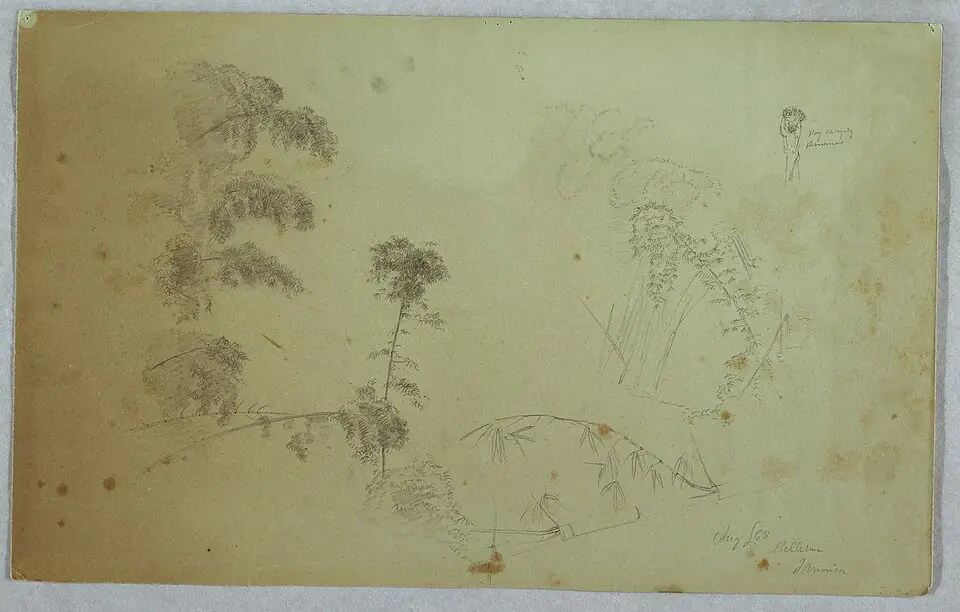
The road belongs in food history: produce had to reach buyers through someone’s labour.
Adolphe Duperly & Sons · Public domain · Image record ↗The hearth was in the yard
House 15 had an outdoor hearth. Excavated material shows reused flint serving as fire starters, and locally made alongside imported ceramics. The researchers describe limited material means compared with managerial households and the repeated use of objects such as glass bottles. These are traces of obtaining, maintaining and adapting household equipment, rather than a surviving menu. [1]
Source & credit
A hearth establishes a place for fire-related activity; it does not establish what was cooked on every occasion. A vessel fragment identifies equipment more readily than a recipe. That makes the kitchen a history of work and resources as well as taste. The question is not simply whether people possessed objects, but how objects were used again when replacing them was difficult.
A familiar food with an unfamiliar journey
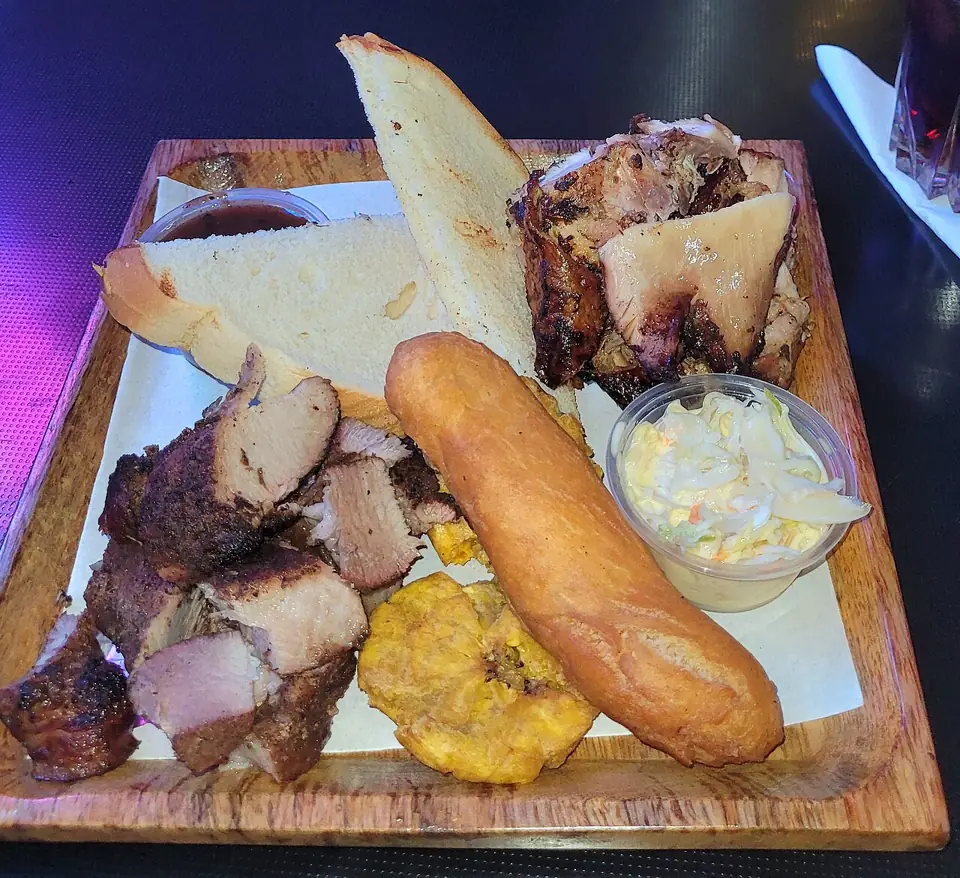
Breadfruit offers a documented example of why familiar Jamaican food should not be assigned a single origin story. A JIS account, drawing on its publication Our Culinary Heritage, describes its arrival from the South Pacific aboard William Bligh’s HMS Providence in 1793 and its use as inexpensive food for enslaved plantation workers. [2]
Source & credit
Arrival and belonging are different histories. A transported plant can become deeply embedded in Jamaican cooking without having originated in Jamaica or Africa. The useful distinction is between botanical movement, the colonial purpose of an introduction and the subsequent choices of people who prepared and ate it. The voyage date does not date every present-day breadfruit dish.
The market is part of the household story
Louise Bennett’s Jamaican Folk Songs recording includes market and work material, offering another way into the relationship between food and livelihood. [3]

Source & credit
An urban market scene places exchange and people in the foreground.
Adolphe Duperly & Sons · Public domain · Image record ↗Listen to Linstead Market as a performance about selling and its consequences, rather than as an audio reconstruction of Seville. Ask whose voice carries the story and how delivery makes the experience memorable. Then return to the excavated hearth: production, preparation and sale are connected, but they leave different kinds of evidence. Food becomes a richer subject when those differences remain visible.

Source & credit
Read the photographed market alongside Miss Lou’s later song. The photograph and performance are different kinds of evidence about a named place.
Valentine & Sons · Public domain · Image record ↗The cook’s work joined several economies
A household meal depended on what could be grown, obtained or exchanged, and on the time and equipment available for preparing it. At Seville, the outdoor hearth and reused objects make some of those constraints visible. They place food within the organisation of an enslaved household’s life rather than leaving it as a list of ingredients supplied by an estate.
Breadfruit then connects the yard to a much larger world. Colonial provisioning plans brought a South Pacific crop into Jamaica; generations of Jamaican preparation gave it a place in local meals. The two histories meet at the cook’s work. Neither an imperial voyage nor an archaeological fragment alone accounts for taste, but together they explain why Jamaican food belongs to histories of constraint, resourcefulness and cultural choice as well as trade. [1] [2]