St. James: Montego Bay, Sam Sharpe and the hills beyond the airport
The parish is more than a resort arrival point. Indigenous traces, plantation districts, emancipation struggle and Maroon country place Montego Bay in a deeper western-Jamaican history.
Start before the hotel coast
JIS’s parish profile identifies archaeological evidence of Indigenous life near Montego Bay, including pottery associated with the Fairfield area. [1] That matters because a coastal city’s modern branding can hide older settlement. The sea, fertile districts and routes inland had significance before tourism became the visitor’s dominant frame.
Sam Sharpe belongs at the center
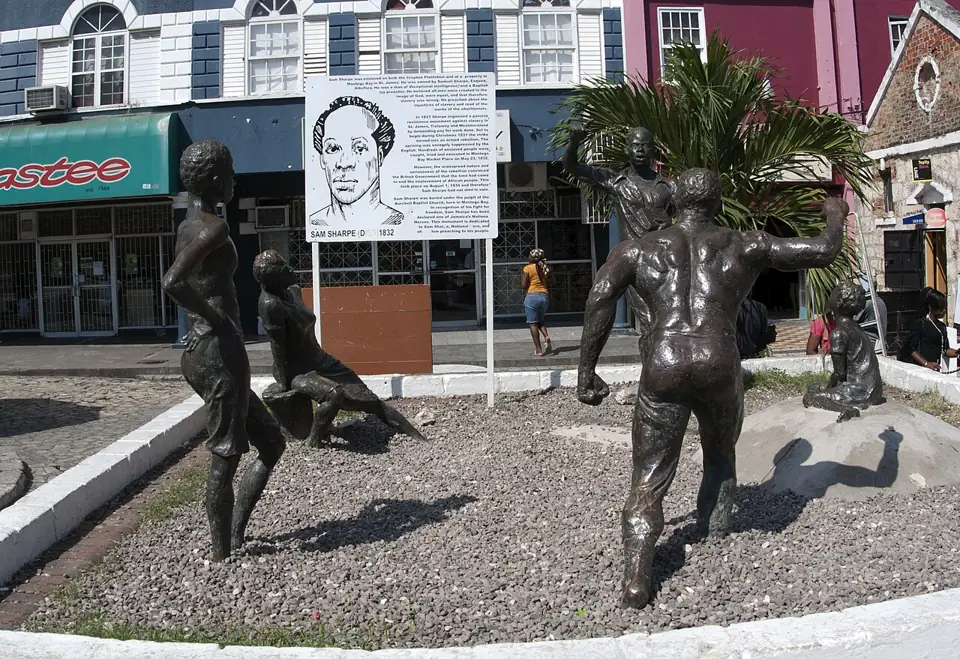
Samuel Sharpe helped organize the rebellion beginning in 1831 in St. James. JIS identifies Kensington Estate with its outbreak. Sharpe’s role as a Baptist deacon and organizer makes the connection between congregation, communication and political action important. [2] Enslaved people were able to interpret news, coordinate across estates and act on an expectation of freedom. This is a history of organization, not simply a portrait of one heroic individual.
Remember the broader conflict as the emancipation war of 1831–32. Repression, executions and destruction were part of its aftermath. The memorial square should prompt questions about the people who participated and the colony that condemned them, rather than stand as an isolated monument.
Read the square and the courthouse together
The old Montego Bay courthouse is associated with Sharpe’s 1832 trial and now forms part of the civic-center setting. [3] That juxtaposition makes the square useful: public remembrance stands beside a building connected to colonial judgment. Ask what a legal institution was protecting at the time. A structure may later serve education or culture without erasing its earlier role.
Source & credit
Go inland to a different western history
Flagstaff, in St. James, carries the history of Trelawny Town and the Maroon war of 1795. JNHT describes later barracks, a military graveyard, foundations and a parade-ground area. [4] The remnants reveal how a landscape associated with Maroon autonomy was subsequently occupied by colonial military infrastructure. This is another reason to avoid imagining one simple line from rebellion to freedom.
Make a day around one serious question
In Montego Bay, connect Sam Sharpe Square to the civic-center history and a conversation with a knowledgeable local guide. For an inland day, arrange a community-led visit near Flagstaff or another confirmed site. Do not combine every distant place simply because they share a parish name. The hills demand time, and a good explanation is worth more than another rushed photograph.
The archival Deeside recording above adds a later voice to western rural life: hunting, crops and the vocabulary of work. It does not record the emancipation war. Listening lets twentieth-century rural residents enter a history otherwise dominated by elite buildings and official commemorations.
Tony’s Call: Give Sam Sharpe and the interior equal attention with the resort coast. Begin with the square; go into the hills with someone who can connect the remains to the people.
Cockpit Country → · House histories and access →
Sam Sharpe changes what counts as a heritage route
A route that begins and ends with great houses places the estate owner at the center before the visitor has read a word. Sam Sharpe's history changes that starting point. Religious organizing, enslaved labor and the struggle for freedom make the interior and its communities central to the account. The buildings remain important, but they become evidence of the order people contested rather than the complete story of the parish.
Keep the sequence of revolt, suppression and emancipation visible. A later legal change should not be written as though it arrived without pressure from the people denied freedom. Equally, a powerful commemorative narrative needs the distinctions supplied by historical research: leadership is not the same as every participant's intention, and the outcome of a struggle is not identical to the conditions people expected when they joined it. Read the church article beside this one to see how an institution could discipline people while religious knowledge also supplied a language for resistance.
Montego Bay and inland St. James belong in the same regional history. A visitor can begin with the public memorial landscape and choose a second stop that explains estate production or community life. Ask a guide how the place's account includes workers and families, not only owners and famous visitors. That question is more useful than demanding a picturesque “old Jamaica.” It also helps distinguish documented history from a tour's dramatic storytelling.