Trelawny and Falmouth: sugar, a port and the country behind it
Meet the craftspeople, households, planters and campaigners behind Falmouth’s streets, then follow the wharves, water system, churches and courthouse through maps and photographs.
A port town with people behind the facades
Falmouth rewards a slower look. The waterfront courthouse, a house with shaded windows, a churchyard and the name Water Square belong to different parts of the same town. Together they tell a story of sugar shipments, skilled building work, households, worship and the struggle over freedom. The people who made that story included enslaved workers and free people of African descent as well as the planters whose names appear on the wharves.
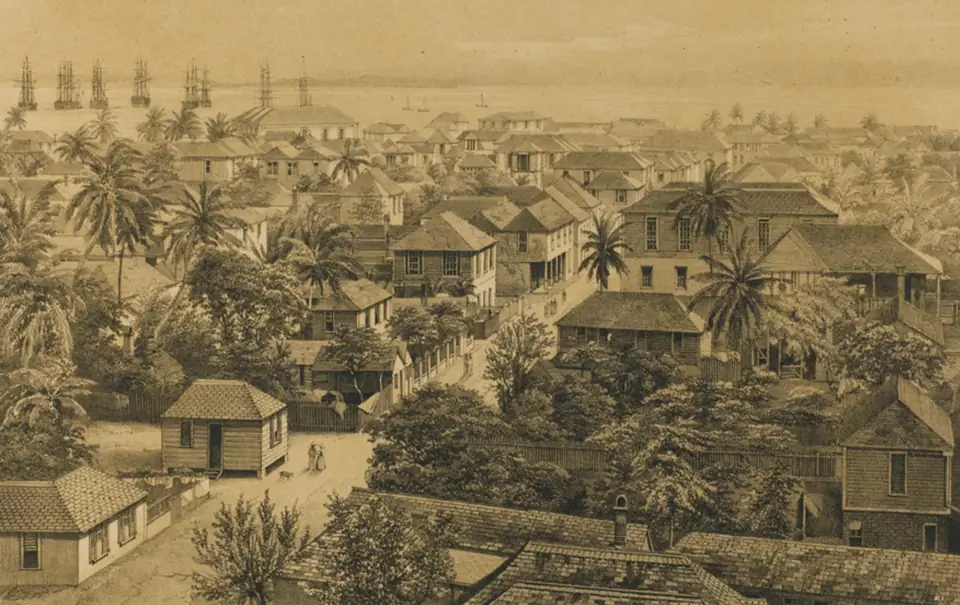
Begin with the older panorama below. It gives you the relationship between roofs, streets and sea. Then follow the chart and the named buildings. Falmouth becomes easier to understand when the view has people and work inside it.
Source & credit
Why the port grew here
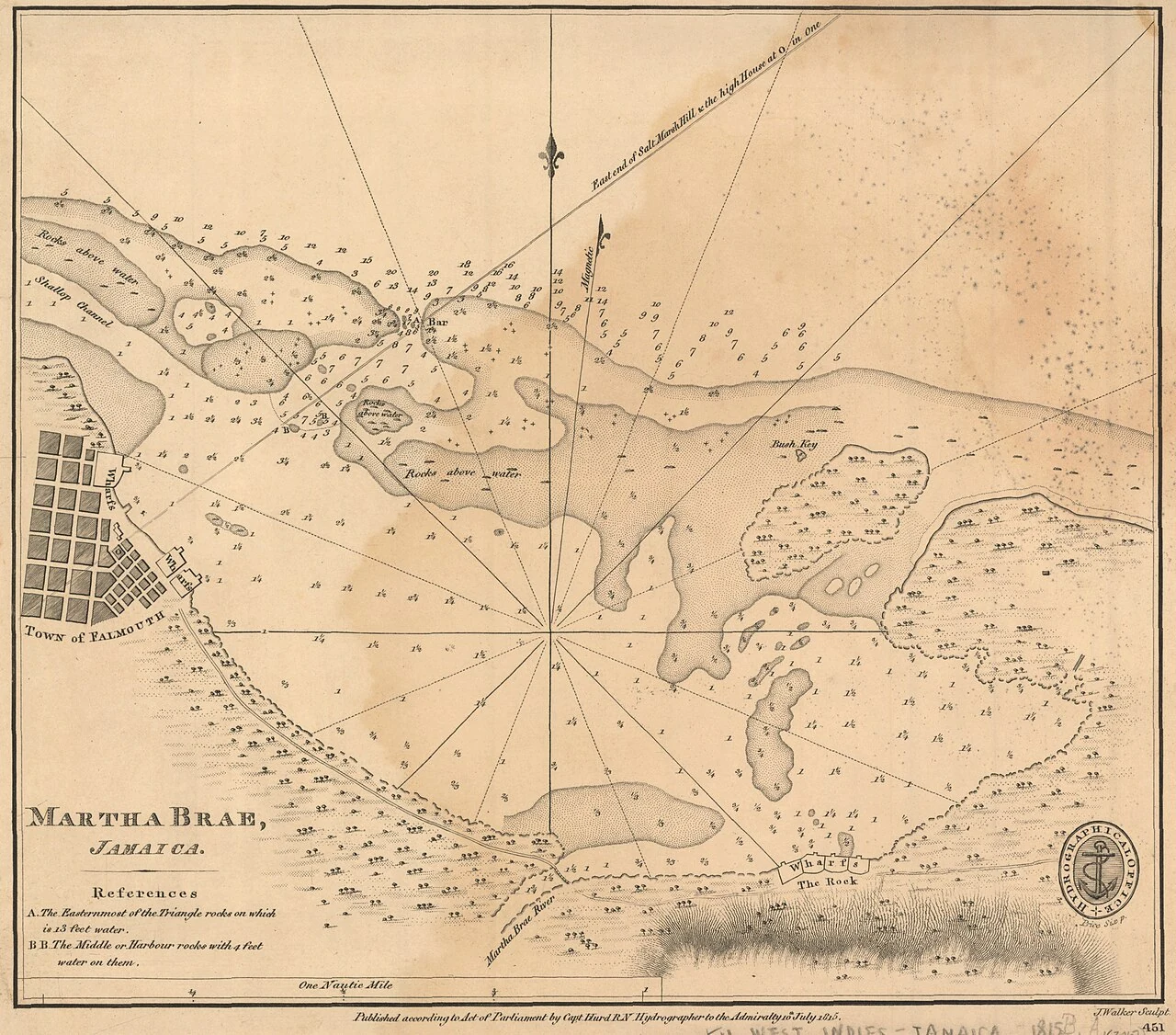
Trelawny became a separate parish in 1770. Its first capital was Martha Brae Village, inland along the river. Boats connected that settlement with larger vessels nearer the coast, but limited space and a difficult river mouth constrained its expansion. A growing plantation economy needed a more useful commercial centre. [1]
Falmouth developed on the Barrett family’s coastal lands. Its streets were divided into regular blocks and building lots. Look at the town beside the harbour on this 1815 chart: the grid and the water are parts of one arrangement. The river, the old capital and the port should be read together rather than as unrelated attractions. [1]
Source & credit
Wharves, warehouses and the estates inland
Sugar and rum went out through Falmouth; supplies for the estates came in. JNHT identifies Davis’, Jarrett’s, Tharp’s and Barrett’s wharves, later known by other names. John Tharp’s town house and wharf connected his plantation interests directly to the harbour. Good Hope, beside the Martha Brae, was part of his estate world. [2] [11]
The port also needed repair skills. The Phoenix Foundry, established around 1810, served estate machinery and ships. That makes the waterfront a place of practical labour as well as merchant wealth. The later shift to larger steamships, and the advantages of rail-connected competing ports, helped erode Falmouth’s earlier position. Its harbour could not cheaply accommodate every change in shipping. [2]
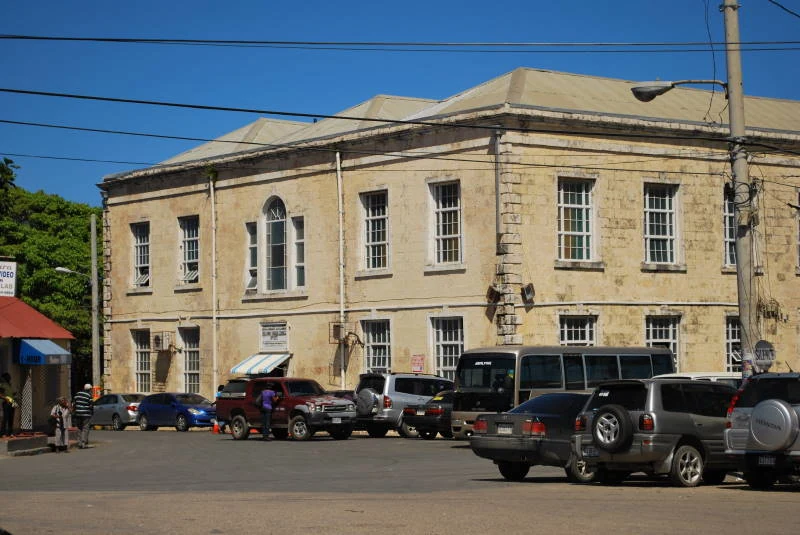
A town can lose commercial dominance without losing its people. The street photograph below records another stage of Falmouth’s life: vehicles and everyday activity beside a substantial older building, long after the sailing-ship economy had changed.
Source & credit
The Love family, the Neales and Mary Gairdner
Historian Jenny Jemmott identifies Isaac Love and his brother Thomas among Falmouth’s skilled free people of colour. The family worked in masonry and chair making and bought and sold town lots. She attributes the brick house at 1 Trelawny Street to Isaac. Their story joins craft skill to property and income. [3]
Thomas and Eleanor Neale lived above their tavern at 23 Duke Street. Business and household occupied the same building. But this is no uncomplicated success story: Jemmott reports that Thomas owned 96 enslaved people. Free status and African ancestry did not necessarily mean opposition to slavery. [3]
Mary Gairdner’s history adds a woman’s ownership and inheritance to the townscape. She held the house later associated with her son Thomas Davidson, at Charlotte and King Streets overlooking the harbour. These named households help us see a socially varied town. They also warn against treating all Black residents, free or enslaved, as having the same opportunities or interests. [3]
How water reached Water Square
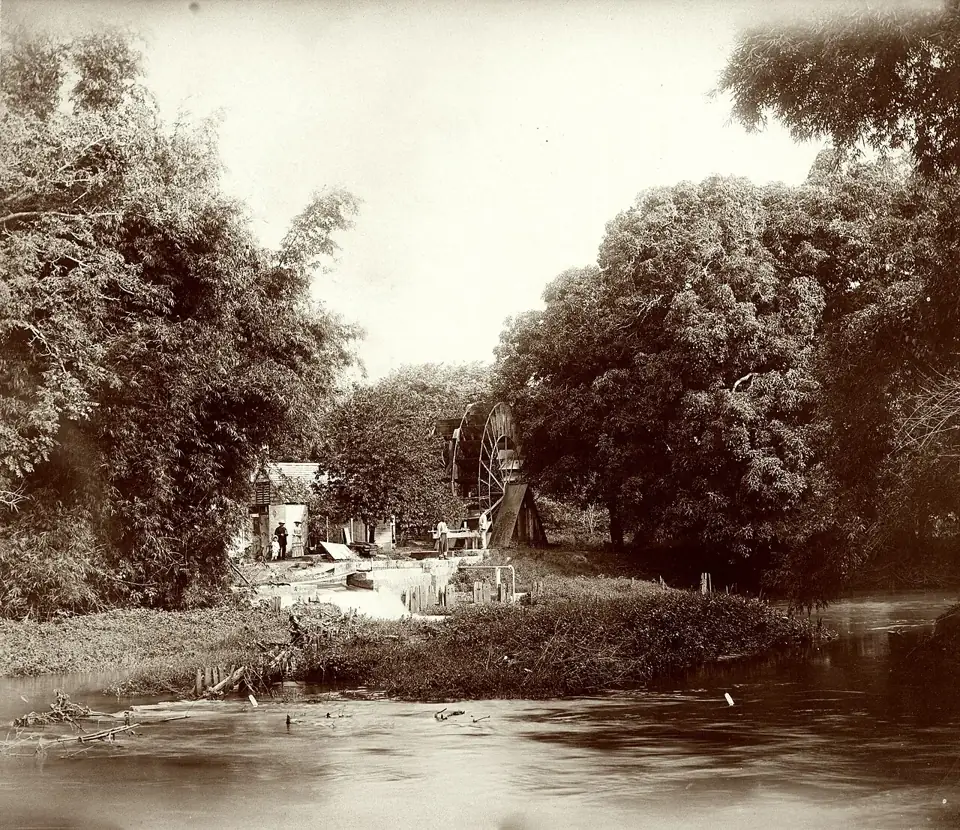
The name Water Square preserves an engineering story. JNHT dates the Falmouth Water Company’s Persian waterwheel to 1798. River flow turned a large upright wheel. Buckets carried water upward and tipped it into an elevated trough; gravity then moved it through an iron pipe to the town reservoir. This was a water-supply machine, not a cane-crushing wheel. [4]
The older photograph below shows the structure in its setting. In 2008, Falmouth Heritage Renewal and University of Virginia field-school students reconstructed parts of the apparatus, retaining original components and locating old pipework. The visible wheel therefore has a restoration history as well as an eighteenth-century origin. [4]
Source & credit
Look closely: Look for the relationship between machinery, water and surrounding vegetation. This is the Martha Brae water-supply wheel, not Tryall’s sugar works or Drax Hall.
The courthouse: authority, fire and rebuilding
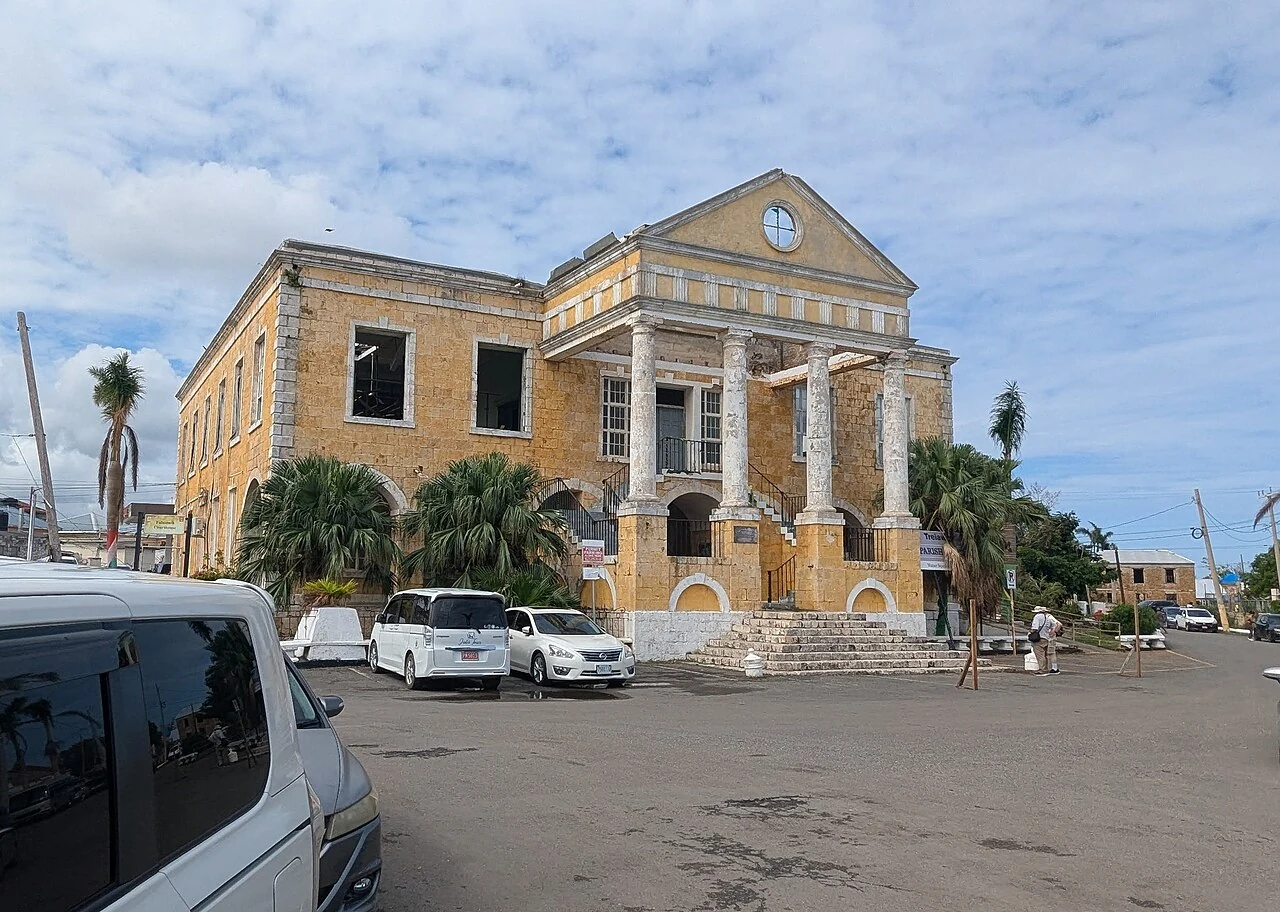
The courthouse gives public authority a prominent waterfront address. Its symmetry and repeated openings make it easy to recognise as a formal civic building. JNHT’s short entry dates it to 1815; its fuller town history describes construction beginning that August and finishing in April 1817. Fire severely damaged it in 1926, and it was rebuilt. [5]
The photograph shows the building in January 2026. It does not show an untouched structure carried unchanged from the sugar era. Repair and reuse are part of the history visible in Falmouth.
Source & credit
St Peter’s and the plantation connections in a church
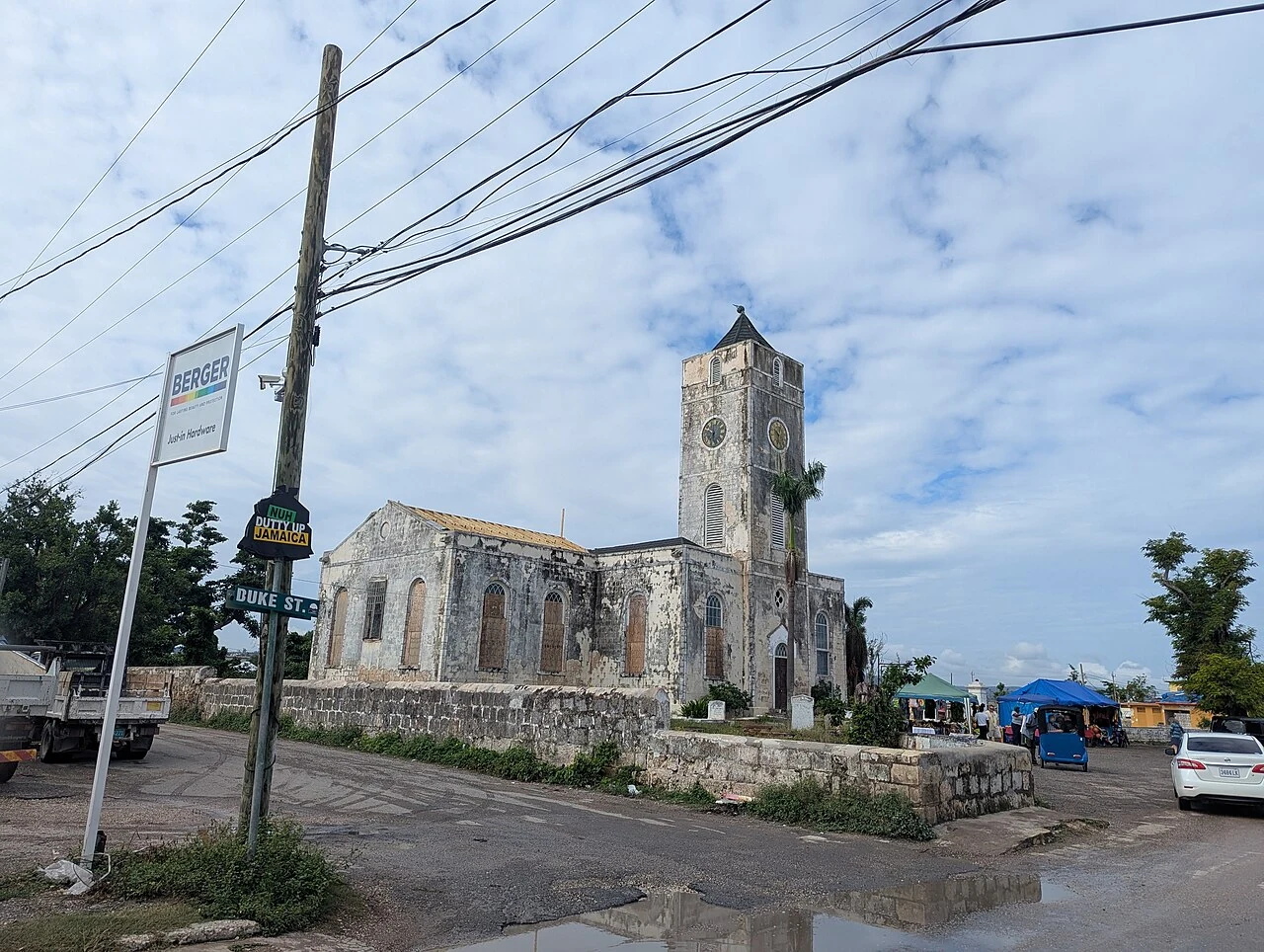
St Peter’s Anglican Church connects worship with the town’s landed wealth. Edward Barrett supplied its site; JNHT dates the building to 1795 and records an enlargement in 1842. It also identifies John Tharp as donor of the organ. Jemmott gives 1796 as completion, a small dating difference worth keeping visible. [6]
The churchyard and memorials preserve individual names, while the building’s materials and roof structure speak to the work needed to construct and maintain it. The January 2026 photograph below records substantial visible roof loss. It belongs to the church’s recent history, not to its original design.
Source & credit
William Knibb and the fight over freedom
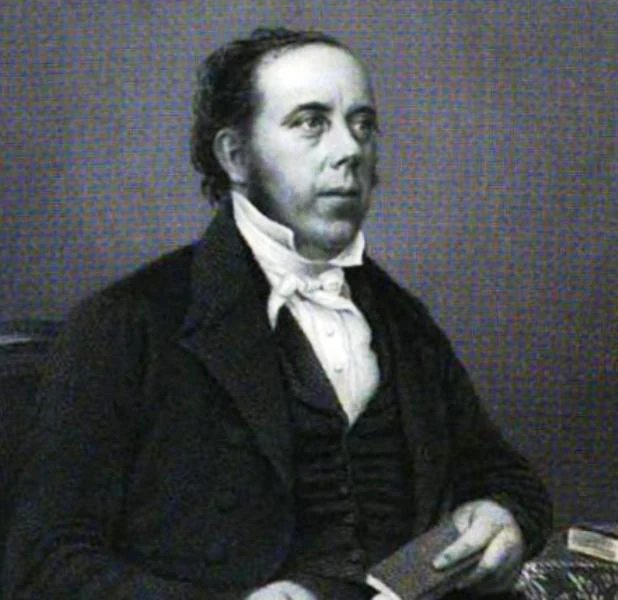
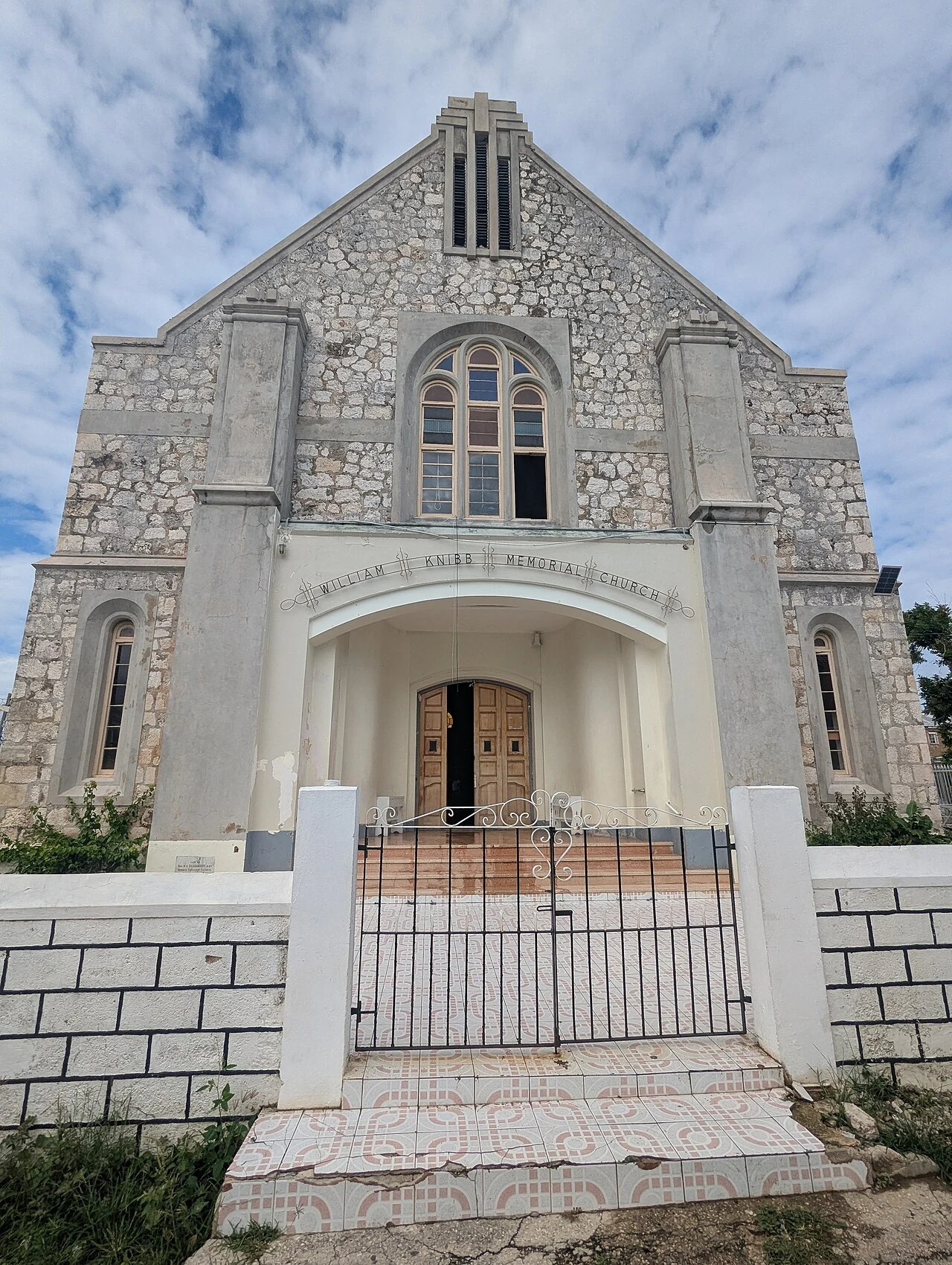
William Knibb was a Baptist missionary, husband of Mary Watkins and father in a family that had travelled to Jamaica. His public life became entangled with people whose religious gatherings and freedom were restricted. The National Library records his arrest after the 1831 rebellion, his successful defence and continuing harassment over his antislavery stance. [7]
Source & credit
One revealing case involved Sam Swiney, an enslaved man punished over an accusation of preaching without a licence. Knibb publicised the case. In 1832 he took his campaign to Britain, appearing before parliamentary committees and addressing audiences about slavery. Those actions matter more than a vague description of him as a benevolent missionary: he challenged the system in public. [8]
Keep the dates straight. Parliament passed the Slavery Abolition Act in 1833; the transition in 1834 imposed apprenticeship, with continued compulsory labour. Full emancipation followed on 1 August 1838. Enslaved Jamaicans’ own resistance belongs at the centre of this change, alongside the campaigning of allies such as Knibb. [9]
Source & credit
Keep the smaller buildings and living voices in view
Falmouth’s importance extends beyond a handful of monuments. The University of Virginia’s Falmouth Project surveyed 764 buildings within the historic district, recording form, materials, photographs and condition in 2008. A small house can hold evidence of household life and building practice as surely as a grand civic facade. That survey is a dated architectural record, not a statement of every building’s condition today. [10]
The wider parish also has a sound history. The recording below takes us to the Deeside area in 1952, where named speakers described work. It is a connection to Trelawny’s countryside, not a recording of nineteenth-century Falmouth dockworkers.
Give the town time
Allow an estimated two to three hours for an unhurried town visit with a local guide, shade breaks and conversation. Use the courthouse and waterfront, Water Square, St Peter’s surroundings and the Baptist church area as possible points in a route confirmed locally. Building entrances, walking surfaces and storm repairs need checking separately.
Tony’s Call: Ask your guide for the Love family and the Neales as well as Barrett and Tharp. Look at the town’s water system and ordinary buildings alongside its courthouse. Falmouth becomes a much richer place when its residents have names.
Read the documented Melissa aftermath → · Continue to Good Hope’s estate history → · Orange Valley’s estate hospital →
Sources and notes
- Jamaica National Heritage Trust, Falmouth: parish formation, Martha Brae and the street plan.
- Jamaica National Heritage Trust, Falmouth Wharves: named wharves, foundry, cargoes and changing shipping.
- Jenny Jemmott, The Parish History Project: The History of Trelawny, p. 70: Love, Neale and Gairdner households. The named property and ownership accounts are reported from this history, not a fresh transcription of their deeds.
- Jamaica National Heritage Trust, Persian Water Wheel: machinery, installation and 2008 reconstruction.
- Jamaica National Heritage Trust, Falmouth Court House: Georgian form, 1815 and 1926 fire. The fuller town history gives construction August 1815–April 1817.
- Jamaica National Heritage Trust, Trelawny Parish Church: 1795 date, 1842 extension and Tharp organ. Jemmott, p. 76, instead gives completion in 1796; the dates are not silently treated as identical.
- National Library of Jamaica, William Knibb (1803–1845): family, arrest after the rebellion and death.
- Jamaica Information Service, Champions of Emancipation, William Knibb: Sam Swiney case and 1832 British campaign. This page contains erroneous references to an 1832 Emancipation Act and the seventeenth century; neither is adopted here. See the parliamentary chronology below.
- UK Parliament, The West Indian colonies and emancipation: 1833 Act, apprenticeship and full freedom in 1838.
- University of Virginia Scholars’ Lab, The Falmouth Project: survey of 764 buildings, with photographs, form, materials and condition assessed in 2008.
- Jamaica National Heritage Trust, Good Hope Great House: estate, Martha Brae and John Tharp.