JAMAICAN HISTORY · PHOTOGRAPHS AND THE RECORD
Up Park Camp: the barracks beside Kingston, and the city around them
Three archival views open a history of military land, water, community and the change from colonial garrison to Jamaican institution.
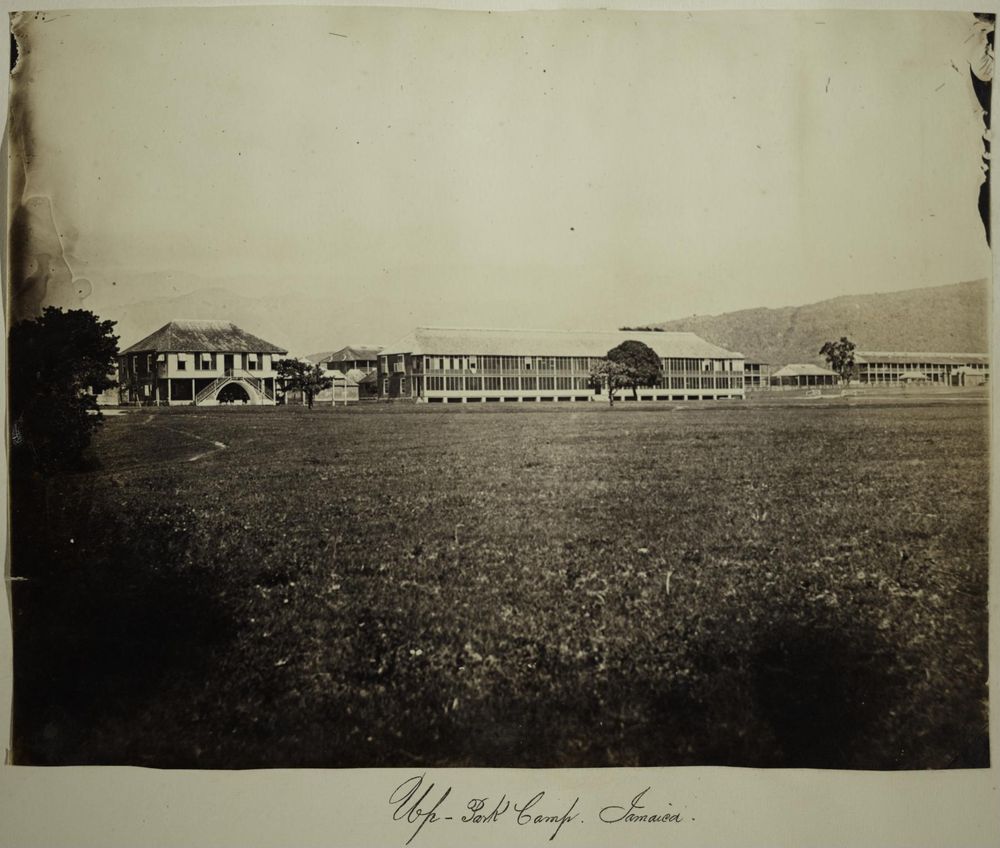
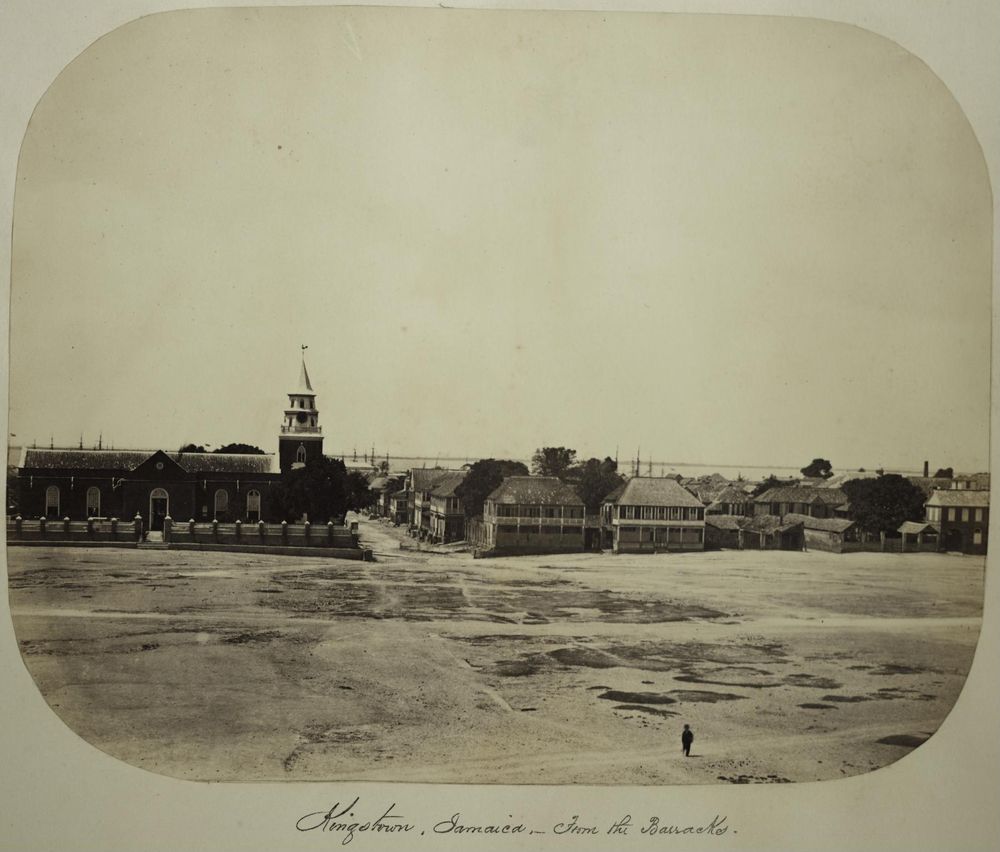
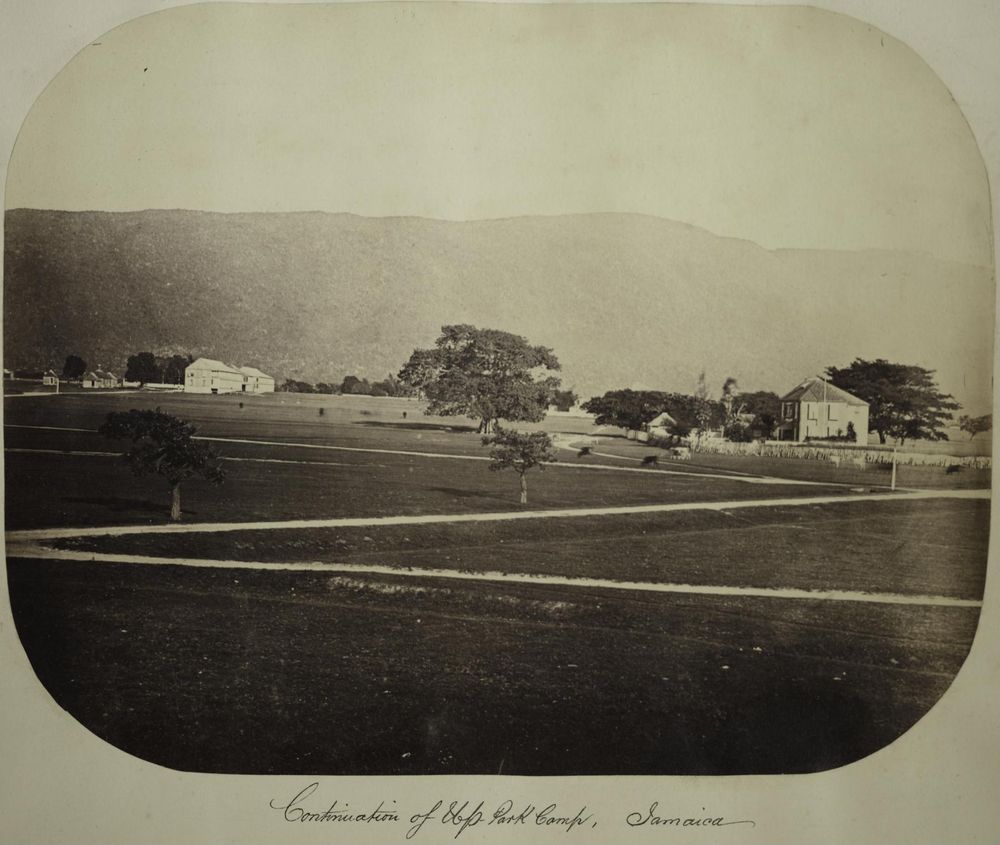
One image is titled simply “Up-Park Camp”; another continues its view. A third looks towards Kingston from the barracks. Read together, they place a military establishment beside a city rather than presenting it as an isolated collection of buildings. These three nineteenth-century views connect the camp to the city around it. [1]
These three photographs come from Princeton University Library’s Gulland album, catalogued 1860–1880.
Source & credit
A long military presence, with changing purposes
The National Army Museum describes Up Park as the British military headquarters in Jamaica from the 1780s and a base of the West India Regiments. Frank Cundall’s Historic Jamaica, published for the Institute of Jamaica in 1915, dates the conveyance of Up-Park Pen to the Crown to 1784. These accounts identify the eighteenth-century roots of the site; they do not date the individual photographs in Gulland’s album. [2] [3]
The Jamaica Defence Force dates its formation to 31 July 1962. The nineteenth-century photographs therefore show an earlier, British phase in the life of a site that became part of independent Jamaica’s military history. [4]
The city seen from the barracks
Source & credit
Seen from the barracks, Kingston spreads beyond the camp’s boundaries. Buildings, roads and open spaces make the military establishment part of a larger urban landscape. The view helps explain the close geographical relationship between garrison and city.
Water was a question of government as well as engineering
Cundall recounts disputes over providing water to Up Park in the early nineteenth century. In his account, the Assembly resisted extraordinary spending because the barracks were under British government control, while adjoining land with a well was acquired. The episode makes an important point: keeping a camp supplied involved arguments over who was responsible and who should pay. [3]
Cundall’s 1915 account places the camp’s buildings within the practical politics of supply. Read beside the photographs, the water dispute connects military accommodation with land, infrastructure and public spending.
Beyond the parade ground
Source & credit
The JDF’s history of the Garrison Church notes an earlier building used for both church and school that was destroyed in the 1907 earthquake, followed by a church at a new site dedicated in 1912. Its account also describes a memorial to officers, soldiers, women and children lost in the earthquake. Those details widen the history beyond uniformed men alone. [5]
The church history extends the camp’s story into worship, schooling, households and remembrance. The earlier photographs and the later memorials show successive parts of that institutional life.
From a colonial base to a Jamaican institution
The National Army Museum identifies Up Park as the Jamaica Defence Force headquarters after independence; the JDF’s own history explains its formation and its relationship to earlier units. Institutional continuity should not erase the change from an imperial garrison to a force serving an independent state. [2] [4]
For readers exploring Kingston’s history, the useful question is how the camp related to the city around it: land, water, labour, movement and public authority. Check current access arrangements with the JDF before visiting.
Sources and image provenance
- Princeton Gulland album: Kingston and Up Park Camp, leaves 15–17. Catalogue range 1860–1880; individual exposure dates unconfirmed.
- National Army Museum: Silk Cotton Tree, Up Park Camp, circa 1868. Institutional historical context only; that separate museum photograph is not reproduced here.
- Frank Cundall, Historic Jamaica (1915), St. Andrew chapter, pp. 225–227. Retrospective colonial-era account; land and water-supply claims are attributed.
- Jamaica Defence Force: History. Formation on 31 July 1962 and institutional predecessors.
- Jamaica Defence Force: Garrison Church of the Ascension. Earlier church/school, 1907 earthquake and later memorial landscape.
- Princeton Special Collections: copyright, credit and citation policy. The institution requires no publication permission or usage fee and requests credit. No Known Copyright is its assessment, not a worldwide warranty.