Tryall’s waterwheel: the work behind an estate landmark
The waterwheel carries Hanover’s sugar history into a landscape now associated with recreation. Follow the channel, the industrial remains and the labour the scenery can conceal.
See the estate before the leisure landscape
JNHT places Tryall between Hopewell and Sandy Bay in Hanover. Its account identifies sugar-works ruins, a cast-iron waterwheel, an old boiler, a brick chimney and nineteenth-century gravestone fragments. Together these remains describe a working estate rather than a single attractive object. Their location within a later recreational property does not make the plantation past irrelevant; it makes changes of use part of the story. The heritage account is not a current operating report for the wheel. [1]
A leisure landscape retained the machinery of another economy
Tryall’s waterwheel makes an earlier productive system visible within a place now associated with recreation. Water power helped turn cane processing into estate output. That technical work belonged to a larger arrangement in which enslaved labour produced the crop and sustained the property.
Changing use can make that connection less obvious without removing it. A machine preserved as a landmark is encountered differently from a machine operating within a sugar works. Its history becomes clearer when the account restores the process and the people around it. The visitor then sees both the surviving engineering and the profound change in what the surrounding landscape is being used to provide. [source]
Source & credit
Water supplied power; people supplied labour
The mill’s rollers needed energy, but the estate also needed cane cultivation, harvesting, hauling and processing. JNHT’s sugar-works overview distinguishes the mill and other production buildings. Apply that process to the Tryall remains: the wheel, boiler and chimney belong to different tasks. Seeing them as a system keeps the human work in view. Water power could increase productive capacity without removing the coercion through which estate labour was organised. [2]
A university exhibition makes the link explicit
Colgate University’s Wicked Commerce gallery guide includes Tryall’s wheel and aqueduct in its discussion of enslaved labour and plantation landscapes. It gives an early construction date, but that does not date every surviving iron component or later repair. This article therefore uses the documented slavery connection while keeping the age of the current fabric separate. A historical origin, a replacement and a restoration can all belong to one structure’s life. [3]
Do not call the house a wheel
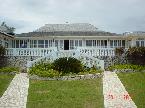
The JNHT source photograph reproduced here shows the estate house. It is a later view of a residence, not a photograph of the waterwheel, the works or enslaved workers. This distinction matters because house photographs often dominate plantation heritage. Ask what another view would need to show: water supply, power transmission, working spaces and the people’s settlement. A house can locate the estate, but cannot stand in as evidence of every feature on it. [1]
Maintenance is historical work too
A wheel that survives requires interpretation as well as conservation. Which pieces have been replaced? When was the channel repaired? Does a turning wheel demonstrate a historical process or serve a modern display? These are practical questions for a custodian; an old web description cannot answer them reliably today. They also distinguish the inheritance of a route and mechanism from the assumption that a complete eighteenth-century machine stands untouched.
Compare two Hanover estates
Kenilworth’s industrial ruins provide a useful parish comparison. Tryall and Kenilworth should not become interchangeable “great-house stops”: their remains, ownership histories and later uses differ. Read the Kenilworth article and choose one industrial feature to compare. Then ask what evidence each place offers about workers’ lives beyond production. The absence of an obvious workers’ house is a reason to seek maps and records, not to conclude that ordinary households had no history.
Try the history yourself
List the wheel, boiler, chimney and house. Give each a possible function and identify which you have actually seen in a photograph. Ask a custodian which surviving parts are original and which have been repaired or replaced.
Explore with care
Contact the property before visiting industrial remains. Confirm access, any guide arrangement and safe viewing distance from machinery and channels. A golf or accommodation booking does not automatically grant access to every heritage feature.