Marshall’s Pen: coffee work, household yards and a birding landscape
Location: Marshall’s Pen, Manchester, Jamaica
Explore area in Google Maps ↗Map search for the named place or area. Arrange the actual entrance, guide meeting point and access with your host; this is not a confirmed tour departure.
Near Mandeville, an estate’s coffee remains and archaeological research sit beside a private nature reserve. The history becomes stronger when the house is only the beginning.
A pen is more than a picturesque name
JNHT links the property’s name with its earlier cattle use and describes surviving coffee-related structures. The owner’s account now identifies a private residence, nature reserve and cattle farm. Those different uses belong in one landscape history without implying a single unchanged enterprise. Ask how production, settlement and conservation relate over time, rather than describing the estate solely as a handsome old house near Mandeville. [1] [2]
A coffee landscape held several kinds of work
The coffee-processing remains connect the house to production, while the village archaeology directs attention toward the people whose domestic life accompanied that work. Both are needed to understand an estate. The house concentrated status; processing structures and household traces reveal different parts of the labour and living that sustained the property.
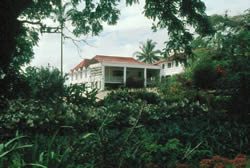
Later cattle, residence and conservation uses changed what the landscape was for without making its earlier layers vanish. A birding visit and an archaeological account can therefore concern the same place through different histories. Marshall’s Pen becomes more intelligible when those uses are connected across time, rather than when the estate is reduced either to a handsome house or to an apparently timeless nature reserve. [1] [2] [3]
Source & credit
The heritage page contains a date problem
JNHT says an Earl of Balcarres bought the property in 1755 while governor. The owner’s history instead places the great house in the early nineteenth century and associates it with the Earl of Balcarres and Crawford. These are not equivalent statements about the same event. The purchase date and building phases remain unresolved by these conflicting accounts. [1] [2]
Coffee left structures, not just a reputation
The Trust describes a surviving barbecue, former mill and a wheel component, with storage and factory buildings adapted for other uses. Here “barbecue” belongs to coffee-processing infrastructure, not a restaurant promise. That vocabulary deserves explanation because an unfamiliar industrial term can otherwise turn a place into the wrong kind of attraction. The architectural remains point to work once organised around the crop, while later adaptations show that buildings did not necessarily vanish when their original use ended. [1]
Household archaeology widens the view
The published abstract of Variation within the Village reports research at Marshall’s Pen comparing house-yard compounds and their non-uniform organisation. The chapter abstract describes that finding. It challenges the assumption that enslaved housing can always be represented by one standard row of identical huts. Differences in spatial organisation are a subject of investigation, not automatic proof of wealth, freedom or a named family’s intentions. [3]
A yard could be a place of activity
A house footprint alone cannot explain the daily life of its occupants. Archaeologists investigate the surrounding space and the distribution of materials as well as walls. In a local learning session, ask how researchers distinguish work, cooking, disposal and movement, and which evidence supports an interpretation. The point is to understand the method, not to assign every artifact an appealing story. Compare Marshall’s Pen with Good Hope’s surveyed village and archaeological sampling.
The modern reserve has a different purpose
Ann M. Haynes-Sutton’s site describes birding and house visits by appointment and provides an eBird link for recorded observations. A list of species reported on a property is not a promise that each bird will appear during your visit. Note the difference between a site’s cumulative record and the observations on a particular morning. This makes birdwatching a useful learning activity about evidence as well as an enjoyable experience. [2]
A dated owl image adds a later layer
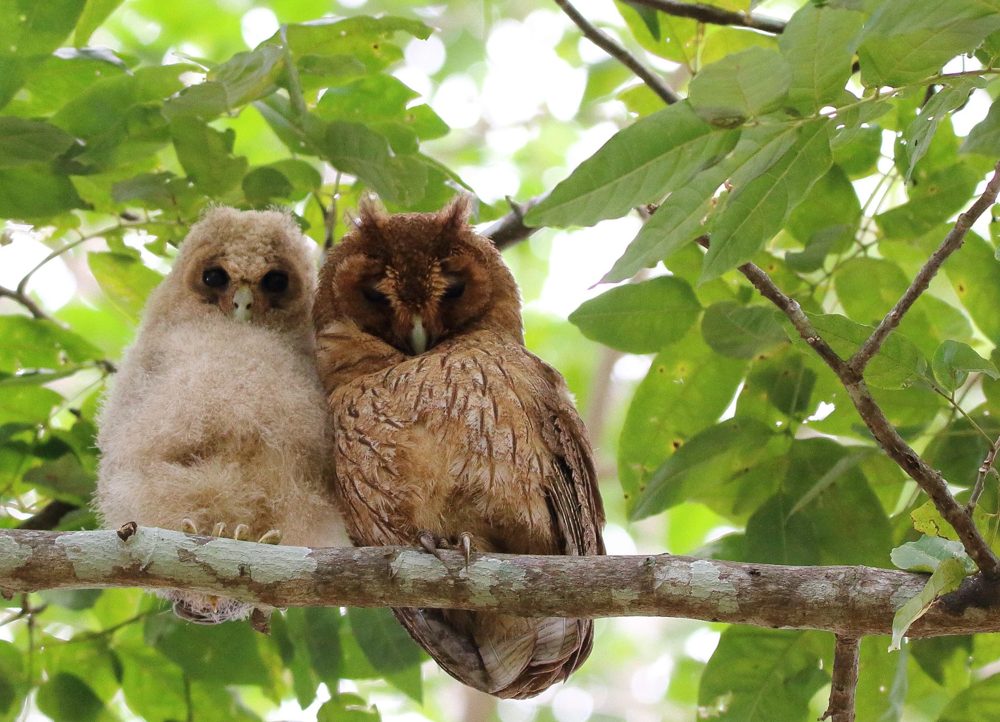
The owner’s page identifies the owl photograph as a downy chick and adult at Marshall’s Pen in March 2017. It belongs to the reserve’s later natural-history record, not the plantation period. Compare the image with the great-house view: they show different subjects at the same named place. Neither erases the other history. Respect the host’s instructions around nests and wildlife, and do not use the photograph as an invitation to seek out or disturb that location. [2]
Source & credit
Read the estate as three connected enquiries
Make a page with coffee production, household archaeology and present natural history as separate headings. Put a documented structure, research question or observation under each. Then ask how a guided visit could connect them without forcing them into one story of progress. The distinctive opportunity at Marshall’s Pen is to understand land use and ordinary lives alongside the skills of observing a living landscape.
Sources and notes
- Primary institutional account identified and attributed in the narrative. ↩
- Owner/manager Ann M. Haynes-Sutton: property history, private reserve, appointment arrangements and dated owl image. Precise early ownership chronology not reconciled here. ↩
- Variation within the Village: Housing Enslaved Laborers on Coffee Plantations in Jamaica. Publisher-indexed abstract only; full chapter retrieval failed. Limited finding about house-yard variation retained. ↩