Hope Aqueduct: water carried into the slavery economy
An arch beside a modern city can reveal how law, water and machinery served a sugar estate—and how infrastructure outlived the system that built it.
Start with the arch, then find the river
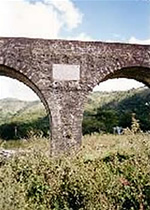
Hope Aqueduct is a channel carried on masonry supports. JNHT connects it to Hope Estate and a private bill passed in 1752 permitting Thomas Hope Elletson to take water from the Hope River to power sugar-grinding mills. The site record reports a plaque dated 1758. Permission, construction and a dated inscription are three different pieces of the chronology. The surviving structure carries an estate history into urban St. Andrew; its presence is more informative than a picturesque photograph alone. [1]
Control of water could increase control of production
Water carried through an aqueduct was a productive resource, not simply a benefit bestowed on a landscape. At Hope it connected engineering and legal authority to the operation of a sugar estate. The arches made a continuing flow possible; the estate used that flow within a labour system built on enslavement.
The surviving infrastructure can consequently tell a history larger than technical ingenuity. Diverting and conveying water involved decisions about rights, investment and work. Its later place beside a modern city creates another relationship with the same fabric. What now appears as a remnant in an urban setting once formed part of a system for producing value from land and coerced labour. [source]
Source & credit
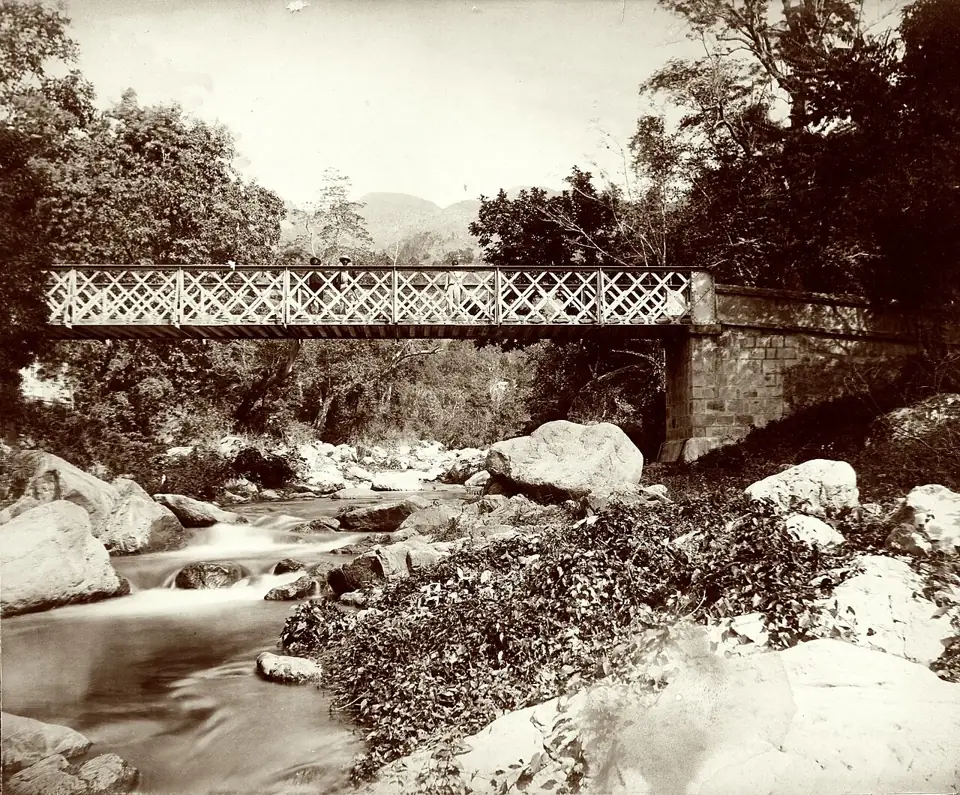
Look closely: This is a river bridge, not Hope Aqueduct. Compare a crossing with a structure that carried water: similar masonry in an image does not establish the same function or site.
Source & credit
Water power did not replace enslaved people
JNHT’s account of sugar works separates the mill from boiling, curing, trash and still houses. A wheel could turn rollers, but cane still had to be grown, cut, moved and processed. Follow the material from stalk to juice to sugar and rum rather than imagining that mechanisation made production humane. The aqueduct belongs to a plantation system organised through coercion. This is a relationship between a surviving structure and a documented industry, not a claim that we know the name or legal status of every individual mason. [2]
The bill is part of the machinery
A watercourse is a shared landscape; an estate’s right to divert it is a political decision. The 1752 permission therefore deserves attention alongside the brickwork. Ask who could secure a private act and who had to work within the economy it supported. The bill’s existence establishes an authorised use, but does not by itself answer downstream questions about neighbouring households or the volume diverted. Those require river surveys, estate papers and legal records. [1]
An aqueduct has a second life
The JNHT account describes later Water Commission use and records national-monument designation on 6 January 2005. These are later histories, not evidence that today’s water service operates through slavery. Nor is an undated heritage page a live engineering report. The useful continuity is physical: infrastructure designed for estate production can survive and acquire another public purpose. Current operating condition and access should be checked independently before a visit. [1]
Read repair as well as age
At an old aqueduct, ask where masonry has been repaired, where a channel is covered and which parts remain visible. A structure’s eighteenth-century origin does not make every brick eighteenth-century. Repairs can preserve a useful route while changing its fabric. An honest caption names the surviving site and separates construction history from the date of the photograph. Here the source photograph’s maker and capture date are not supplied; it is a later view, not evidence of a plantation workforce.
Keep the workers in the frame
Compare Hope with Mona’s estate remains. The important connection is the working system—water, energy, land and labour—not a claim that their structures are identical. At both, a visitor can ask why industrial remains may survive more visibly than workers’ houses. That imbalance affects the stories a place seems to offer. Choosing to discuss labour beside an arch is a small but meaningful correction to a heritage account made only of owners and engineering.
Try the history yourself
Draw a simple process chain: river → channel → mill → processing rooms. Under each stage, write a task that would still require people. Circle the point at which an official decision controls a natural resource.
Explore with care
Ask about lawful access and a safe viewing position. Stay out of channels and behind barriers; monument status does not establish a visitor route. Combine this reading with the Mona article rather than assuming a staffed aqueduct tour.