Mona: plantation water, wartime shelter and the making of a university
Location: Mona, St. Andrew, Jamaica
Explore area in Google Maps ↗Map search for the named place or area. Arrange the actual entrance, guide meeting point and access with your host; this is not a confirmed tour departure.
At Mona, a campus landscape contains several histories at once. Follow the waterworks, examine a wartime camp photograph, then distinguish reused barracks from a chapel moved from another parish.
A campus with a longer past
UWI’s account places Mona and Papine estate works within the landscape that became the university campus. It describes an aqueduct bringing water from the Hope River to several estates. The water was part of a production system, not simply a picturesque feature. Follow the relationship between river, channel and works before treating masonry as an isolated monument. A modern campus can preserve fragments of an older arrangement while obscuring the labour and land relationships that gave it purpose. [1]
A campus inherited more than buildings
Mona’s successive uses joined very different projects on the same land: estate production, wartime accommodation and a Caribbean university. Reusing buildings made a new institution materially possible, but it also meant the campus inherited structures whose earlier purposes could fade from view.
The chapel makes that inheritance unusually tangible. Factory fabric travelled from Gale’s Valley in Trelawny and was reassembled for worship at Mona. Its new use did not erase the older labour economy to which the stones had belonged. Nor does that origin define everything the university became. The campus shows Jamaicans and other Caribbean people making new institutions from an inherited landscape, preserving some material while changing what it was for. [1] [4]
Source & credit
Do not make every old building the same building
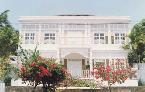
JNHT identifies Mona great house as a Georgian estate residence with an estate history beginning in 1681. Its source photograph belongs to that building. It does not illustrate the university chapel or prove that the photographed house is open to the public. Read the house and the waterworks as distinct parts of an estate landscape. Their relation needs a map and records; an attractive shared name is not enough to collapse them into one visitor attraction. [2]
War brought another use of the land
UWI describes Gibraltar Camp at Mona as accommodation for evacuees from Gibraltar and Jewish refugees from Spain and Portugal, followed by other wartime uses. That history connects Jamaica with displacement well beyond the Caribbean. A camp is not merely a convenient transitional stage between plantation and university. It was a place where people lived through uncertainty, and its own household histories deserve study. Do not assume everyone accommodated there had the same nationality, legal status or experience. [1]
Read the photograph with its archive label
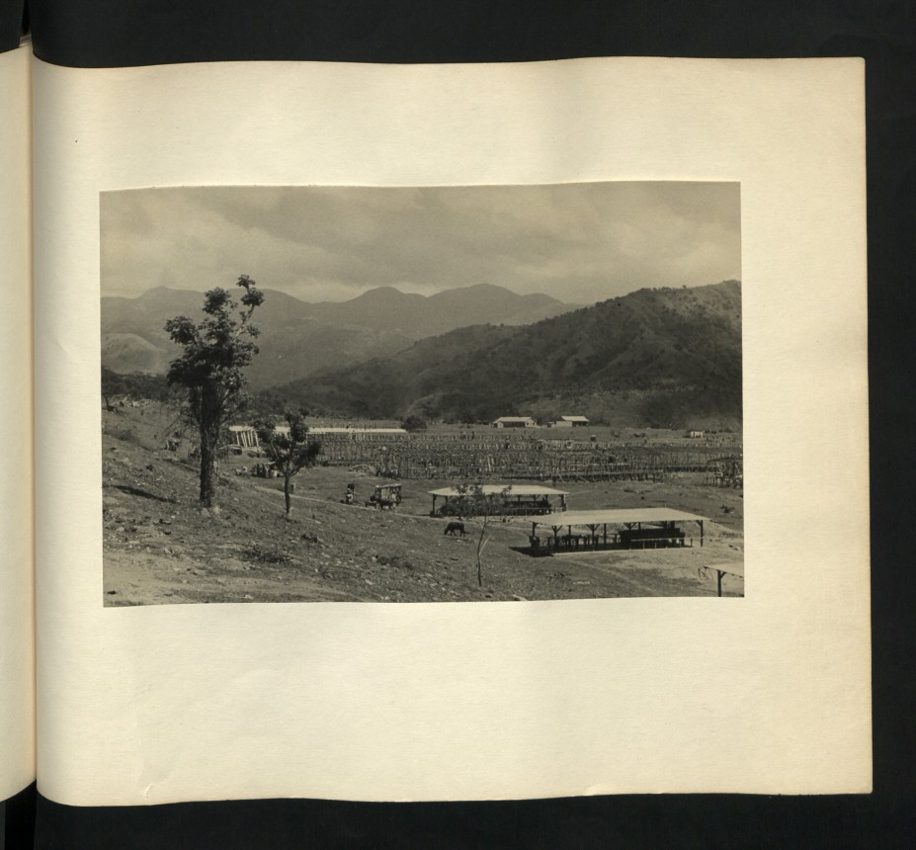
The National Archives’ Flickr record identifies the inline album photograph as Gibraltar Camp, Jamaica, with an archival date range of 1940–1941 and reference CO 1069/371, item 76. The photograph shows low buildings in a landscape. The catalogue does not identify each building’s function or the people who used it. Keep the whole album page visible: its arrangement is part of the surviving archival object. A date range should remain a range rather than becoming an invented day. [3]
Source & credit
A camp became the first campus
UWI’s institutional history describes the reuse of barracks for early university teaching and residence. It records the first 33 medical students in October 1948 and the university’s independent degree-granting status in 1962. This sequence makes adaptation central to the story. The new institution did not begin with an entirely new architectural landscape. Students and staff worked in buildings inherited from a recent emergency, while developing an institution with a different purpose. [1]
The chapel arrived from Trelawny
The university’s chapel history identifies the building’s older fabric as originating in a sugar factory at Gale’s Valley, Trelawny, dated 1799. Stones were dismantled, numbered and transferred for reconstruction at Mona in the 1950s. The first service took place in June 1959, with dedication in February 1960. This is a crucial distinction: the chapel is not simply Mona’s original plantation factory converted in place. Its material journey links two parishes. [4]
Reuse can preserve and change meaning
A factory reconstructed as a chapel acquires a new function, audience and atmosphere. A barrack adapted for teaching does the same in a different way. Such transformations can preserve useful fabric while making the earlier use less obvious. On a heritage walk, ask which elements stayed in their original location, which were moved, and which were reconstructed. That question makes the campus legible as several historical processes rather than a collection of buildings of vaguely similar age.
Make three maps of one place
Use a campus map as a starting point, then annotate three layers: estate production and water, wartime accommodation, and university use. Mark uncertain locations rather than guessing from the archive photograph. Compare the chapel’s Trelawny origin with the local great house and the camp image. A guided campus heritage enquiry can then become an exercise in spatial history, showing how institutions inherit land, materials and memories without inheriting a single uncomplicated story.
Sources and notes
- Primary institutional account identified and attributed in the narrative. ↩
- JNHT: Mona great house, estate origins and private-property description; source of the first photograph. ↩
- The National Archives UK on Flickr: Gibraltar Camp, Jamaica, 1940–1941, CO 1069/371 item 76; no known copyright restrictions label. ↩
- UWI chapel history: 1799 Gale’s Valley factory fabric, transfer and reconstruction, first service and dedication. ↩