Negro World: the people who made Garvey’s newspaper travel
A 1920 front page leads to printers, convention delegates, women organisers and readers who carried a Jamaican-led movement across borders.
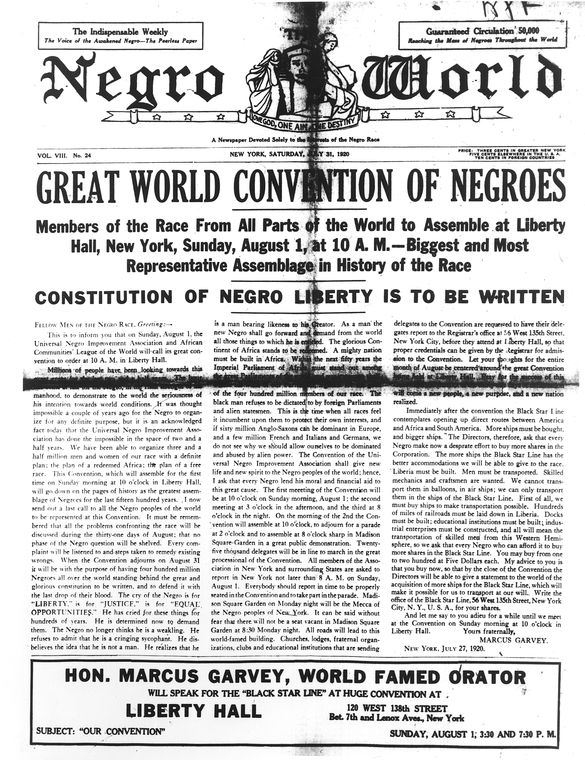
On 31 July 1920, the front page of Negro World called readers towards a gathering that had not yet happened. The headline announced a world convention and a proposed constitution of liberty. It turned an ambitious political project into an invitation that could travel. A month later the movement would use the same newspaper to announce decisions and demand allegiance to new leaders. The page belongs at that moment between anticipation and action. [1] [3]
Source & credit
The editor had learned a trade in Jamaica
Marcus Garvey was not simply a politician who discovered the usefulness of a newspaper. He had trained as a printer with his godfather in St. Ann’s Bay. The Marcus Garvey and UNIA Papers project places that skilled trade beside the farming and artisan world of his Jamaican upbringing. In New York, where he arrived in 1916, print became part of an effort to organise Black people across national boundaries. [2]
A newspaper could carry an appeal further than a speaker’s voice reached in a hall. It could also return each week, with reports, arguments and instructions. This is where the trade mattered to the political vision: an organisation needed words set into type, a product made and distributed, and readers who might turn a distant appeal into a local meeting. The international movement depended on practical work as well as the authority of its leading speaker.
The convention proposed rights and claimed authority
The featured issue is volume 8, number 24, with Garvey identified as editor in the Schomburg Center’s catalogue. Its 31 July date places the announcement just before the August 1920 convention. The Papers project connects the annual choice of 1 August with emancipation’s anniversary in the British West Indies. A Jamaican historical date became part of a movement’s international calendar. [1] [2]
Source & credit
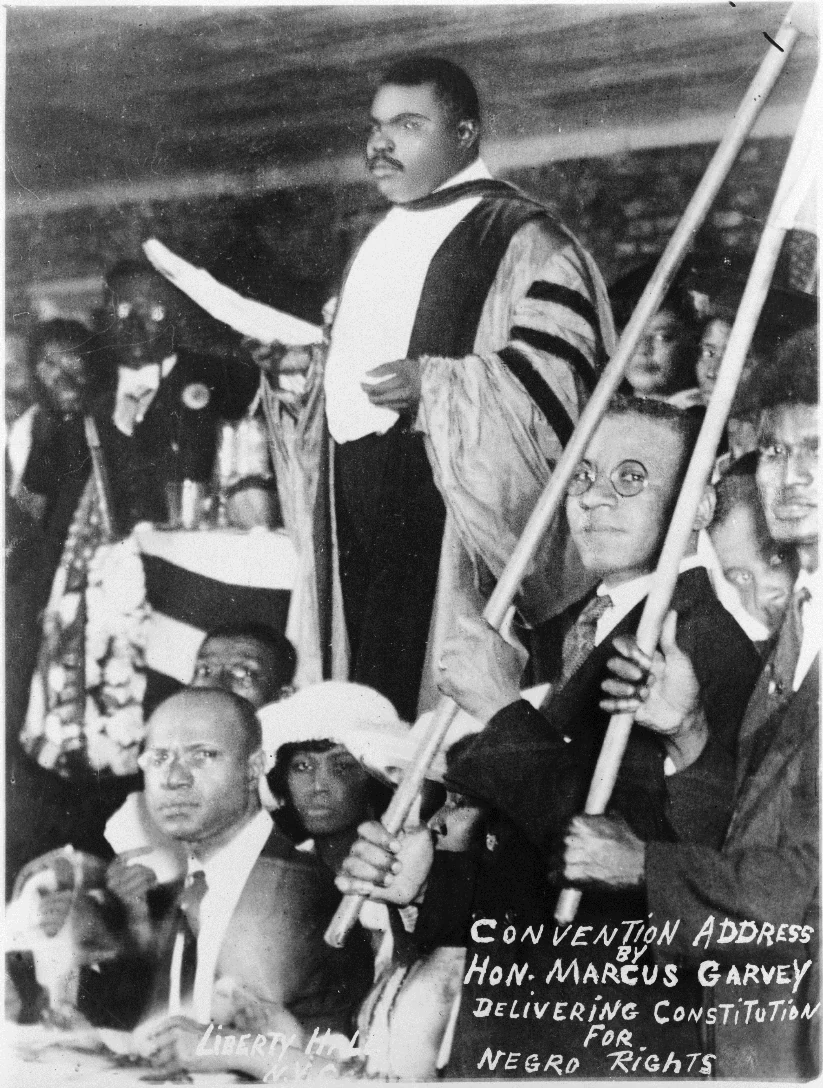
The convention adopted a Declaration of Rights of the Negro Peoples of the World. Its demands included freedom of the press and speech, self-determination, educational opportunity and the teaching of Black history. Its complaints linked exclusion from government and unequal treatment to a wider international problem. These were political demands from a movement asserting Black people’s rights; adoption by the convention did not make them binding law in the countries it addressed. [4]
Garvey’s editorial letter dated 1 September, printed on 4 September, reported a convention sitting through August and presented its elected dignitaries. Gabriel Johnson was named Potentate and Garvey Provisional President of Africa. The letter asked readers to accept a centralised leadership. Read that claim as the organisation’s assertion of authority, not evidence that every Black person recognised it or that Garvey governed an existing African state. [3]
The newspaper had a workplace and many contributors
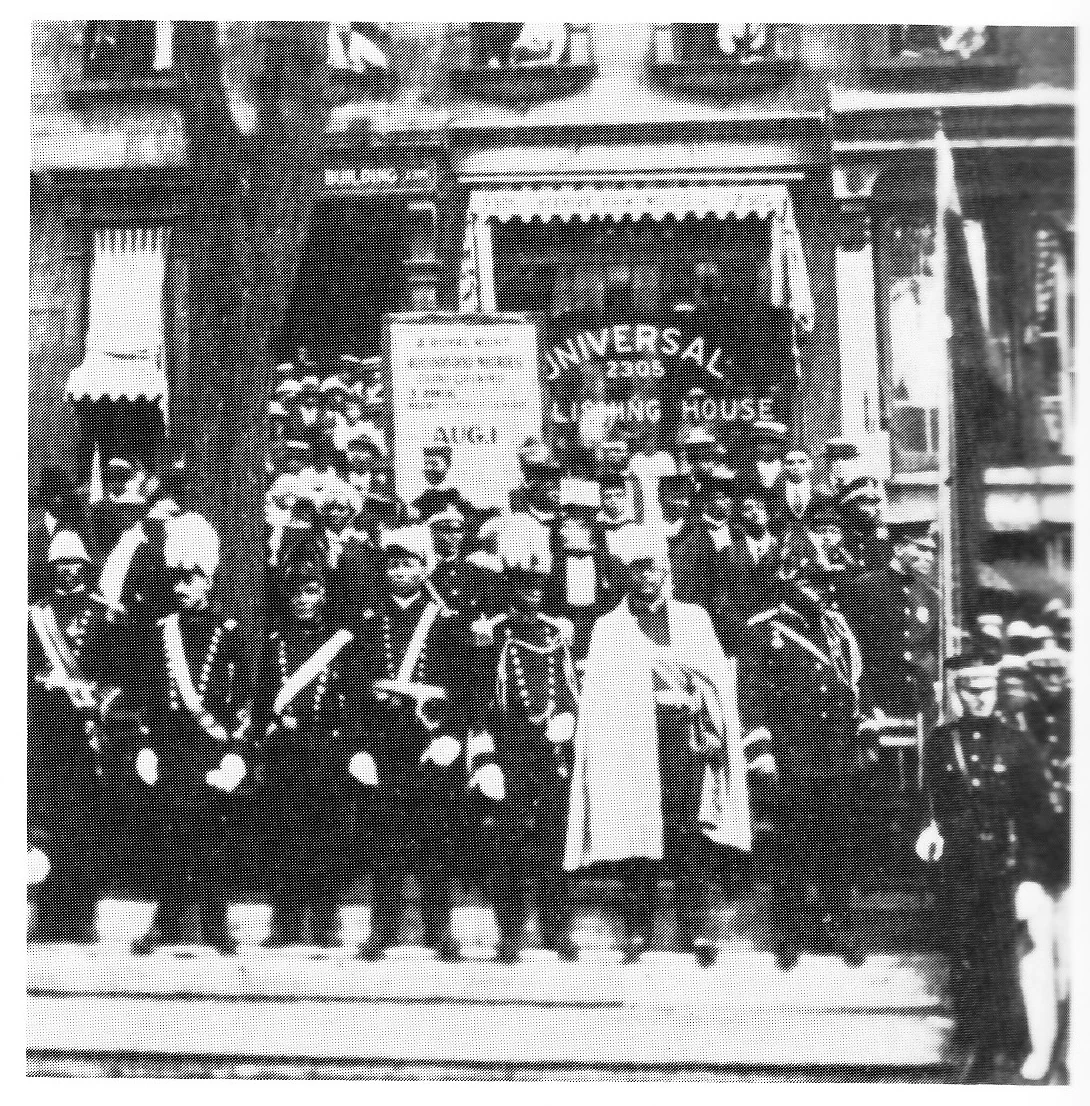
A later photograph gives the press a physical setting: people assembled outside the UNIA Printing and Publishing House at 2305 Seventh Avenue in Harlem. The source caption dates the reviewing platform to 1922. The building’s lettering connects the organisation’s public display with a place of production. It does not show the presses at work or document the printing of this particular July 1920 issue. [5]
Source & credit
News also arrived from people organising elsewhere. In a September 1919 report, published in October, Dorris Francis described the formation of a UNIA Ladies’ Division in Colón, Panama. She became its secretary; Mrs. Crooks took the provisional chair and F. Keene the treasury. Their named offices show women doing organisational work before the newspaper’s later women’s page. A report sent to print could make one division’s activity visible to readers far away. [6]
Sometimes carrying the paper carried a risk
An official record from Trinidad shows the resistance circulation could face. On 5 October 1919, U.S. consul Henry D. Baker reported that postal officials burned copies of Negro World, while some copies still seemed to circulate secretly. His hostile description of the paper belonged to an official monitoring it. The report documents Trinidad at a particular moment; it is not evidence that Jamaican postal officials used the same practice. [6]
That account makes the Declaration’s later demand for press freedom concrete. A newspaper was not useful only where it could be openly displayed. Trying to prevent its arrival was itself evidence that officials feared what readers might do with its ideas. The surviving record reveals both attempted suppression and its apparent limits, without giving us a reliable count of every copy that reached a reader.
Amy Jacques Garvey made another political space in print
Source & credit
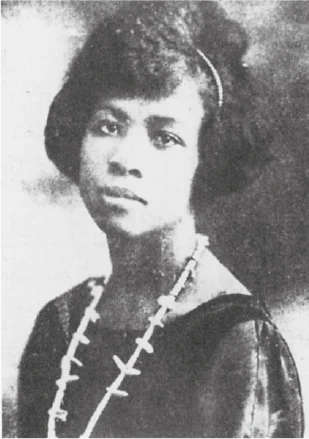
Amy Jacques Garvey belongs to a later chapter of the paper’s work. Born in Jamaica, she moved to Harlem in 1917 and became involved in the UNIA, first as a travelling secretary and then as Garvey’s private secretary. She married him in 1922. Her 1923 portrait above therefore does not depict an editor at the desk of the featured 1920 issue. [7]
Historian Ula Yvette Taylor’s research places her associate editorship and sustained women’s-page work in 1924–27. In “Our Women and What They Think,” Amy Jacques Garvey addressed racism, imperialism and male authority. Political analysis appeared in a part of the paper that could otherwise have been confined to household hints. Her contribution changes the story from one famous man publishing a message to a newspaper in which women also shaped political argument. [7]
A movement’s newspaper contained contradictions
The paper’s pages also had to earn money. The Papers project’s editors note that advertisements for skin-lightening and hair-straightening products appeared after an earlier absence, provoking criticism from a rival newspaper in 1923. They suggest financial pressure helped explain the change. That interpretation does not erase the contradiction between racial pride and products marketed through racialised beauty standards. It shows why a movement’s publication deserves scrutiny as well as admiration. [8]
Hear the organiser, with the date kept straight
Garvey’s surviving studio voice belongs to July 1921, after a Caribbean and Central American tour. UCLA’s Sound Library identifies two recorded speeches, including Explanation of the Objects of the Universal Negro Improvement Association. The recording below is an organisational appeal, not live sound from the 1920 convention photograph. Newspaper, photograph and record show different ways the movement addressed an audience. [9]
Return to the large headline with those people and tasks in mind: a trained Jamaican printer, women organising in Panama, a later associate editor, press workers and readers facing official hostility. The page’s ambition was international. The work that gave it reach took place in particular offices, streets, halls and homes.
Sources and notes
- New York Public Library, Schomburg Center: Negro World, 31 July 1920, volume 8, number 24; front-page record, Marcus Garvey editor, public domain.
- Marcus Garvey and UNIA Papers Project, UCLA, American Series vol. I introduction: Jamaican printing apprenticeship, 1916 arrival and emancipation anniversary calendar.
- Marcus Garvey editorial letter, 1 September 1920, printed in Negro World on 4 September; reproduced in the UCLA Papers project. Primary movement account of the convention and claimed leadership.
- Declaration of Rights of the Negro Peoples of the World (1920), primary text reproduced by the UNIA-ACL archive: press, speech, self-determination and education demands.
- Stephen Robertson, Digital Harlem, 26 April 2011: UNIA locations and Printing and Publishing House photograph, captioned 1922.
- UCLA Papers project, Caribbean Series sample documents: Dorris Francis’s 15 September 1919 Colón report, printed 11 October; U.S. consul Henry D. Baker’s 5 October 1919 Trinidad report, U.S. National Archives RG 59, 811.918/133.
- Cathy Cockrell, UC Berkeley, 26 February 2003, on Ula Yvette Taylor’s The Veiled Garvey (2002): Amy Jacques Garvey’s life and 1924–27 women’s-page political work.
- UCLA Papers project, American Series vol. V introduction: changing newspaper contents, advertisements and editors’ interpretation of financial pressure.
- Marcus Garvey and UNIA Papers Project, UCLA Sound Library: July 1921 speeches recorded on a 78 rpm record. Existing audio transfer and provenance: https://commons.wikimedia.org/wiki/File:Marcus_Garvey,_speech,_1921.ogg
Historical sources, image identities and reproduction records reviewed 26 October 2026. Capture, publication and digitisation dates are distinguished where known.