Milk River: a public bath, an inherited story and the business of visiting
Location: Milk River Bath, Clarendon, Jamaica
Explore area in Google Maps ↗Map search for the named place or area. Arrange the actual entrance, guide meeting point and access with your host; this is not a confirmed tour departure.
A story of an enslaved man seeking refuge became part of the identity of a public bath. Milk River connects bodily vulnerability, remembered healing and a destination taking shape in Clarendon.
A long history of organised visiting
The Ministry of Tourism dates the institution to 1794; JTB’s account connects that year with baths opening to the public. This places Milk River within a history of people travelling for a particular service long before today’s resort economy. The date concerns the institutional baths, not the age of the spring or the building in the photograph. [1] [2]
Opening baths turned a spring into an organised destination. People could travel for a service, and someone had to maintain facilities and manage access. Milk River therefore belongs to a Jamaican history of visiting that began long before the modern resort economy.
Source & credit
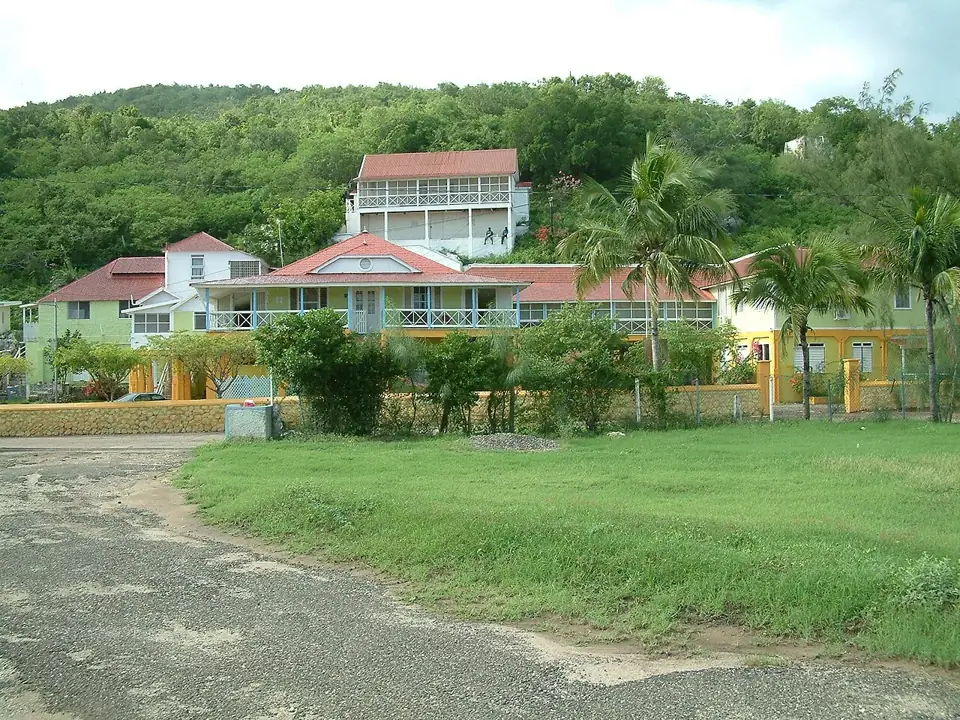
Look closely: The open ground and later buildings give a wider setting than the close-up in this story. They do not date the facilities to the eighteenth-century origin account.
Source & credit
The man at the centre of the origin story
The Jamaica Tourist Board retells a story of an enslaved man who fled beatings and bathed his wounds in a spring. On his return, the account says, the apparent healing led Jonathan Ludford to demand the spring’s location in exchange for a promise of no further punishment. Ludford then enclosed the site. This is an attributed origin story, not a verified biography or medical finding. Its human force lies in the contrast between a fugitive finding refuge and an owner asserting control over the place. [2] [2]
The man remains unnamed in the account, while the property owner enters the written history by name. Remembering that imbalance changes the emphasis of the story. The spring’s reputation begins with a vulnerable person’s experience, then becomes part of the identity of an institution and a visitor destination.
Government, property and public access
The Ministry describes Milk River as a public body with responsibilities for preserving the property and providing services. The Ministry of Justice catalogue also identifies a statute devoted to the Milk River Bath. Together these show that the place belongs to an institutional history as well as a landscape history. [1] [4]
Public responsibility brought another relationship to the spring: keeping a property and its facilities available through an institution, rather than through an owner’s personal permission. The statute and the Ministry’s remit show how access became a matter of administration as well as landscape.
Do not let a heritage label turn a claim into evidence
The Ministry and JNHT pages describe notable mineral waters and repeat therapeutic reputations. Those descriptions are evidence of how the destination is presented. They are not clinical evidence that a bath will treat a particular condition, and this guide makes no such promise. [1] [3]
The reputation helps explain why people travelled and how the bath was promoted. A belief in healing could organise a journey, a business and a place’s identity even though that belief is not clinical proof.
The photograph records another phase
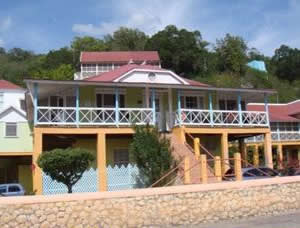
The source photograph shows a later spa building. It can help us notice the physical form in which visitors encounter the institution, but it does not reconstruct the first public baths. Architectural appearance, opening date and the survival of a service should remain separate in the reader’s notes. [3]
Connect this story with Bath in St. Thomas, then return to the differences: location, institutions and the particular evidence for each. Shared interest in mineral water does not make the two destinations interchangeable. Milk River deserves its own Clarendon branch, with time and arrangements fitted to the actual visit.
Make the visit fit the evidence
Confirm the actual bath or hotel service, booking, price, duration, changing facilities, steps and assistance with the operator. Use an appropriate qualified source for personal health suitability. Allow the booked service and your real transfer to determine the day; no therapeutic result is promised.