Morant Point: an iron lighthouse and the people behind the landmark
Location: Morant Point Lighthouse, St. Thomas, Jamaica
Explore area in Google Maps ↗Map search for the named place or area. Arrange the actual entrance, guide meeting point and access with your host; this is not a confirmed tour departure.
At Jamaica’s eastern point, an 1841 tower opens a history of maritime infrastructure, imported ironwork and African skilled labour.
A coastal landmark made by many hands
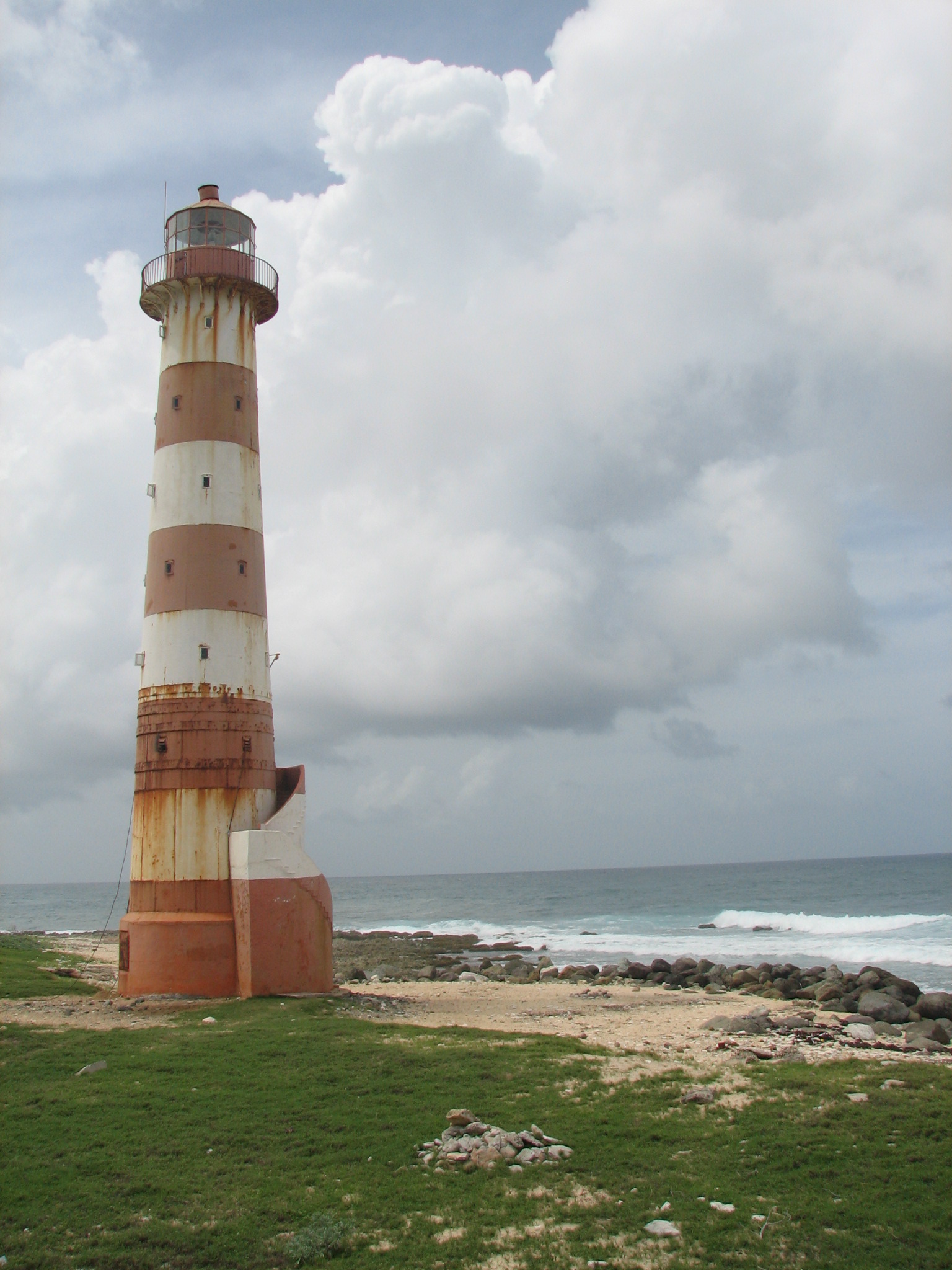
At Jamaica’s eastern tip, Morant Point’s tower joins two histories: ironwork manufactured overseas and the people who erected and maintained it here. The Jamaica National Heritage Trust dates its construction to 1841, identifies London as the place where the cast iron was made, and lists it as a national monument and Jamaica’s oldest lighthouse. [1]
The tower belongs to the history of shipping as well as St. Thomas. A light at a headland helped mariners recognise the coast; keeping it visible required continuing attention after the construction crew had left. The story runs from a nineteenth-century industrial project to the ordinary tasks of the keeper.
Source & credit
The Kru workers behind the iron tower
JNHT credits the erection to Kru men from Africa, describing them as free Africans brought to Jamaica. Construction in 1841 followed the end of apprenticeship in 1838. Their presence places African labour within the building of the island’s maritime infrastructure after emancipation. [1]
The institutional summary does not identify individual workers, wages or recruitment terms. It supports the group’s role in erection, rather than a detailed account of their contracts. Casting the sections in London and assembling them on a Jamaican headland were distinct tasks; both belong in the landmark’s history.
An engineering image from 1846
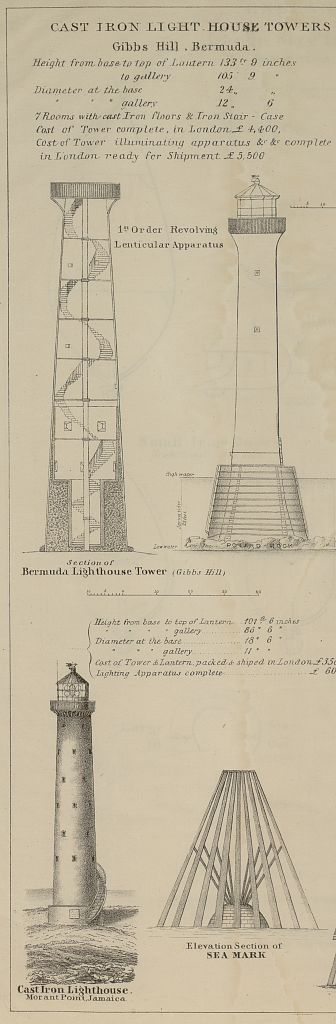
An 1846 lithograph preserved by the Library of Congress places Morant Point among examples of cast-iron lighthouse construction. It appeared with a United States Treasury report on lighthouse improvements, showing how a tower in Jamaica entered a wider technical discussion only a few years after its construction. [2]
The full sheet contains several subjects. Morant Point is the small tower at the lower left; the much larger section above concerns Gibbs Hill, Bermuda, and the lower-right structure is a sea mark. Keeping the sheet intact makes those labels visible and prevents the Bermuda structure from being mistaken for Jamaica’s tower.
Source & credit
A keeper’s working day
A July 2015 interview by Omar Tomlinson gives the later service a name and a routine. Keeper Athol Owen described checking the light around dawn and cleaning the glazing because salt-laden air obscured it. The article reported roughly a quarter-century of his service at Morant Point. [3]
Owen also recalled helping fishermen and Haitian migrants in distress near Rocky Point. His account connects the station with people at sea, beyond the familiar image of an isolated tower. These are recollections recorded in 2015; they do not identify today’s keeper or establish present operating arrangements. [3]
Compare the views, then explore the parish
The lithograph explains how nineteenth-century publishers presented iron lighthouse construction. Dorn’s 2006 photograph shows the later painted tower, its external stair and gallery, and the rocky shore. They are different kinds of evidence, separated by 160 years. Neither is a photograph of present conditions.
Read Morant Point alongside Stokes Hall and Bath Gardens to connect coastal work with estate property and botanical institutions inland. Folly Point offers another lighthouse comparison, but it is a separate site from both Morant Point and Folly mansion. An arranged visit can bring these histories into the landscape without assuming they form a short driving circuit.
Sources and notes
- Jamaica National Heritage Trust: construction, London cast iron, Kru workers and monument designation.
- Library of Congress, LCCN 2005688392: lithograph, 1846 Treasury report, subjects and publication rights; see the linked image record in its caption.
- Omar Tomlinson, “The Keeper of Tales”, Jamaica Observer, 17 July 2015: firsthand interview with Athol Owen; photographs by Karl McLarty are not reproduced here.