Bath Gardens: the travelling history of Jamaican food plants
Location: Bath Botanical Gardens, St. Thomas, Jamaica
Explore area in Google Maps ↗Map search for the named place or area. Arrange the actual entrance, guide meeting point and access with your host; this is not a confirmed tour departure.
A St. Thomas garden links plants, ships, institutions and everyday food. The attractive greenery is the doorway into that history.
A physician’s garden in a spa town
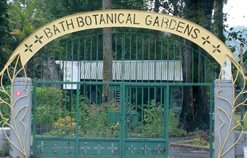
Bath’s garden joined medicine, useful plants and leisure. JNHT dates its establishment by the House of Assembly to 1779 and identifies its first superintendent, Dr. Thomas Clarke, as a physician at Bath Hospital. Visitors to the mineral spa could relax among plants also being studied for medicinal and economic uses. [1]
Cundall’s 1915 history places Clarke’s arrival in 1777, when a tropical garden at Bath and a European garden were being planned. [2]
Source & credit
Thomas Dancer left a record we can read
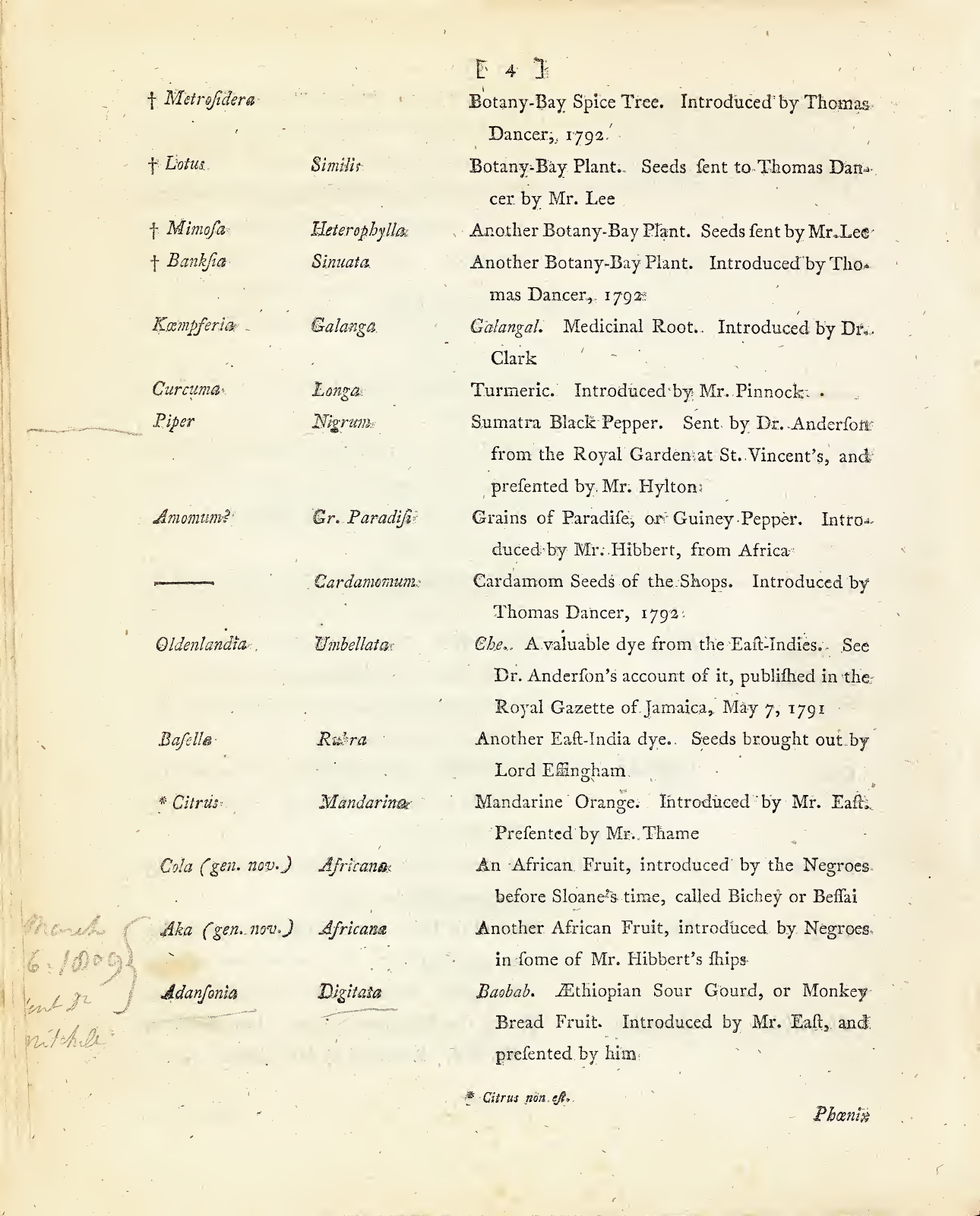
Dancer later combined responsibilities for the garden and hospital. His Catalogue of Plants, Exotic and Indigenous, in the Botanic Garden, Jamaica was printed at Spanish Town in 1792. Its dedication names Speaker Samuel Williams Haughton and the House of Assembly. The preface says the Assembly ordered both the compilation and publication for public use. It sought to trace plant introductions, acknowledge contributors and invite corrections. [1] [3]
The entries make the network concrete. Printed page 4 credits Dr. Clark with galangal, Mr. Pinnock with turmeric, and Dr. Anderson’s garden in St. Vincent with black pepper. Dancer records his own 1792 introductions. These are historical catalogue names and attributions, not a survey of plants growing at Bath today. [3]
Source & credit
Testing plants for use and profit
A small symbol in Dancer’s catalogue reveals the uncertainty behind an introduction. Plants marked with a cross had only recently arrived and were described as being in an uncertain state. The marked entries on page 4 include plants from Botany Bay. Getting a seed or living specimen across the sea did not establish that it would flourish in Jamaica. The catalogue records a collection still being tested, rather than a list of guaranteed successes. [3]
Cinnamon shows the commercial ambition. The opening entry reports favourable assessments of Jamaican-grown samples against Ceylon cinnamon and says plantations were being established. This is Dancer’s contemporary report of expectations, not an independently verified measure of export success. Elsewhere, the list includes medicinal roots, pepper and dye plants. A useful garden could supply materials for trade and manufacture as well as foods. Its value was judged partly by what could be propagated beyond its boundaries. [3]
Some contributors appear without names
The same page credits unnamed Black people with introducing two African fruits. The Cola entry calls the fruit Bichey or Bessai and places its introduction before Sloane’s time. The following African-fruit entry links an introduction to Mr. Hibbert’s ships. The catalogue records their contribution but not their names or individual status. It should not be read as proof that only botanists and wealthy donors moved plants into Jamaica. [3]
The list preserves African participation alongside the names of elite donors.
Breadfruit joined botany to the plantation economy
JNHT associates Bligh’s 1793 voyage on HMS Providence with introductions at Bath. Kew’s historical account explains the wider breadfruit project as an attempt to supply food for enslaved people in the Caribbean. Transporting plants served colonial economic purposes as well as botanical curiosity. [1] [4]
The voyage was one stage in a longer history. Establishing trees, cultivating fruit and making it part of Jamaican meals required further work. Cundall describes county committees receiving and distributing allotments of breadfruit and other plants from Jamaica’s botanical gardens as propagation permitted. He distinguishes the Liguanea garden under James Wiles from Bath under Dancer. The system needed nursery work, allocation and onward transport; arrival at a garden was not the same as establishment throughout the island. [2] Follow breadfruit into Jamaican Foodways →
Source & credit
The surrounding landscape also tells the story
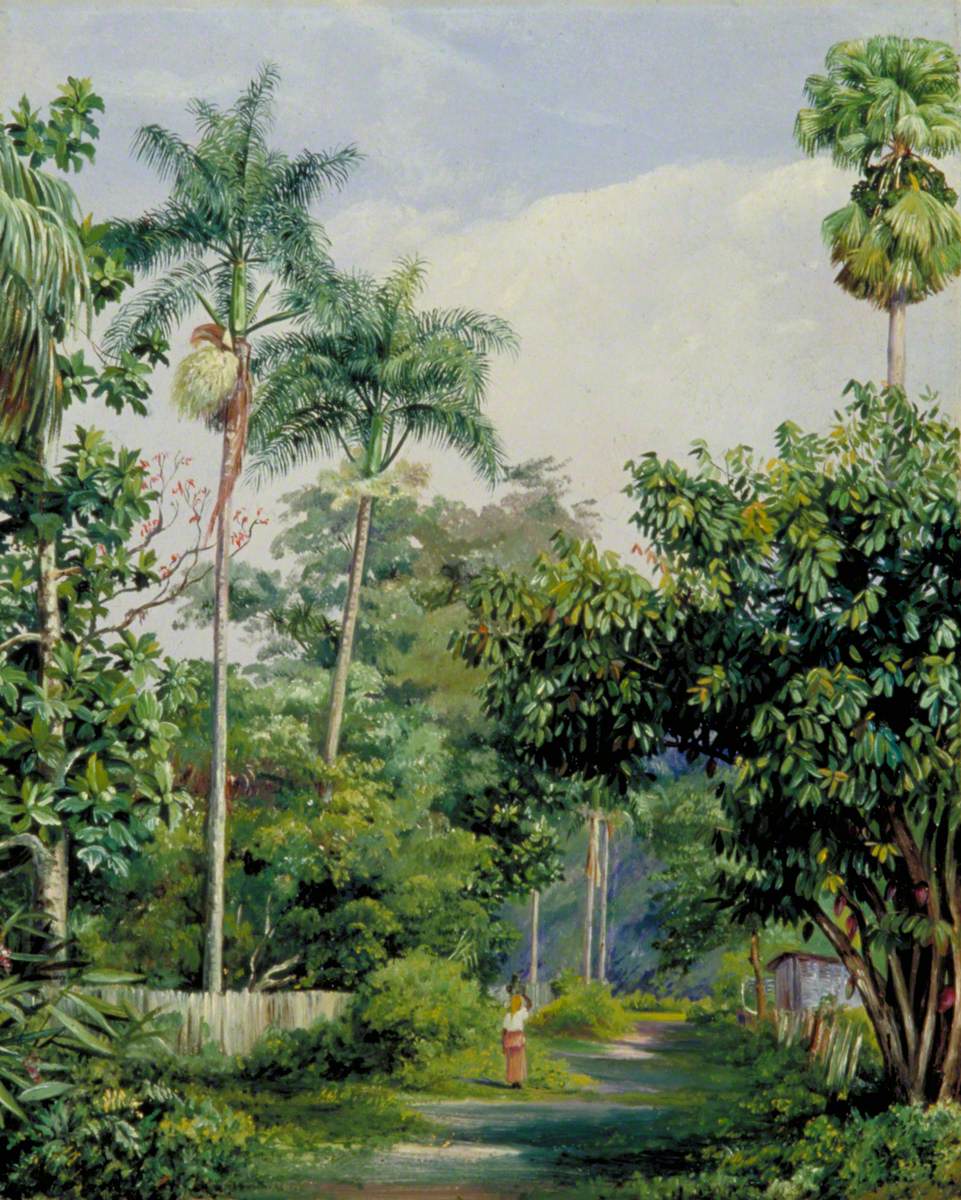
North’s painting brings palms, breadfruit, cocoa and coral trees together in its recorded title. It shows vegetation around a lived-in road near Bath, not a botanical plan or proof that particular trees survive. Compare its landscape with the garden’s later gate photograph without treating them as matching viewpoints.
Flooding by the Sulphur River contributed to Bath’s decline, according to JNHT, alongside the rise of Castleton. In February 2026, JIS announced a J$29.5 million rehabilitation over five months. That is a dated announcement, not confirmation that the works have finished. [1] [5]
Sources and notes
- JNHT: foundation, Clarke, Dancer, introductions, flooding and Castleton.
- Frank Cundall, Historic Jamaica (1915), pp. 26–27 and 248–249: Clarke and Bath’s institutional history.
- Thomas Dancer, Catalogue of Plants… (1792), preface and p. 4; BHL / New York Botanical Garden. Primary source.
- Royal Botanic Gardens, Kew, World Heritage Site Management Plan consultation draft (2019): Banks, breadfruit and colonial provisioning.
- Judana Murphy, JIS, 6 February 2026: announced rehabilitation. Completion is not established by this report.