Morant Bay, 1865: freedom without equal power
Paul Bogle’s march reached a courthouse in a society where emancipation had not brought equal access to land, justice or political authority.
Emancipation left an unequal political order
Legal freedom after 1838 was a fundamental change, but it did not give every Jamaican the same resources or access to government. The National Library’s independence history describes heavy taxation, expensive goods and a justice system that disadvantaged peasants. These circumstances connect Morant Bay to the free-village history: freedom had to be made usable through land, institutions and a meaningful voice in public decisions. [1]
A court could claim to administer a common law while people experienced its costs and decisions unequally. That gap makes a courthouse more than an architectural attraction. For a person with little money or influence, distance, fees and official discretion could determine whether a grievance received a hearing.
The march of October 11
Jamaica Information Service identifies Bogle as a Baptist deacon and dates his protest march to the Morant Bay courthouse to October 11, 1865. His religious role belongs to the political history. Congregational networks could support communication and leadership outside the institutions dominated by the colonial elite. The protest therefore linked public grievance to a local capacity to organize. [2]
The violence and repression that followed did not simply concern damage to one building. They concerned who could challenge authority and how the state would respond. The Heritage Trust records the execution of George William Gordon, a politician transferred to Morant Bay and tried for alleged involvement. That distinction matters: allegation, procedure and punishment belong in the account, rather than silently treating punishment as proof. [3]
Source & credit
Repression changed the form of government
In 1866 Crown Colony government replaced the older representative arrangement. The National Library describes a governor, officials and nominated members at the center of the new order. A change in administrative form did not mean that the poor suddenly acquired political control. The long struggle over representation continued. [1]
The sequence makes it misleading to place emancipation, Morant Bay and independence in a smooth story of inevitable progress. Institutions could change after a crisis while remaining unequal. The people pursuing justice did not know the eventual outcome in advance. Their demands were immediate, and repression imposed real costs on lives and communities.
The courthouse and its later life
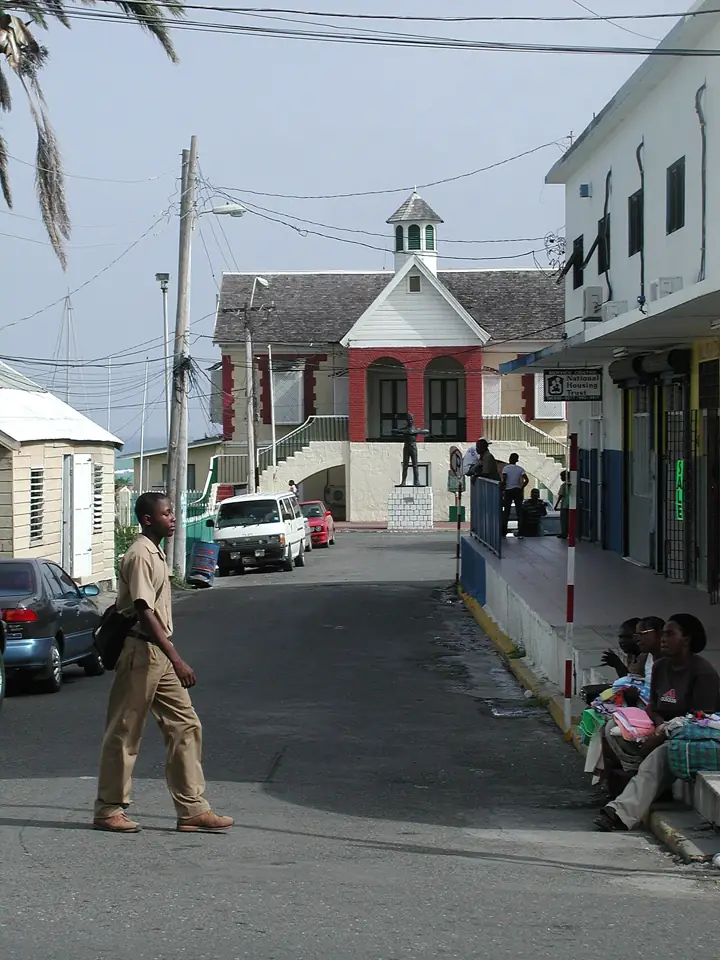
The courthouse site is associated with both the rebellion and later public commemoration. The Heritage Trust also records the fire that destroyed the building in February 2007. A modern image must therefore be dated: the building photographed before that fire and the present site are not interchangeable views of an unchanged monument. [3]
Morant Bay sits beyond this guide’s principal north-coast travel area, but belongs at the center of its Jamaican history portal. The connection is substantive rather than a casual day-trip recommendation. Its story helps explain why the court records of St. Ann, the villages formed after emancipation and the twentieth-century campaign for suffrage belong to one larger history of power and participation.
From Stony Gut to the courthouse
Read the Stony Gut account alongside Morant Bay. Bogle’s organising began in a community before the march reached the courthouse. That short geographical connection keeps the story from becoming only an account of a confrontation and its punishment. Then follow the later struggle over representation → [1] [2]
Sources and notes
- National Library of Jamaica, Jamaica’s Journey to Independence: Crown Colony government, labor agitation and 1944 suffrage. ↩
- Jamaica Information Service, Paul Bogle: protest, repression and execution in 1865. ↩
- Jamaica National Heritage Trust, Morant Bay Courthouse: rebellion, Gordon and the courthouse’s later history. ↩