JAMAICA, RECONSIDERED · 4 OF 19 · SCHOLARLY REINTERPRETATION
Morant Bay: Bogle’s rebellion and what the investigation missed.
Paul Bogle and his supporters protested poverty and unequal power in 1865. The colonial response brought killings, floggings and burned homes. The inquiry exposed brutality, but left the protesters’ larger demands unresolved.
On 11 October 1865, protesters approached the courthouse at Morant Bay, St. Thomas. Paul Bogle’s supporters were confronting more than a local court dispute. Poverty, taxation, access to land and a political system dominated by planter interests had made freedom after slavery deeply unequal. [1]
The confrontation became violent. The colonial response was devastating: people were killed and flogged, and homes were destroyed. Bogle was captured and executed. The British inquiry that followed condemned major abuses, but it did not deliver the wider changes the protesters had sought. [1]
The people killed at the courthouse
The confrontation on 11 October 1865 killed protesters and people assembled with the parish authorities. Princeton’s portraits let us follow several of the named dead rather than treating them as an anonymous group.
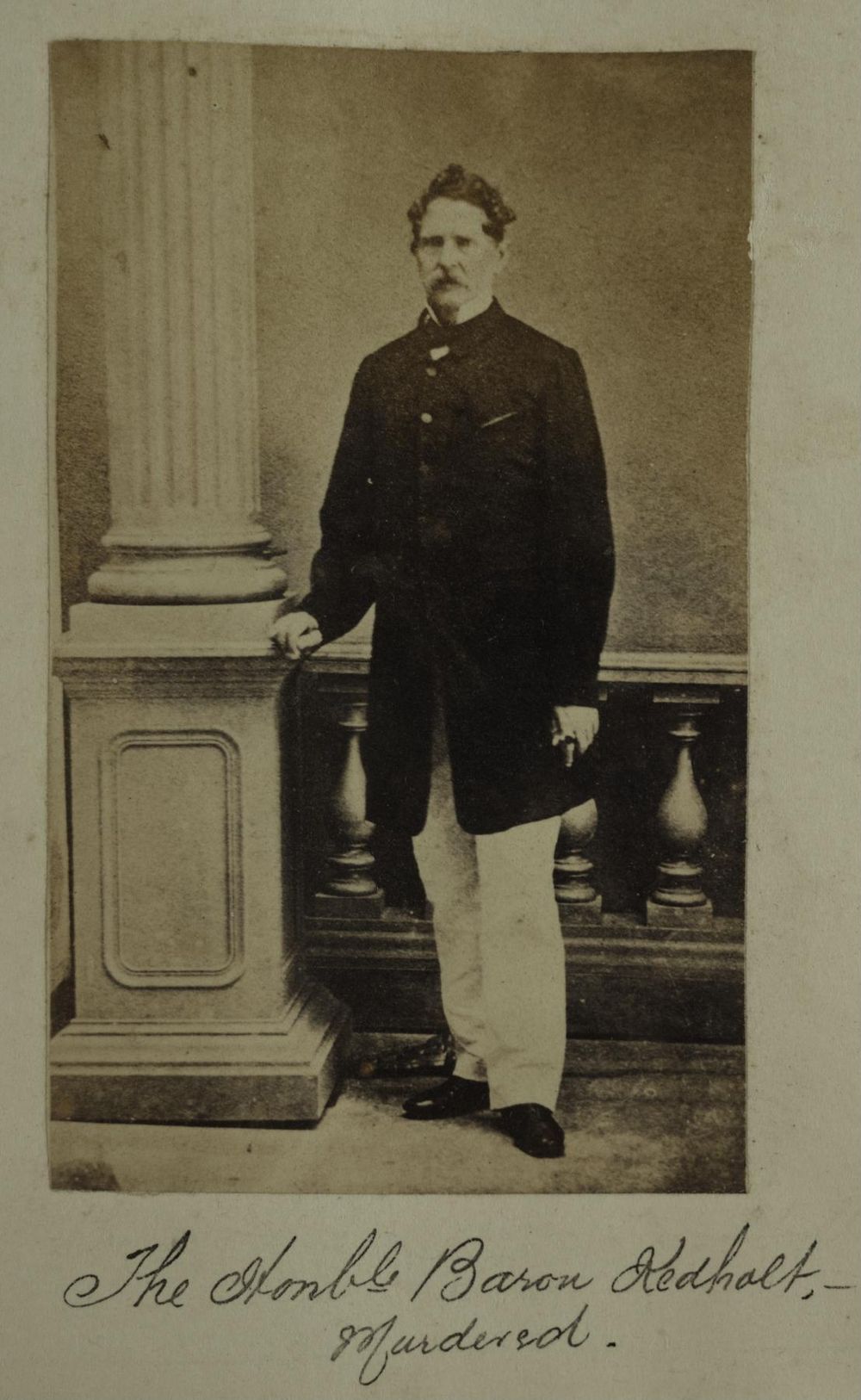
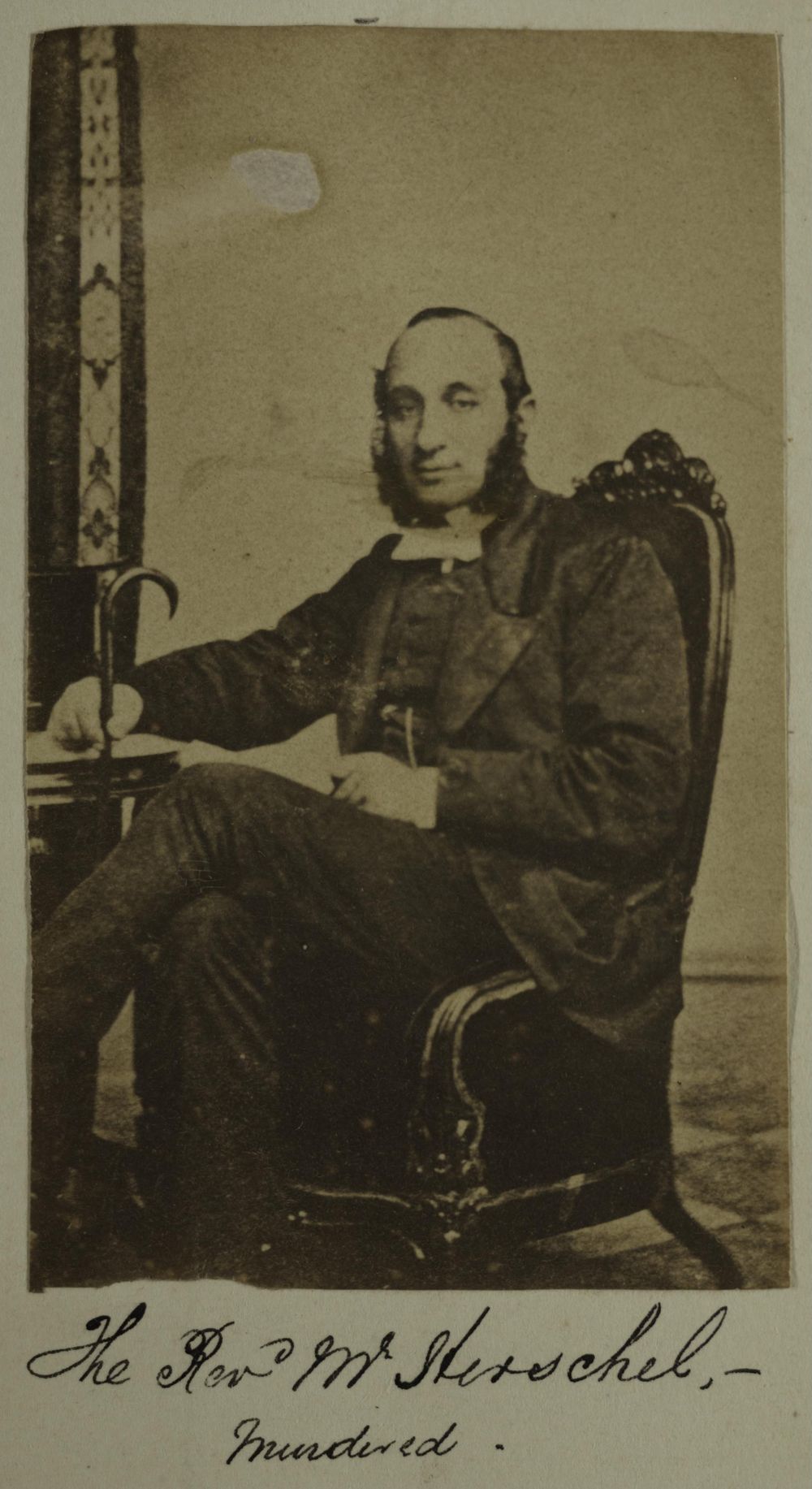
Ketelhodt and Herschell
Baron von Ketelhodt, the Custos, addressed the crowd before the courthouse burned. The Reverend Victor Herschell, island curate of Bath, was also killed. Their offices connect the deaths to the local government and established church around which parish power was organised. [casualties]
Source & credit
Source & credit
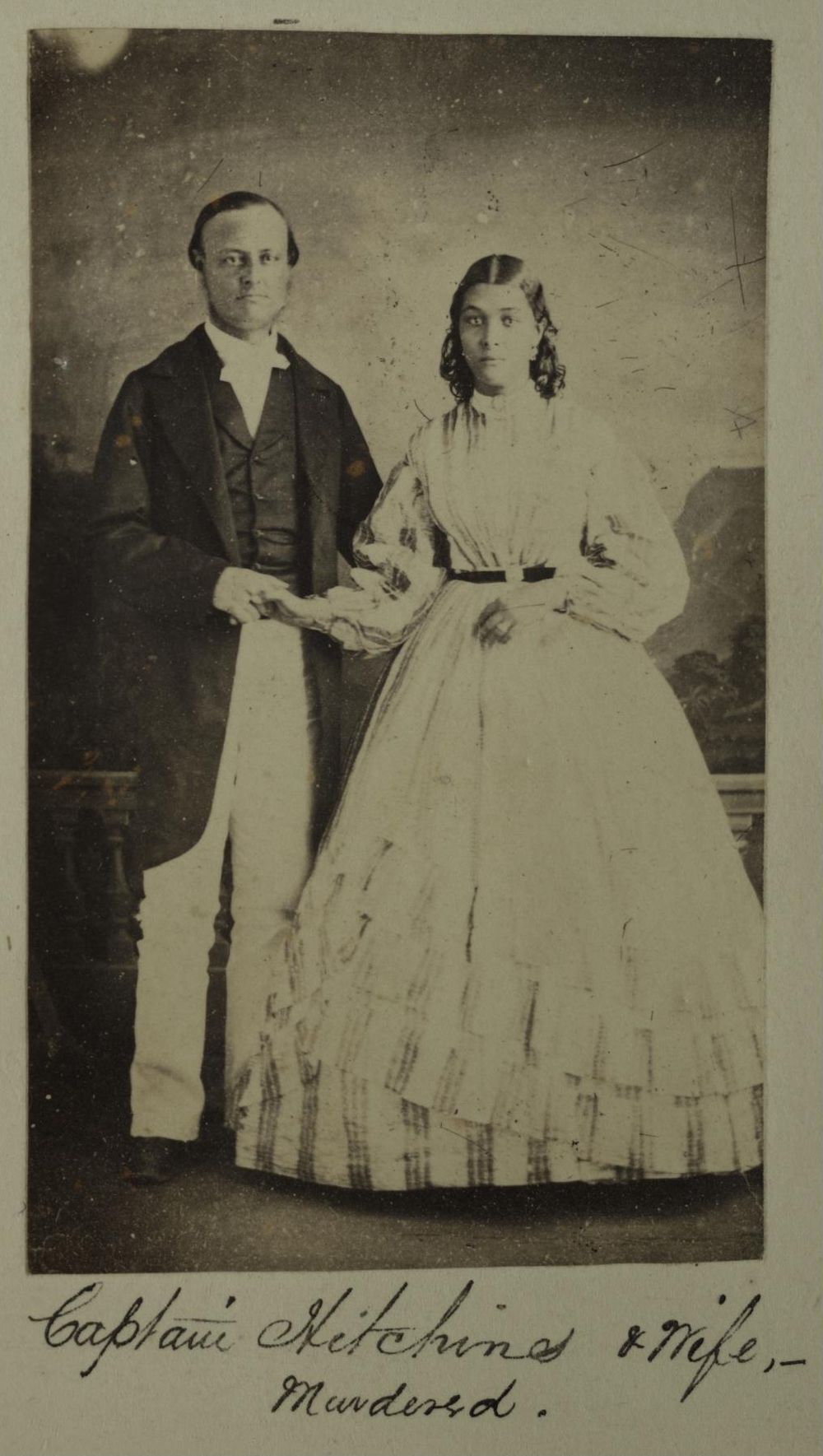
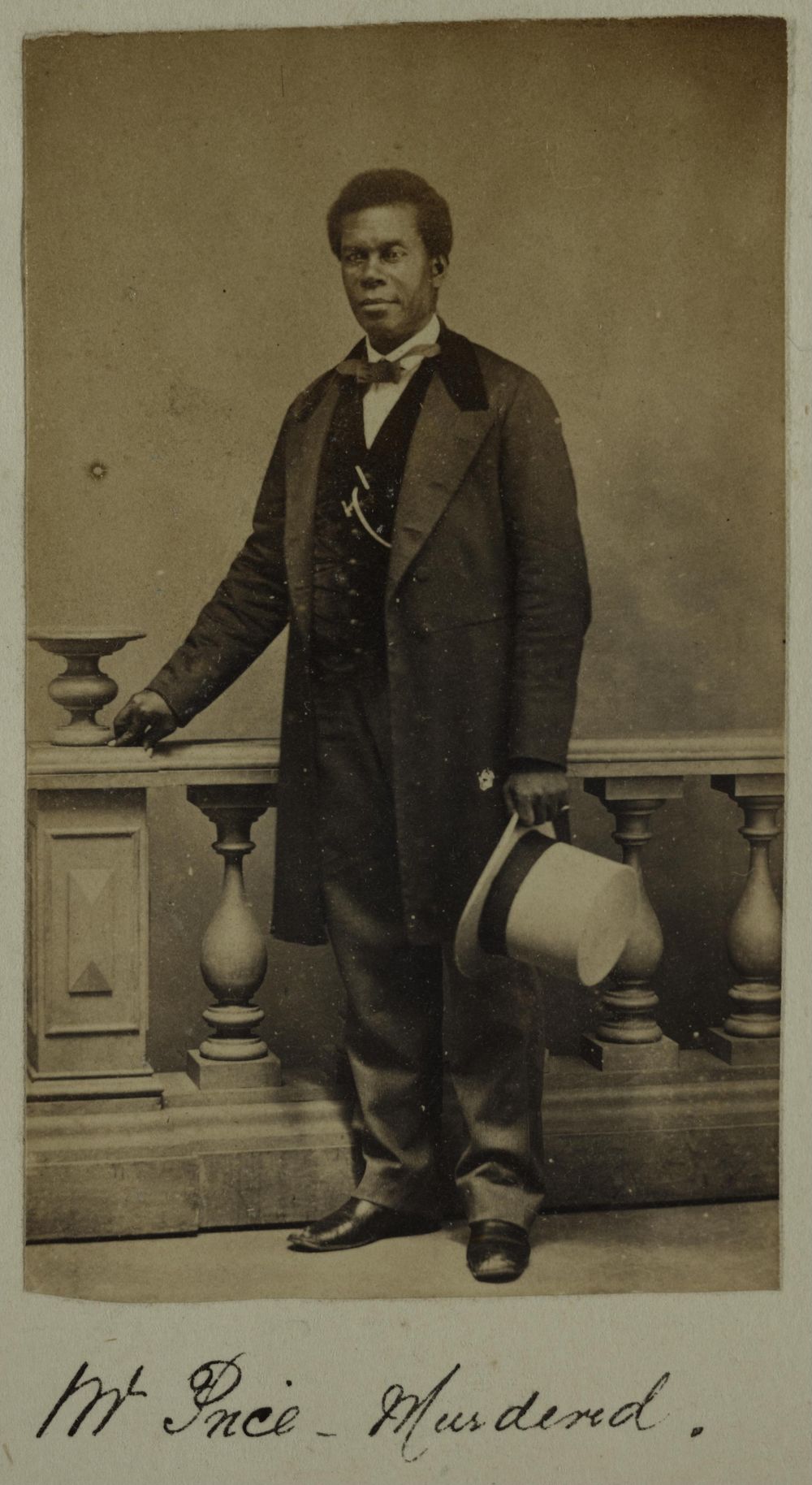
The volunteers and Charles Price
Captain Hitchins commanded the Bath volunteers; the contemporary casualty return names him among those killed. It also names Charles Anthony Price, whom Dr Major describes as a Black former assemblyman. These lives show why the conflict cannot be reduced to a simple division between white officials and Black protesters. [casualties] [price]
Source & credit
Source & credit
Meet the other people in the Morant Bay portrait album →
People had tried to be heard
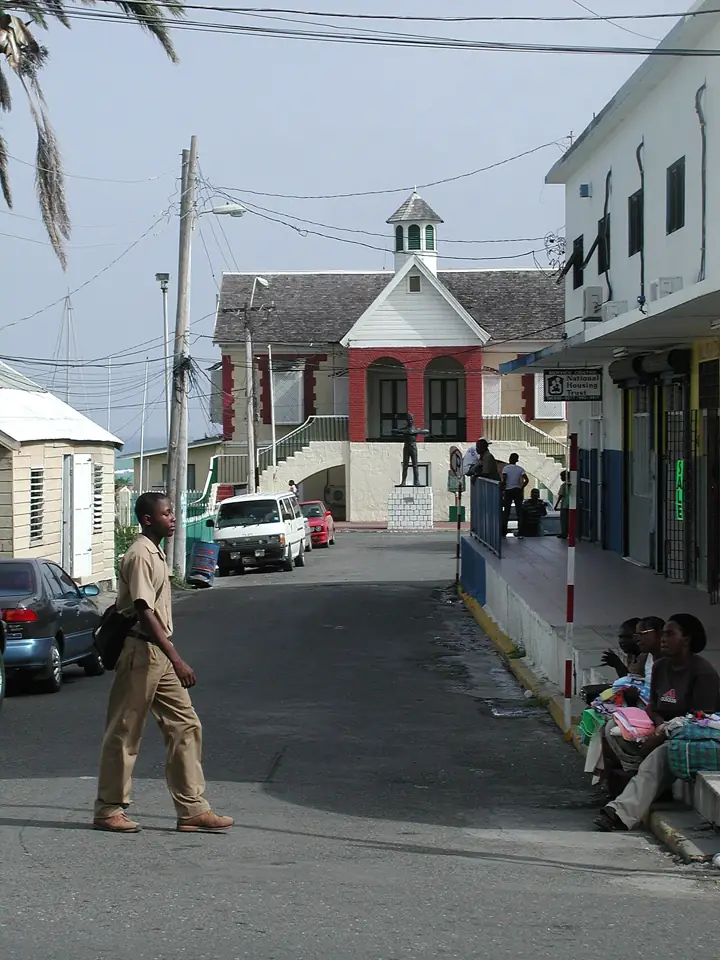
Before the uprising, Jamaicans had used meetings, petitions and public arguments to explain their conditions. Historian Jonathan Connolly places these efforts at the centre of the story. Starting with the burning courthouse alone makes the uprising look like an unexplained outbreak of disorder. Starting earlier reveals a population making political demands. [1]
A Colonial Office response known as the “Queen’s Advice” stressed wage labour and rejected the assessment of severe poverty. For protesters, the issue was not simply whether people were willing to work. It was whether the land, wages and political rights available to them made a decent life possible. [1]
Source & credit
The crackdown went beyond ending the fighting
Source & credit
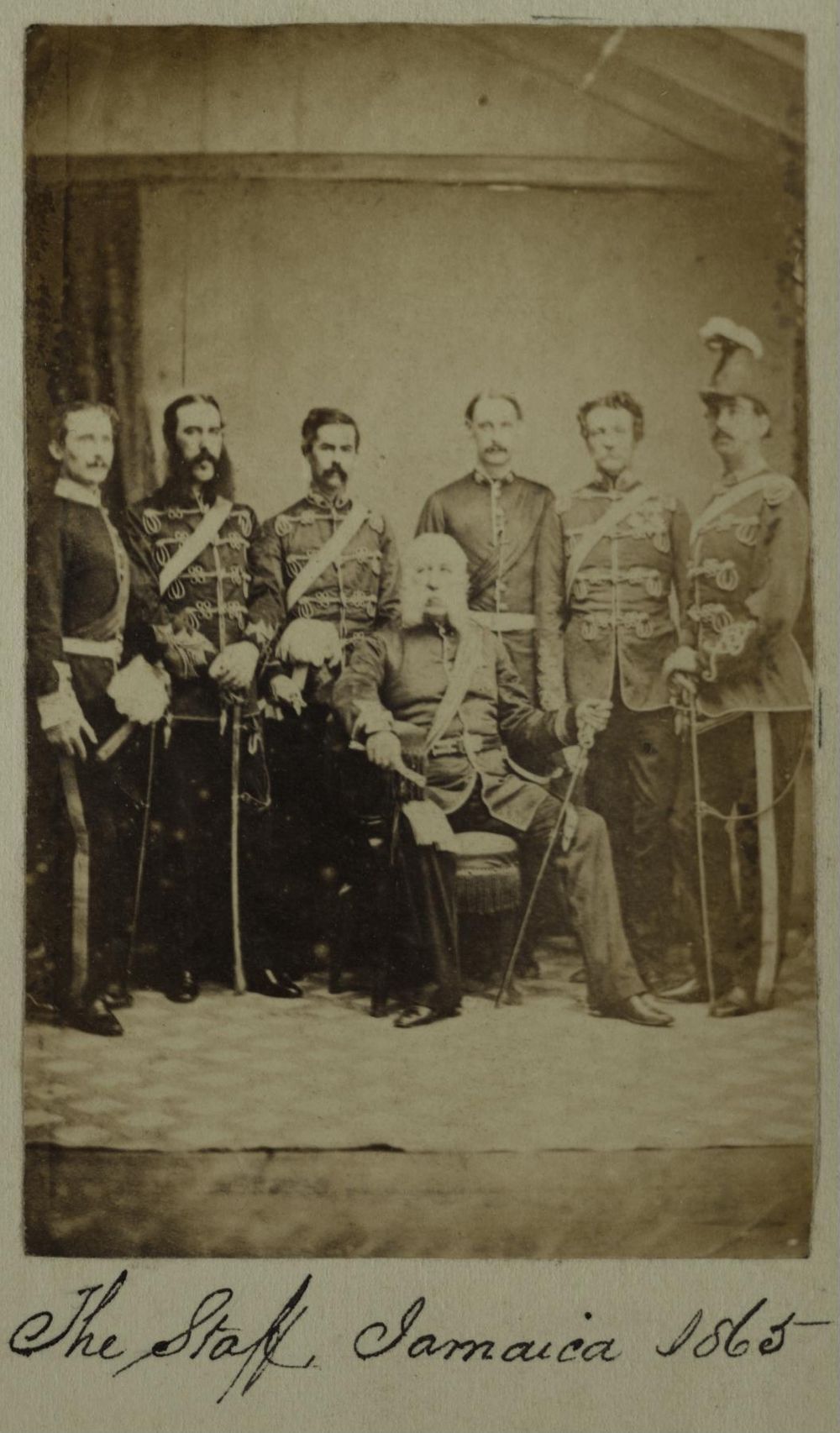
Martial law gave the authorities exceptional powers. Punishment continued after organized resistance had been put down. The royal commission recorded evidence and condemned much of the killing, flogging and destruction. Its findings matter because they exposed the scale and character of the repression. [1]
Bogle’s capture
Source & credit
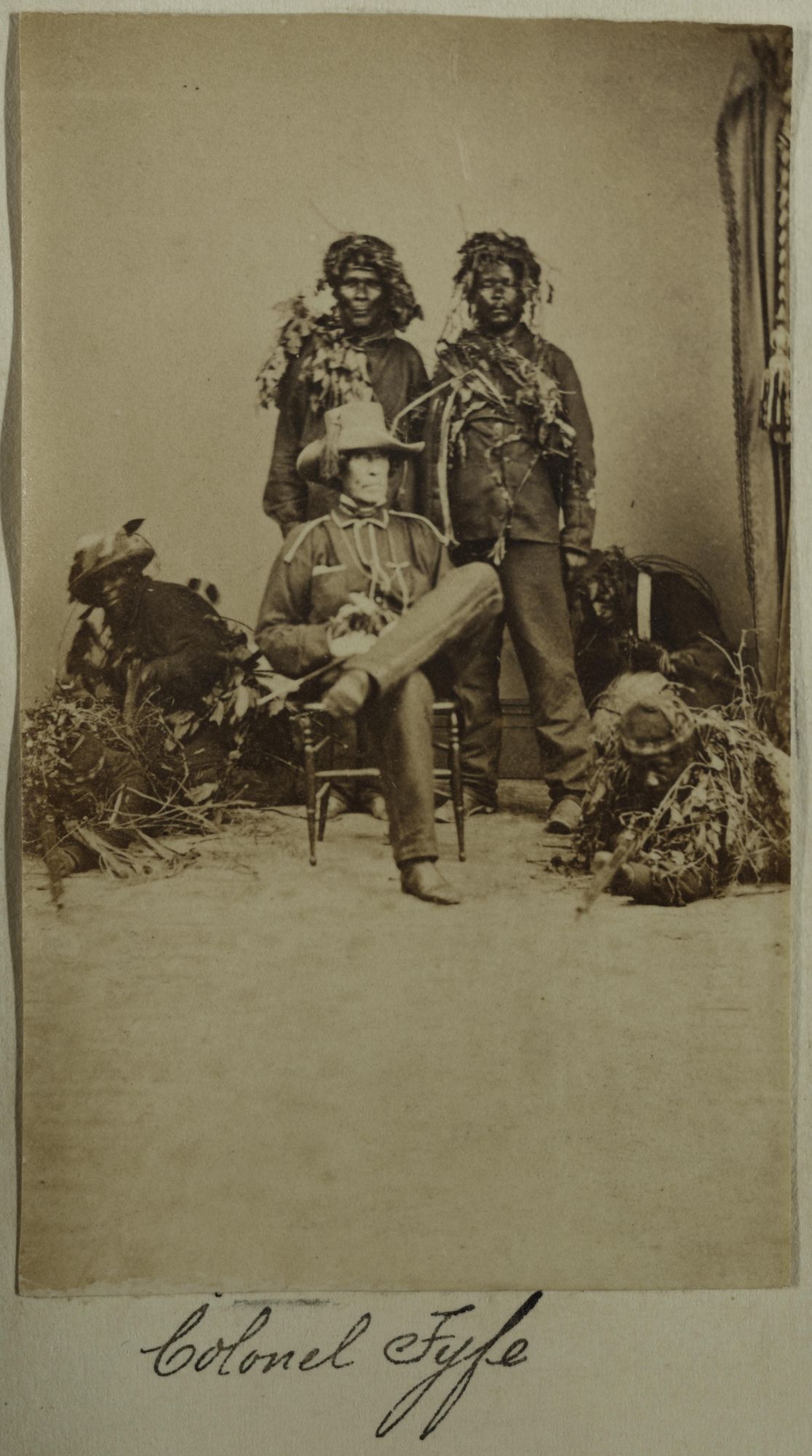
Paul Bogle was captured by Jamaican Maroons during the suppression of the 1865 uprising and handed to the colonial authorities. The National Library of Jamaica identifies his captors as Portland Maroons, while the African Caribbean Institute of Jamaica confirms that Maroons brought him to Morant Bay. He was executed on 24 October 1865. Published accounts differ on the exact date of his capture. National Library of Jamaica · African Caribbean Institute of Jamaica.
This was not an isolated contradiction: eighteenth-century Maroon treaties protected autonomy while also imposing obligations to return escaped enslaved people and assist against rebellions. It is important to distinguish the choices of participating Maroons from those of all Maroon communities. Read the related investigation: The Maroon treaty secured freedom—and obligations to slavery →
George William Gordon: 23 October 1865
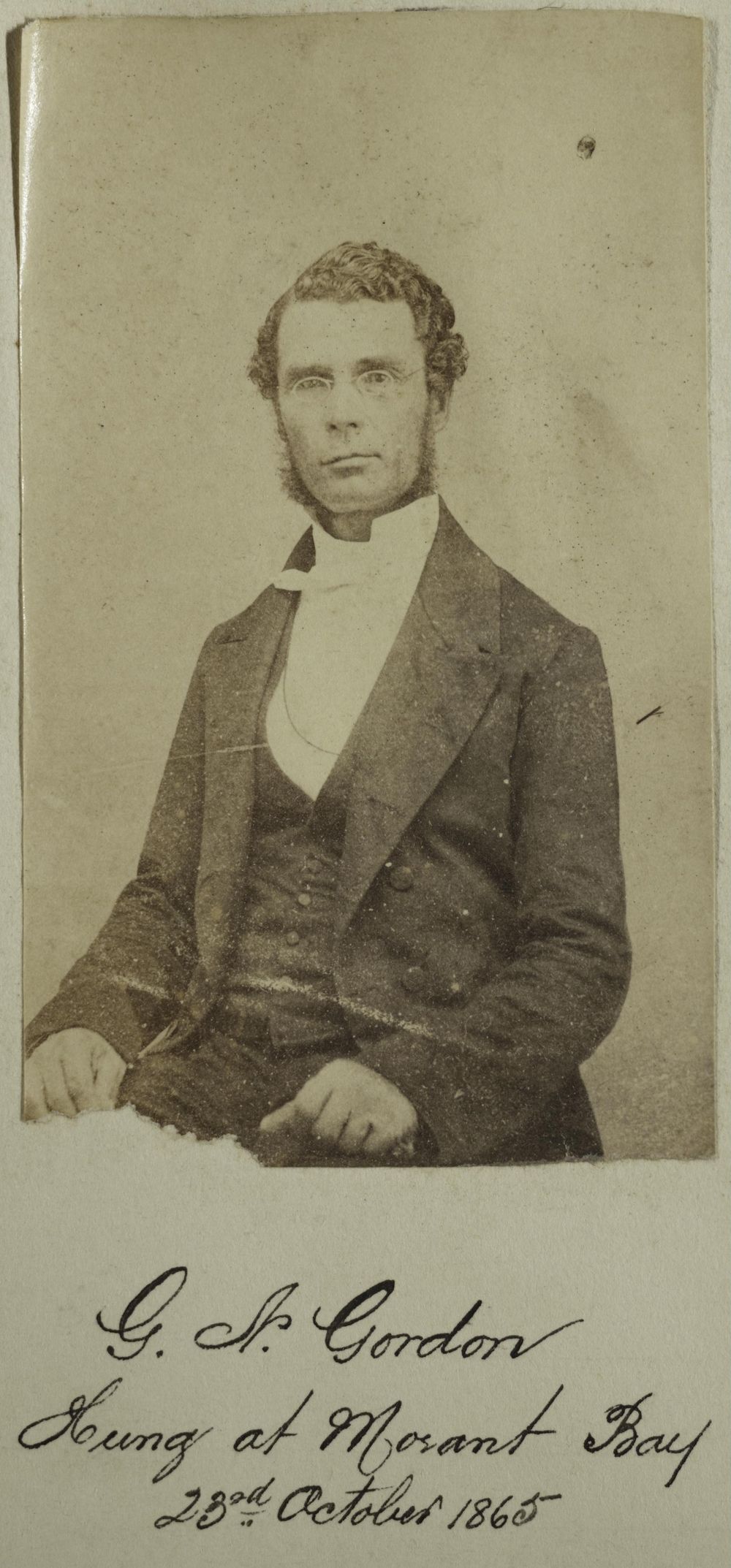
Gordon was taken from Kingston to Morant Bay, tried by court martial and executed on 23 October. His portrait records a death during the suppression, twelve days after the courthouse confrontation. [gordon-portrait]
Source & credit
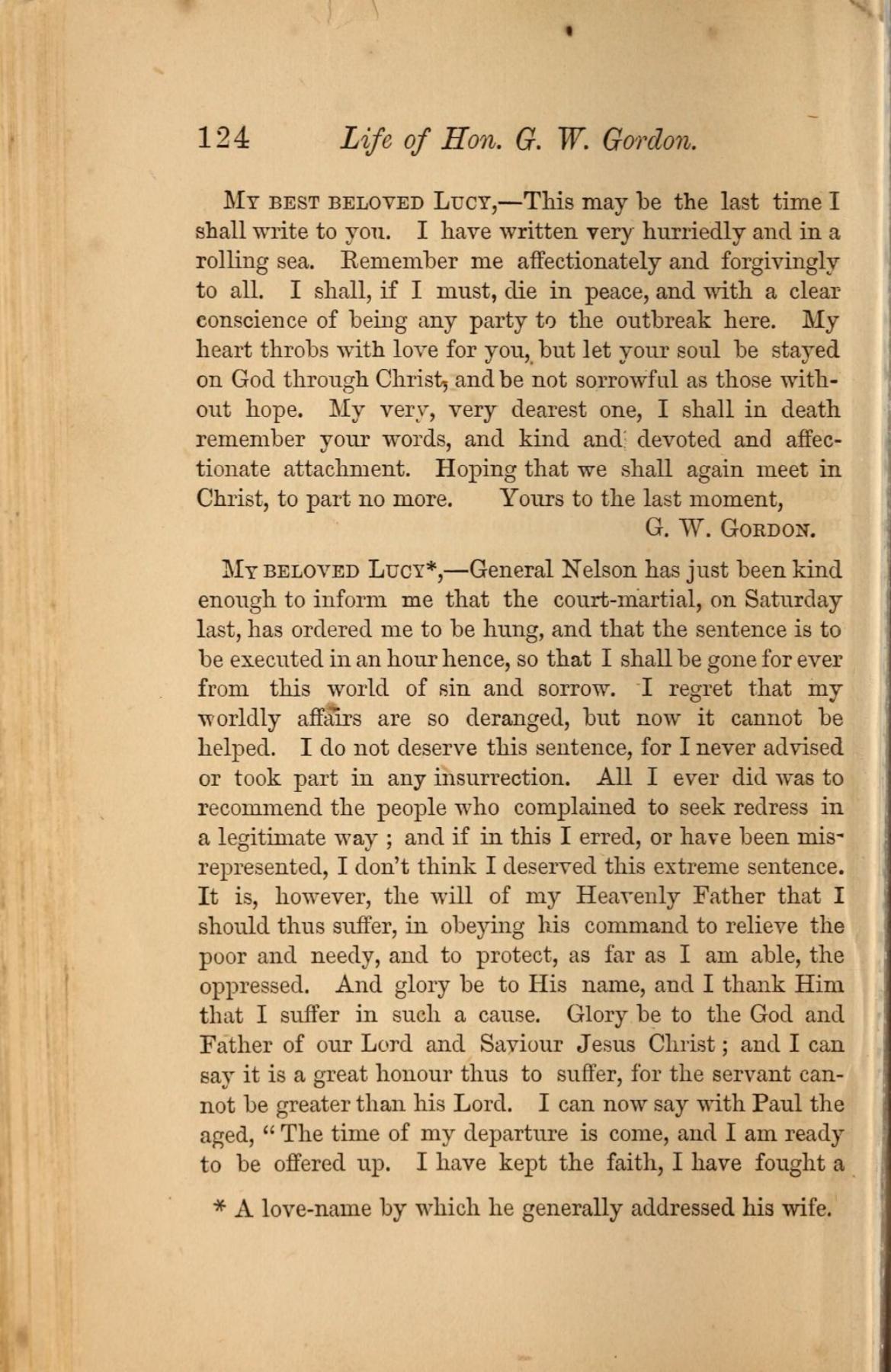
Gordon’s own letter carries the story into the family left behind. Addressing “My beloved Lucy,” he protested his innocence and regretted the disorder of his financial affairs. Fletcher printed the letter in 1867, with a footnote explaining Lucy as his affectionate name for his wife. The document joins the public question of lawful government to the household consequences of the execution. [family-letter]
Source & credit
How the question became narrower
Connolly’s argument is that the investigation and legal controversy changed the public question. Attention shifted from why people challenged colonial society to whether Governor Edward Eyre had exceeded his powers. A governor’s conduct could be condemned without resolving unequal access to land or political influence. [1]
John Stuart Mill and the Jamaica Committee tried to hold Eyre accountable. Their effort challenged arbitrary punishment, but a prosecution of one official could not by itself settle the justice of the colonial system he served. [1]
Eyre was not convicted
In 1868, a Middlesex grand jury rejected the indictment. The case did not proceed to the trial and conviction some retellings imply. This distinction is essential: there was a campaign to prosecute Eyre, not a successful conviction. [1]
Connolly also argues that the crisis helped justify more centralized imperial control. In that reading, exposing abuse did not necessarily weaken colonial rule. The system could acknowledge a scandal while keeping its deeper arrangements intact. That is the historian’s interpretation, rather than a finding that every participant in the inquiry intended the same outcome.
Morant Bay in the photographic record
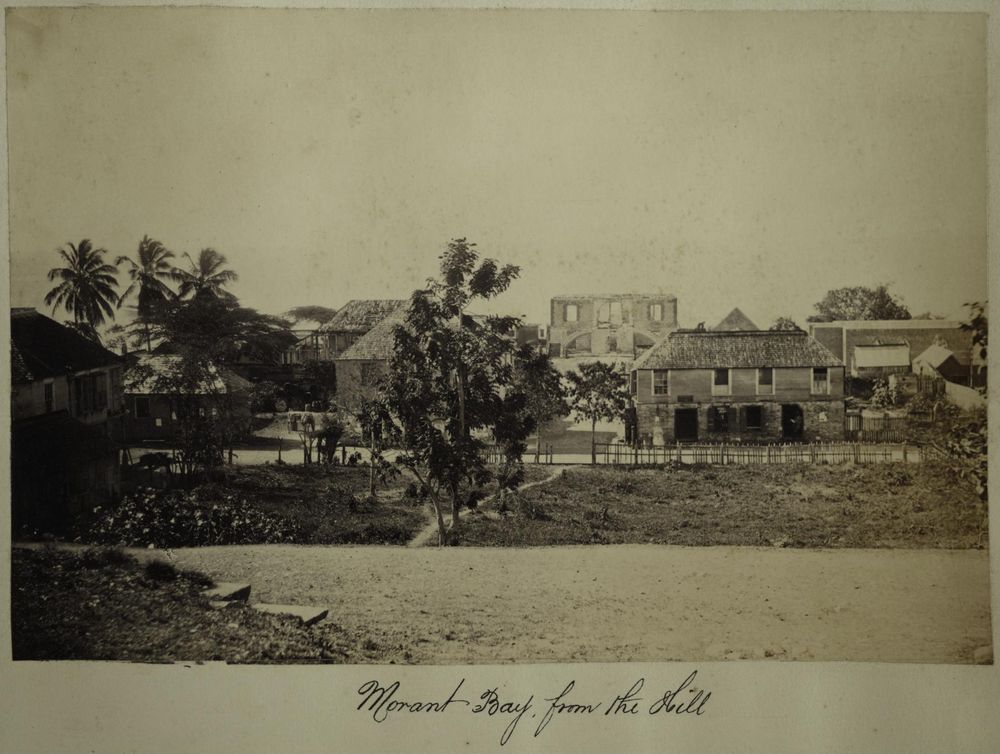
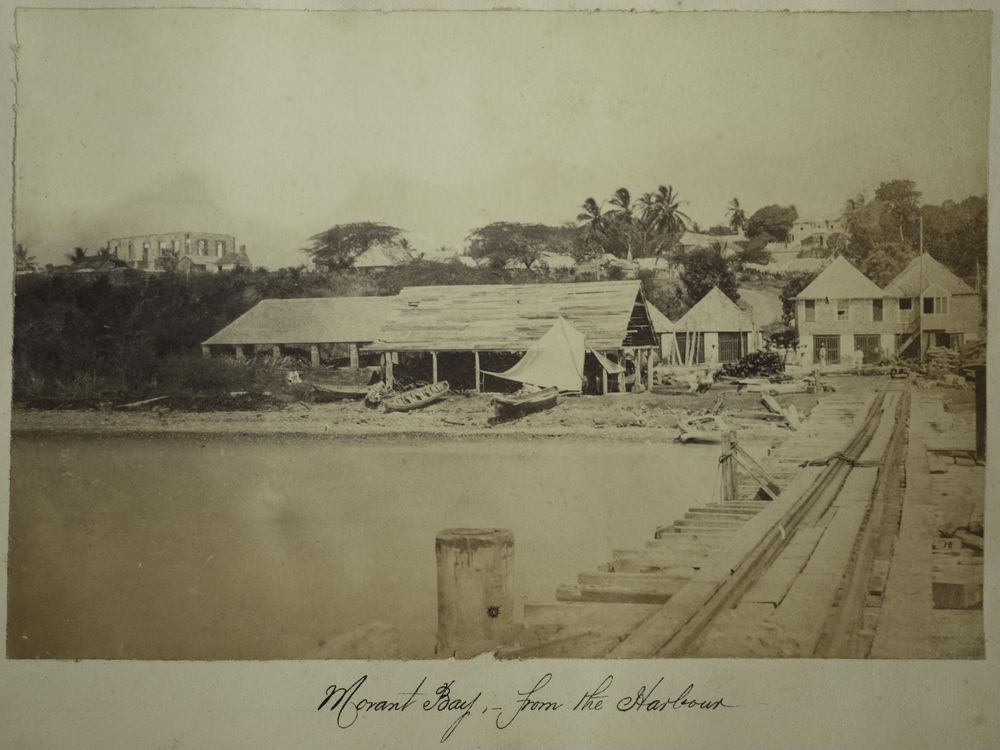
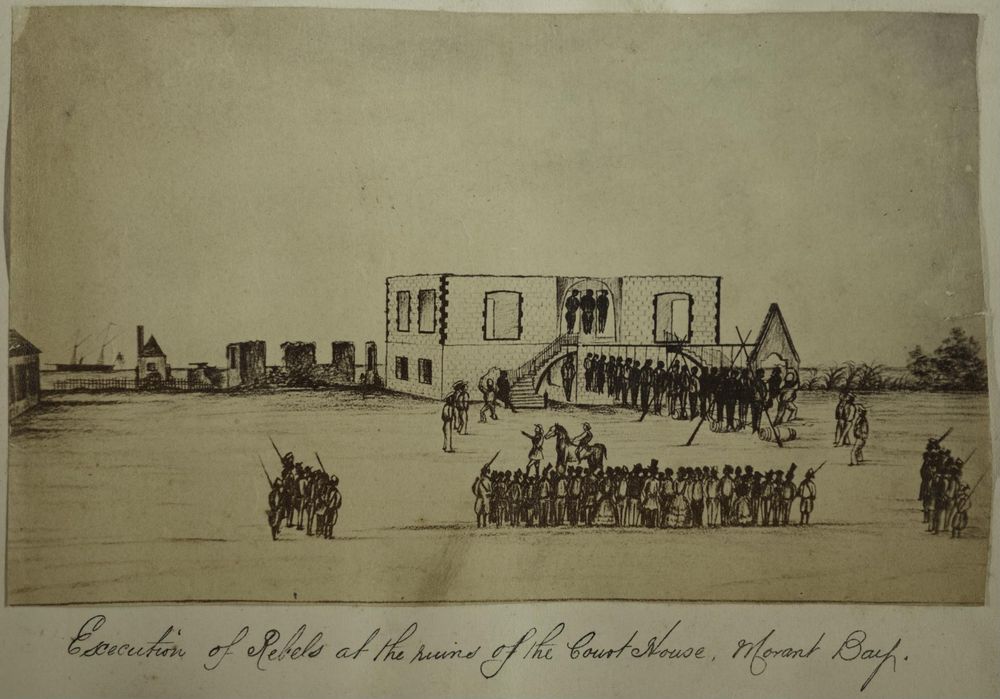
The album’s views from the hill and harbour show a built town, not merely the setting for a single confrontation. The ruined courthouse scene, tree and burial-site image ask different questions: what happened, how places were identified afterwards, and how a military album described the dead. These are nineteenth-century sources, distinct from the later courthouse photograph already shown in this article.
Source & credit
Source & credit
The ruined courthouse and scaffold
The ruined courthouse and scaffold make the suppression visible in the landscape where the confrontation began. The album titles the scene “Execution of Rebels”; it does not identify a particular execution.
Source & credit
Places associated with assembly and burial
The cotton tree and burial ground connect the story to places outside the courthouse. The album identifies the tree as an assembly point and the burial site as the grave of eighty people. Those original captions accompany the views.
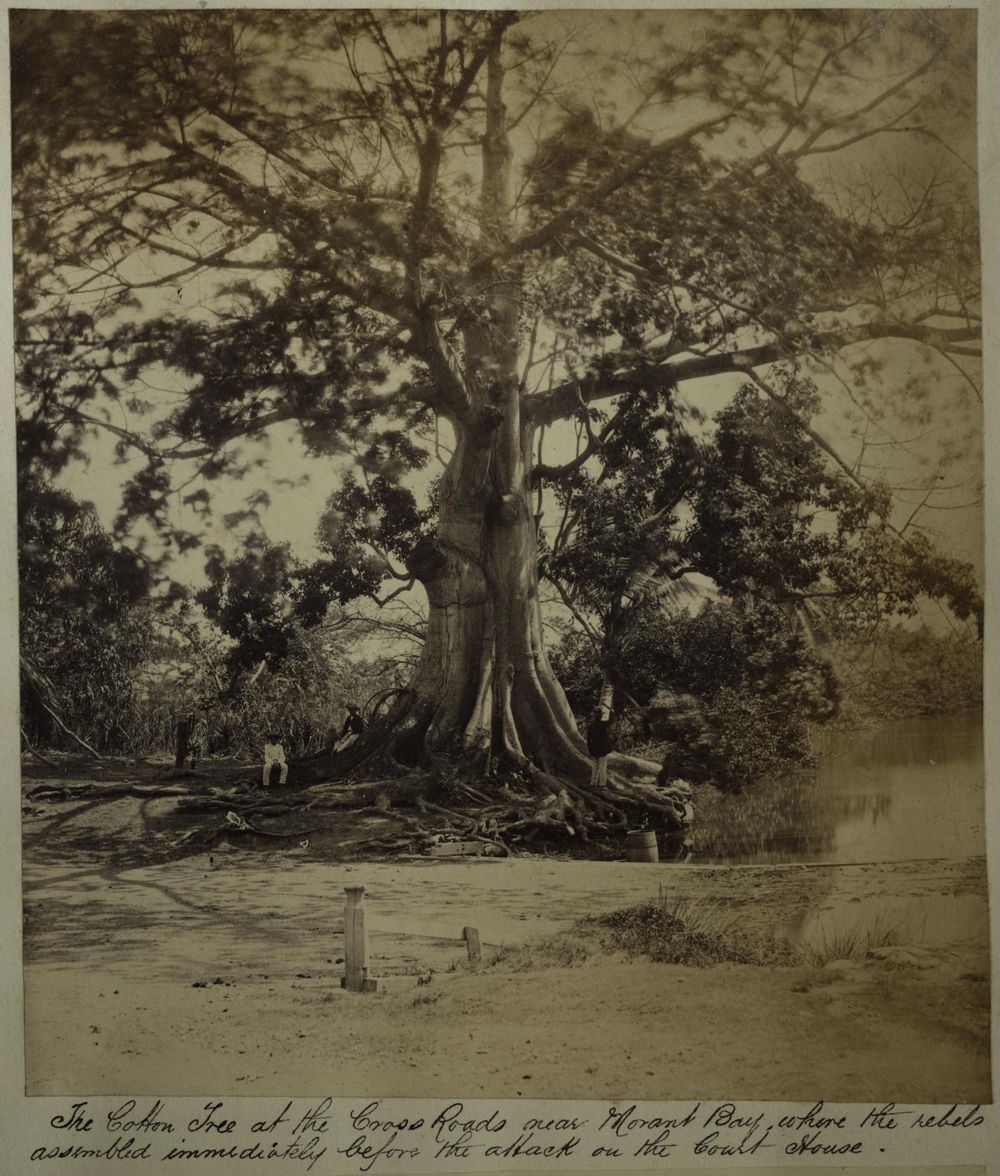
Source & credit
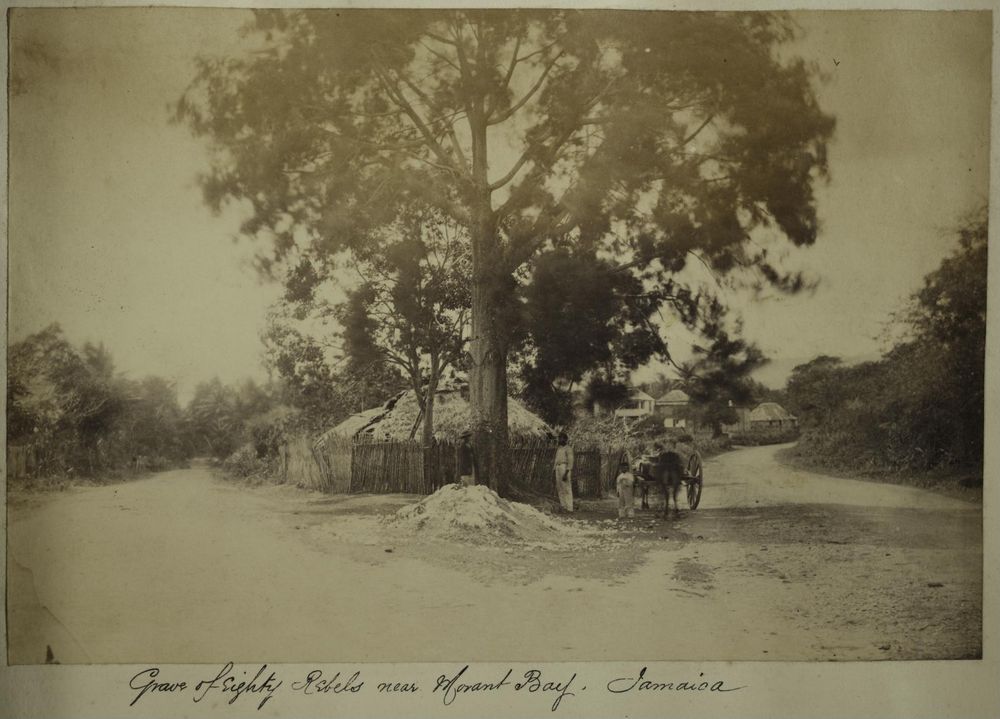
Source & credit
Continue with the portrait album: named officials and unnamed Jamaicans →
What a visit should bring back into view
Bogle’s memorial and the courthouse site preserve his importance. They should also lead us back to the people around him: what they wanted, how they organized and what happened to their demands. The hero’s name is an entrance into the story, not its ending. [4]
Look again
Compare the protesters’ concerns about land, taxes and representation with the later questions about Governor Eyre’s powers. Which problems could a prosecution of one governor leave untouched?
Scholarship and evidence
- Connolly, J. (2023). Re-reading Morant Bay: Protest, inquiry, and colonial rule. Law and History Review, 41(1), 193–216. https://doi.org/10.1017/S0738248022000578 Full open article and PDF consulted; CC BY 4.0. Particularly the sections on systemic critique, inquiry, and The Queen v. Eyre. ↩
- Heuman, G. (1994). The Killing Time: The Morant Bay Rebellion in Jamaica. University of Tennessee Press. Further reading identified in Connolly’s bibliography.
- Jamaica National Heritage Trust. Morant Bay Court House. Institutional site record and later-place context.
- Jamaica Information Service. Paul Bogle. National-hero biography; commemorative account is distinguished from Connolly’s interpretive argument. ↩
- Princeton University Library: Gulland album, Morant Bay image records 86–92. Captions are attributed; precise exposure dates, identities and burial counts remain unconfirmed.
- Papers Relating to the Disturbances in Jamaica, Part I (February 1866), enclosures 24 and 33, printed pp. 18, 22–23. Names and roles of people killed on 11 October 1865.
- Dr Edward William Major’s statement, Papers Laid before the Jamaica Royal Commission by Governor Eyre (1866), printed pp. 28–29. Charles Price and the courthouse confrontation.
- Princeton University Library: curatorial account of the Gulland album, 5 October 2009. Identifies Gordon’s portrait; execution date also recorded in the cited JIS biography.
- Duncan Fletcher, Personal Recollections (1867), pp. 124–126: Gordon’s letters to Lucy. Original printed pages inspected in the Library of Congress digitisation.
Jonathan Connolly’s interpretation is credited under CC BY 4.0.