JAMAICA, RECONSIDERED · 3 OF 19 · MISSING HISTORY
The economy enslaved Jamaicans built beyond the cane fields.
Enslaved Jamaicans grew food, sold produce and made pottery as well as working on plantations. Gardens, markets and broken pots reveal an economy built through their knowledge and effort, under conditions they did not control.
Plantation records often tell us how much sugar an estate produced and who owned it. They tell us less about the meals people had to find, the pots they used or the goods they carried to market. Yet enslaved Jamaicans did that work too. Their lives cannot be explained by the cane field alone. [1] [2]
A provision ground was a plot used to grow food. Cultivating it could help a family survive and produce something to sell. It could also save the enslaver the expense of feeding people whose labour the plantation already controlled. The same garden could be a source of independence and another burden. [1]
Food took time and work
A plot was not a gift of leisure. Someone had to reach it, plant it, tend it, harvest and carry the food. That work competed with the demands of the estate. The value of the crop cannot be separated from the time and effort required to produce it.
Research by Edwards, Plummer and McKenzie follows this tension through Jamaican grounds and gardens. It shows people using agricultural knowledge to sustain themselves within an exploitative system. Their initiative was real; so were the limits slavery placed on it. [1]
Source & credit
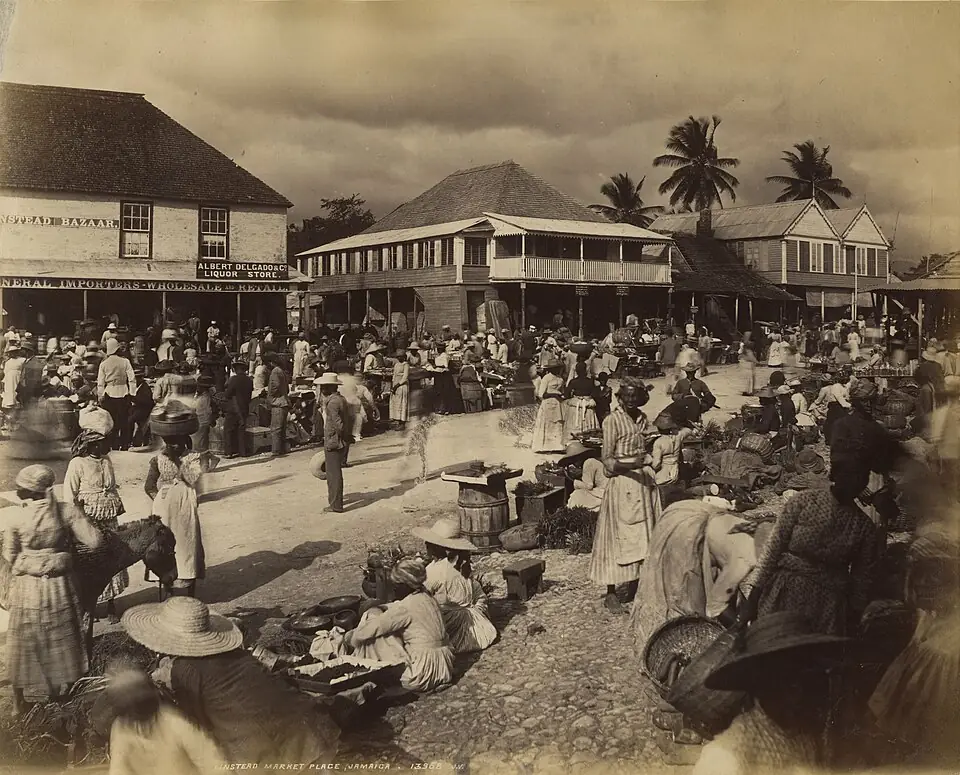
Markets connected people
Produce and handmade goods created connections beyond one household or estate. Selling a surplus could bring money and contact with other people. Neither erased enslavement, but both belong in an account of how people made room to act within it.
The Linstead photograph shows a market in 1891, after emancipation. It helps us picture a trading place, but it is not a photograph of an eighteenth-century slave market. Its date matters as much as its subject.
What a broken pot can tell us
Archaeologists Mark Hauser, Christophe Descantes and Michael Glascock studied the materials in Jamaican earthenware. By comparing pottery found in different places, they tested how widely it may have been produced and exchanged. Their findings pointed to a larger scale of production and distribution than an account of isolated households would suggest. [2]
A fragment cannot tell us a potter’s name or every stop on a trading journey. But it can show connections that an estate owner’s ledger misses. The study also discusses women’s roles in making pottery and passing on craft knowledge. [2]
People brought skills into freedom
After emancipation, people seeking land and homes did not start without knowledge. They already knew how to cultivate, make, bargain and maintain relationships. The National Library’s account of free villages describes the next struggle to acquire land and build settlements. Read beside the earlier market history, it shows continuity as well as change. [5]
Source & credit
A song takes us back to the seller
In Louise Bennett’s performance of Linstead Market, the uncertainty of selling becomes a story we can hear. The later recording is not a set of slave-era market accounts. It is a cultural expression of work, hopes and disappointing trade. Hear the identified performance → [6]
That is the larger point: Jamaica’s economy was made by people growing food, carrying goods and making useful things, as well as by the export business that dominated colonial records.
Look again
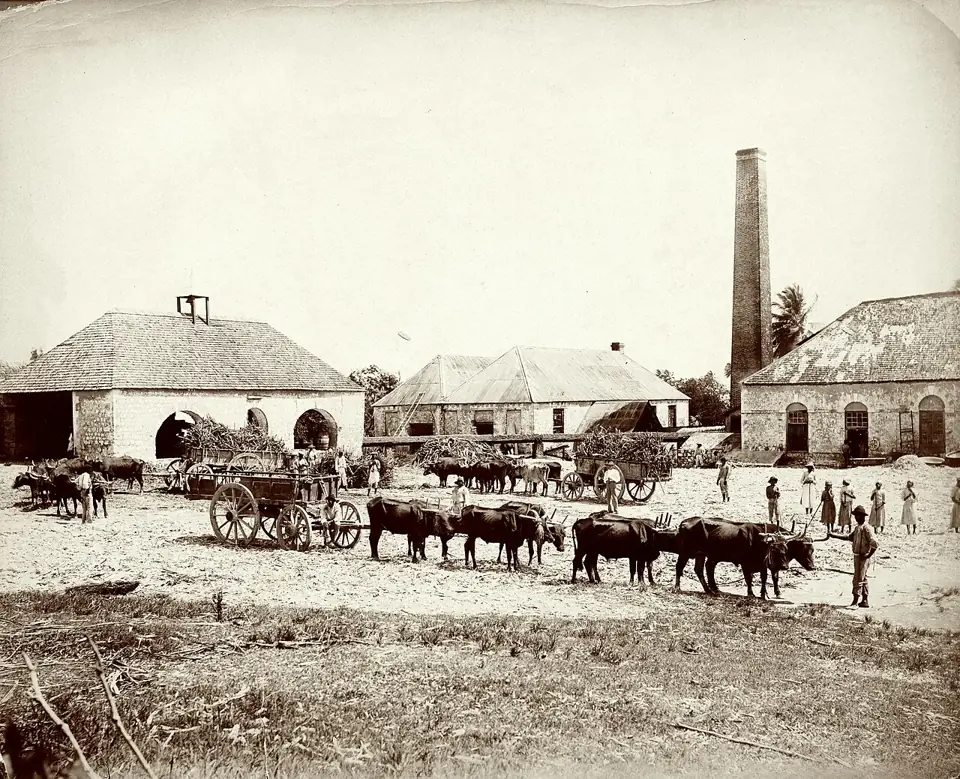
Look at the market and estate photographs. Then ask how growing a family’s food could give an enslaved person some choices while saving the enslaver money.
Scholarship and evidence
- Edwards, T., Plummer, N., & McKenzie, C. (2026). Grounds and gardens in Jamaica: Rooting Black resistance and resilience. Public Humanities, 2, e126. https://doi.org/10.1017/pub.2026.10241 Open article consulted; concise discussion of findings, not reproduction or adaptation of its text or figures. ↩
- Hauser, M. W., Descantes, C., & Glascock, M. D. (2008). Locating enslaved craft production: Chemical analysis of eighteenth century Jamaican pottery. Journal of Caribbean Archaeology, Special Publication 2, 123–148. Research PDF consulted: introduction, method and conclusion. ↩
- Hauser, M. W. (2008). An archaeology of Black markets: Local ceramics and economies in eighteenth-century Jamaica. University Press of Florida. Bibliographic record; further reading.
- Mintz, S. W., & Hall, D. (1960). The origins of the Jamaican internal marketing system. Yale University Publications in Anthropology, 57. Author’s bibliography confirms publication. Use the consulted research article above for findings, rather than attributing unread passages to this work.
- National Library of Jamaica. Emancipation exhibition. Institutional account of land purchases and free villages consulted. ↩
- Smithsonian Folkways. Louise Bennett: Jamaican Folk Songs. Recording identity and performance context; a later song is not a statistical account of a slave-era market. ↩