History Reconsidered | Morant Bay: After the Executions | Stony Gut, St. Thomas
Paul Bogle: The Village That Would Not Be Forgotten
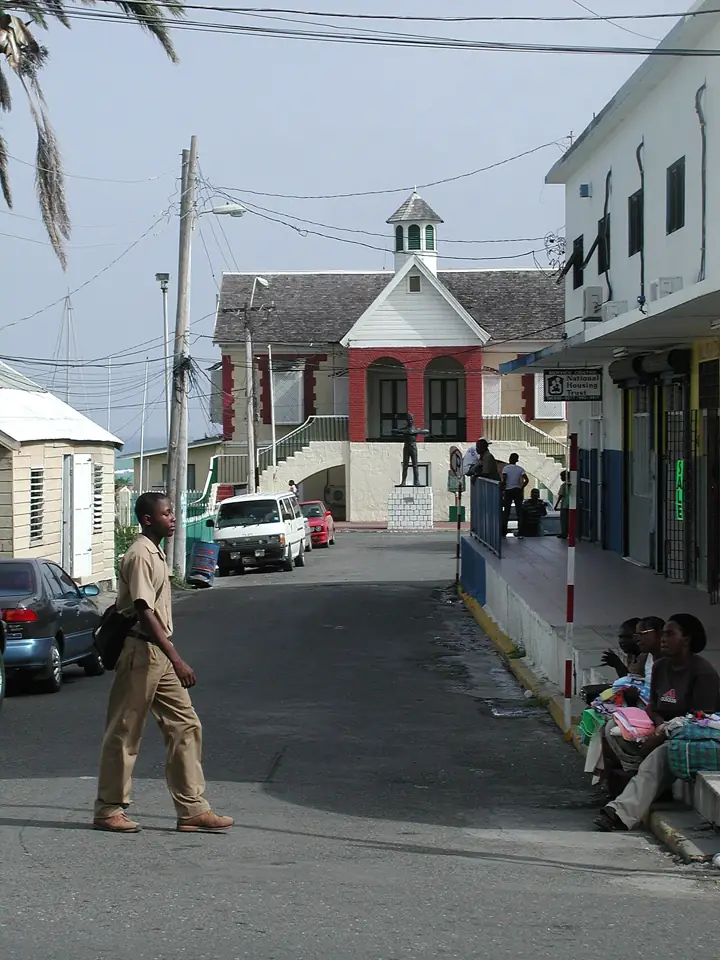
Before Paul Bogle became a Jamaican National Hero, he belonged to Stony Gut. There were neighbors to organize, families to support, a chapel in which people could gather, and grievances that could not be resolved simply by waiting for the authorities to listen.
Source & credit
A visitor can stand near places associated with Bogle's life. Harder to see are the households that made his movement possible, and the people who continued living in St. Thomas when the government had hanged him. Their history is the subject of this article.
A community seeks an audience
Bogle was a Baptist deacon and community leader in Stony Gut. Freedom from slavery had not brought the rural poor equal political influence, secure livelihoods or confidence in the courts. His ally George William Gordon, an elected politician and landholder, challenged aspects of the colonial administration.
The Jamaica Information Service recounts a journey in which Bogle, his brother Moses and villagers went to Spanish Town to present grievances to Governor Eyre. They did not secure the hearing they sought. The trip matters because it shows the protest movement did not begin with violence at a courthouse. Its participants had also tried to petition the government.
The marchers’ decision to travel meant leaving work and households behind; the surviving account does not record their conversations on the road.
From Stony Gut to Morant Bay
On 11 October 1865 protesters came to the Morant Bay courthouse. An encounter with militia escalated into gunfire and an attack on the courthouse in which officials and others died. Eyre declared martial law over much of the eastern part of the island. The subsequent suppression killed hundreds, involved extensive flogging and left roughly a thousand houses destroyed according to royal commission-era counts.
Who captured Bogle, and what did their force do?
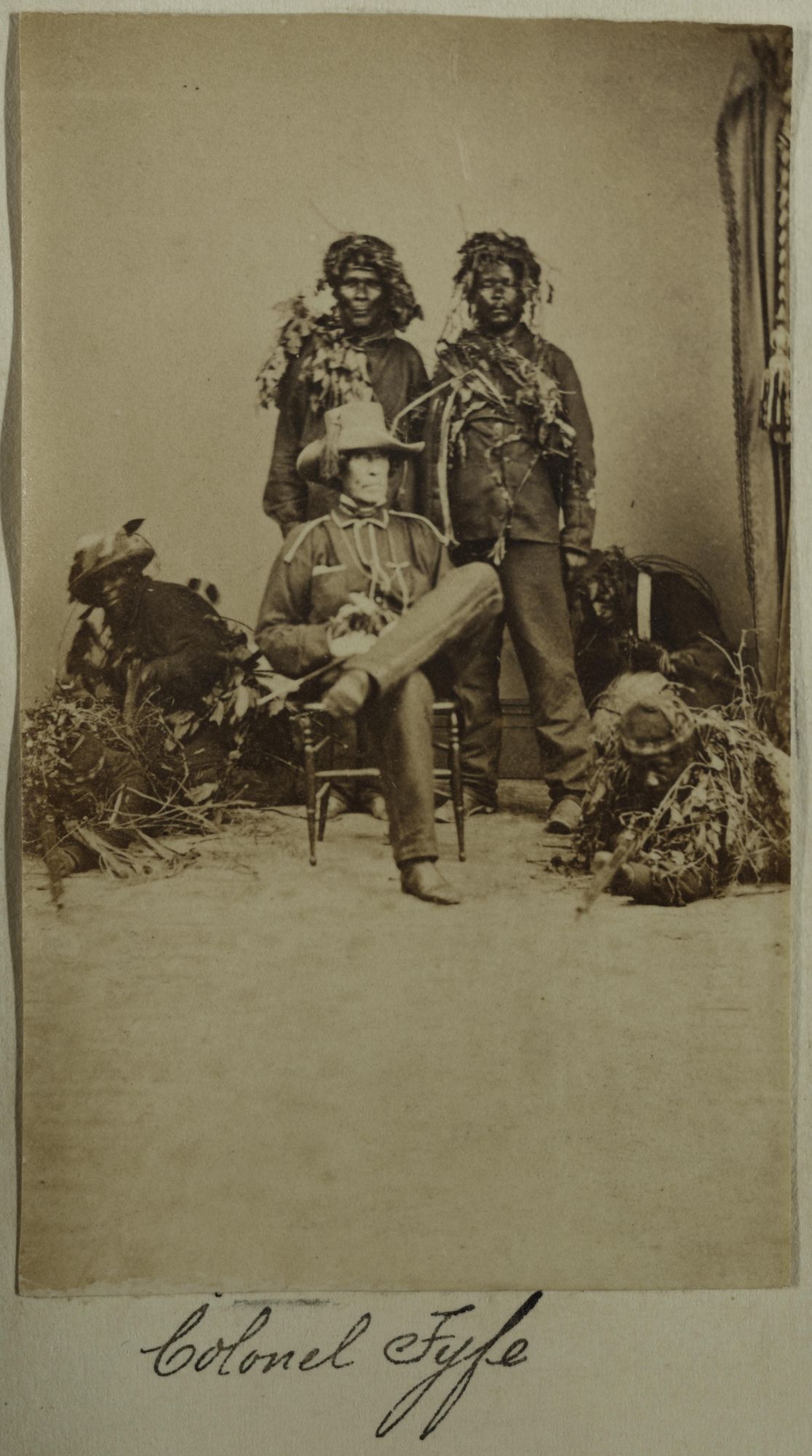
The Maroon force involved in Bogle’s capture was associated with Moore Town in Portland and commanded by the white colonial officer Alexander Fyfe. Anthropologist Kenneth Bilby identifies Captain Joseph Briscoe as the Maroon officer credited with capturing Bogle. These were identifiable participants, not an anonymous force simply described as “the Maroons.” Bilby also cautions that identifying Briscoe in surviving group photographs remains an educated guess. [6]
Source & credit
Historian Joy Lumsden reconstructs the capture on 23 October 1865: Bogle was taken alive, brought to Whitehall that evening and sent to Morant Bay the following morning. He was hanged by the colonial authorities on 24 October. The capture and execution were separate acts; saying merely that Bogle “was captured and hanged” conceals who carried out each one. [5] [1]
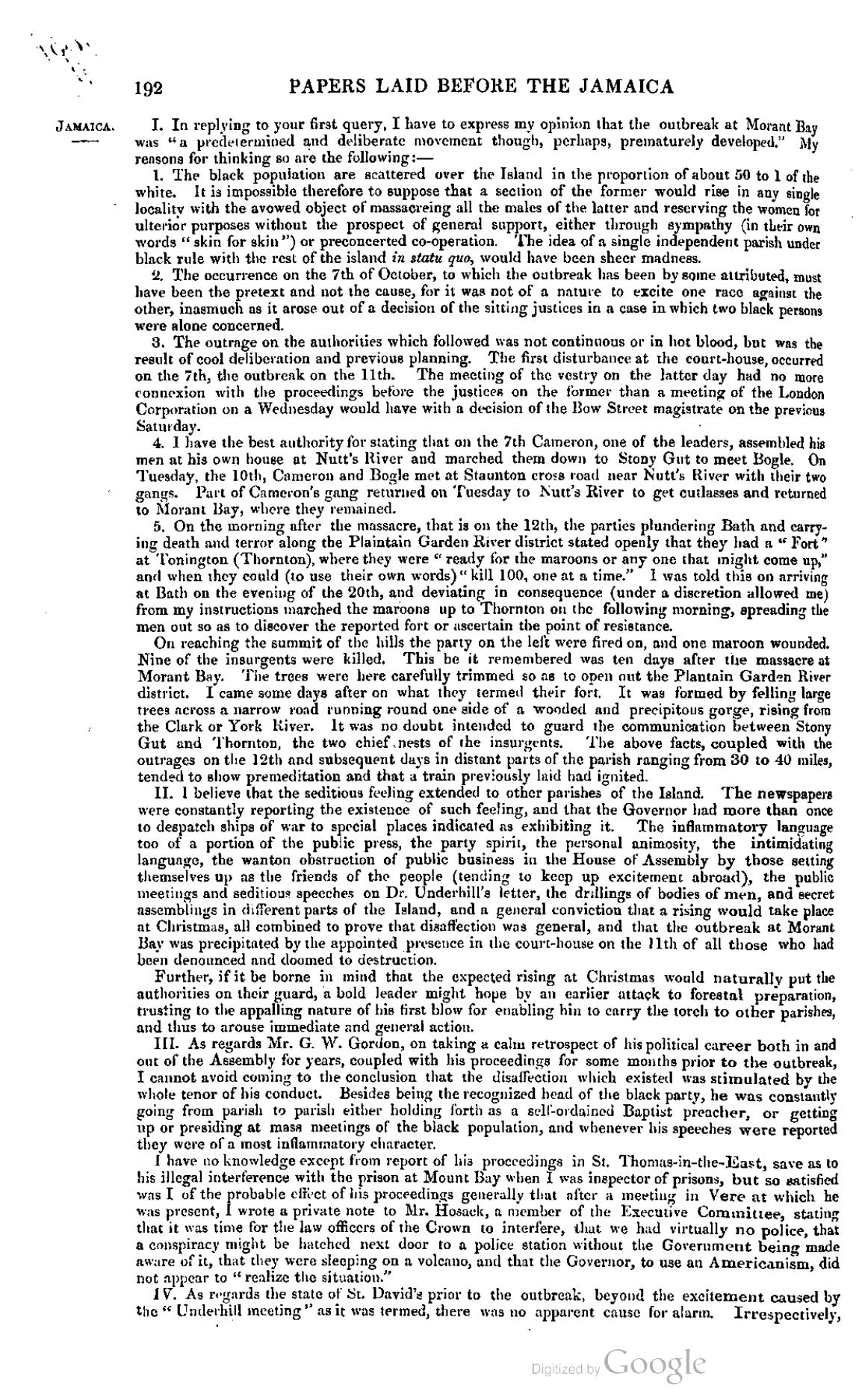
There is also a specific record of killings by Fyfe’s force. Lumsden cites his report of operations at Torrington on 21 October: after the advance party was fired upon and a Maroon wounded, his men returned fire, reporting nine people killed, and burned houses. “Rebels” was the report’s label for those killed, not an independently established account of every victim’s involvement. Nine is a reported count for that episode, not a verified total of deaths attributable to Maroons throughout the suppression. Fyfe repeated the nine-death account in a letter dated 9 February 1866, reproduced below. [7] [5]
Source & credit
These actions belong in Bogle’s history alongside the story of resistance. The people pursued in 1865 were living after emancipation; this was colonial repression, not the return of legally enslaved fugitives. Naming commanders, communities, victims where known, and the records behind each claim makes responsibility visible without assigning every Maroon the same conduct. Read the separate investigation of Maroon treaties and slave-catching →
The uprising was crushed. For people living in Stony Gut and surrounding districts, the consequences did not end with Bogle's execution.
What happened to the neighbors?
A burned house was not a statistic to the people who lived in it. Neither were the loss of income, family separation and fear that accompanied the reprisals. Yet the best-known accounts preserve the governor's name and the leaders' names far more readily than those of ordinary residents.
To recover those people, the royal commission's witness testimony could be read alongside parish registers, land records, church histories and family archives. Individual claims should be checked against contemporary documents where they survive. Some names may remain unrecoverable; that is a limitation of the record, not a reason to erase the community from the narrative.
A reported descendant speaks
In an October 2025 Jamaica Star interview, Constantine Bogle was identified as Paul Bogle's great-great-grandson and spoke about how his ancestor is represented and commemorated. His account is meaningful family testimony. It is not, on its own, a published birth-to-birth chain proving the precise relationship. It should be presented as a reported identity and a promising research lead.
Moses Bogle offers a different route into family history: as Paul's brother, he anchors the wider Bogle family even if the direct line remains incompletely mapped. Descendants of siblings are relatives, but not direct descendants of Paul himself.
This investigation also extends beyond the Bogle surname. Stony Gut's other families were participants and witnesses, not scenery behind a single great man.
The image and the place
Tony's Guide has a separate investigation of the familiar portrait traditionally presented as Bogle. Questions about the sitter's identity belong there, where the competing evidence can be examined in full. A portrait cannot substitute for a genealogical record.
The physical places tell another part of the story. Bogle's chapel and home site link commemoration to the community in which political action began. Morant Bay is associated with the courthouse confrontation and executions. Visitors should not mistake photographs of the old courthouse for a current building: the historic courthouse was destroyed by fire in 2007.
These sites can illuminate the past, but visitors should respect residents and check current access rather than treating living communities as museum exhibits.
The question Stony Gut leaves us
Bogle's execution did not end the demand that freedom should mean justice. Yet it would be equally misleading to claim that the uprising immediately secured political equality. Jamaica instead moved to Crown Colony government, with power more firmly concentrated in imperial hands. The struggle for representation continued.
The next great account of Stony Gut may come from an overlooked baptism entry, a family-held letter, a burial register or a witness's name in the inquiry. Bogle matters not because all those people were his descendants, but because they formed the community that acted with him.
Tony's call: Visit Stony Gut to encounter a community's history, not merely a hero's memorial. Listen to descendant testimony, verify the links that can be verified, and remember the neighbors whose names have yet to be recovered.
Evidence: The reported relationship of Constantine Bogle requires corroborating generation-by-generation records. Confirm current site access and memorial conditions before visiting.
Explore the companion portrait essay: named officials and unnamed Jamaicans →
Sources and further reading
- Jamaica Information Service: Paul Bogle
- Jamaica Information Service: St. Thomas heritage sites
- Jamaica Star: reported Bogle descendant, 10 October 2025
- Tony's Guide: Is this really Paul Bogle?
- Joy Lumsden, “A brave and loyal people: the role of the Maroons in the Morant Bay Rebellion in 1865,” full-text chapter copy. Capture: manuscript pp. 20–21 and notes 27–28. Torrington: pp. 18–19 and notes 24–25, citing Fyfe to Eyre, 22 October 1865, The National Archives, CO 137/394. Chapter account citing the original dispatch. Reported casualty figures are attributed, not treated as a verified overall toll.
- Bilby, K. (2011). Picturing the Maroons in the Morant Bay Rebellion: Complicating the imagery of commemoration. The Princeton University Library Chronicle, 72(2), 574–583. Moore Town, Fyfe and the credit given to Briscoe, especially pp. 574–576 and 582. Author’s full-text copy ↗. His proposed identification of Briscoe in a photograph is explicitly uncertain.
- Papers Laid before the Royal Commission of Inquiry by Governor Eyre (1866), pp. 191–192: A. G. Fyfe to W. R. Myers, 9 February 1866. Original PDF text and page 192 scan directly examined; paragraph 5 describes the approach to Torrington/Thornton and reports nine killed after a Maroon was wounded. Fyfe was defending his force’s actions; this is a participant’s retrospective statement, not an independent adjudication. Full source PDF ↗.