History Reconsidered | Featured investigation | St. Thomas and Britain
Charles Darwin and Jamaica Collide: The Rebellion That Divided an Empire
On 20 November 1866, Charles Darwin wrote to his friend Joseph Dalton Hooker about his latest botanical experiments. He wanted roots for crossing experiments and was pleased that a carnivorous plant was unfolding new leaves. Then, without ceremony, he turned to Jamaica.
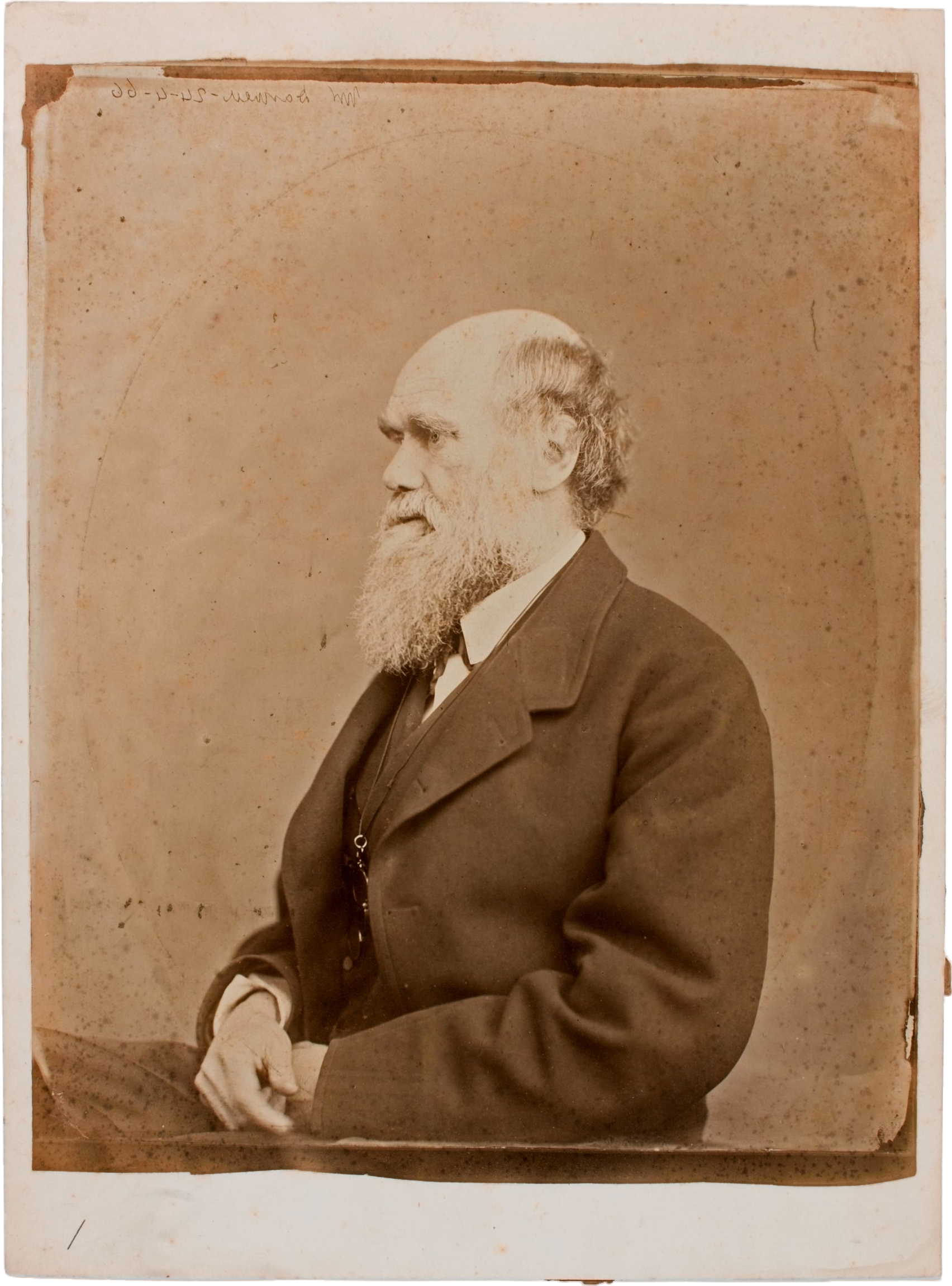
Source & credit
Darwin told Hooker he had subscribed to the Jamaica Committee. The more he learned, he wrote, the more atrocious the affair seemed. The previous day his cash account recorded £10 under the heading Jamaica.
Why was the author of On the Origin of Species giving money to pursue a former governor of Jamaica? The answer begins not in Darwin's garden but in Stony Gut and Morant Bay.
What had happened in Jamaica?
Slavery had been abolished decades earlier, yet the political and economic inequalities of plantation society persisted. Paul Bogle, a Baptist deacon and community leader from Stony Gut, helped organize protests over poverty and injustice. George William Gordon, a prominent Jamaican legislator, openly criticized Governor Edward John Eyre.
On 11 October 1865, confrontation at the Morant Bay courthouse erupted into violence. Militia opened fire; protesters attacked the courthouse, and officials and other people died. Eyre imposed martial law over part of eastern Jamaica. The uprising was swiftly contained, but troops and colonial authorities carried out extensive killings, floggings and destruction of homes.
Gordon was arrested in Kingston outside the martial-law district, transferred into it, court-martialed and hanged on 23 October. Bogle was executed the following day. A royal commission later found the continuation of martial law excessive and criticized the severity of reprisals.
These were the events that reached Darwin's circle in England.
The letter that reveals the division
Darwin's letter is especially revealing because the declaration about Jamaica sits amid routine exchanges about plants. The violence had entered his working life, not simply a list of distant political causes. His contribution is documented by his account books and the letter, not inferred from an admirer’s later biography.
Hooker replied on 22 November. He said he had no defense to offer for Eyre's actions, yet opposed prosecuting Eyre personally: he feared the effort would worsen rather than resolve matters. His distinction complicates a simplified tale of humane scientists against cruel scientists. He could deplore the violence while rejecting the legal strategy.
Thomas Henry Huxley supported the Jamaica Committee's effort; John Tyndall opposed prosecution. Victorian scientists did not form a united political camp. The dispute concerned the reach of imperial power and what legal accountability should follow a colonial emergency.
Another source makes Darwin's feelings unusually vivid. William Darwin later recalled a family argument in which he made a flippant remark about the prosecution fund. His father became furious, then apologized for losing his temper. That is a recollection recorded later, not a transcript of a conversation; it is valuable precisely because it is labelled honestly.
Why slavery mattered to Darwin
Decades before the Jamaican events, Darwin saw slavery during the Beagle voyage in Brazil and condemned its cruelty in his travel writing. He also grew up in families shaped by the abolitionist commitments of figures such as Josiah Wedgwood. These facts help explain why the report from Jamaica could have moved him, though they do not prove a single cause for his decision in 1866.
There is also a provocative connection between his science and the controversy: Darwin's account of common human ancestry challenged fixed notions of separately created human groups. But common ancestry is a scientific claim; equality under law is a moral and political commitment. The two should not be treated as interchangeable. Darwin himself used some racial categories of his time, and evolutionary language was later distorted to defend hierarchy. Neither distortion cancels his documented support for the Eyre prosecution effort.
What the campaign achieved—and did not
The Jamaica Committee, associated with John Stuart Mill and other critics, sought legal accountability. Eyre was recalled and faced prolonged controversy, but prosecution attempts did not produce a criminal conviction. He eventually retired in Britain. The Jamaican families affected by the reprisals lived with a different legacy.
Darwin's support should not be inflated into a claim that he led the Jamaican struggle. He did not. The uprising, the petitioning and the personal risks belonged to Jamaicans long before famous British intellectuals entered the argument.
A second distinction is equally important: Darwin definitely contributed money to the Jamaica Committee campaign. In a later letter he was uncertain whether he had formally been a member. It is safer to say he supported the committee than to describe him confidently as an enrolled leader or member.
Why this collision matters
A small piece of Darwin's correspondence brings two histories into focus. In one, a scientist examines plant reproduction and questions inherited assumptions about nature. In the other, Jamaicans struggle over the meaning of emancipation, lawful government and political voice. The link is not a metaphor invented for a headline: it is recorded in a £10 account entry and a letter to a friend.
The best way to tell it is to begin and end with Jamaica. Bogle, Gordon and the people of St. Thomas created the events that shook Britain's intellectual establishment. Darwin's reaction tells us how far their story traveled—and how deeply the empire's conduct divided people who otherwise worked together.
Tony's call: Remember Darwin's £10, but remember first the Jamaicans whose demands and suffering made Britain argue about justice. The scientific celebrity is the connection; Jamaica is the center of the story.
Evidence: Darwin's £10 contribution is documented. The claim that evolutionary theory caused his decision is interpretation, not an explicit statement by Darwin.
Primary documents and further reading
- Darwin to Hooker, 20 November 1866 — letter and editorial note recording the £10 account entry.
- Hooker to Darwin, 22 November 1866 — Hooker's qualified disagreement.
- Darwin to Herbert Spencer, 13 November 1875 — later uncertainty about formal membership.
- Darwin Correspondence Project: Darwin in 1866 — context and intellectual divisions.
- The Life and Letters of Charles Darwin — William Darwin's family recollection.