History Reconsidered | Morant Bay: After the Executions | St. Thomas
Edward John Eyre: The Governor Who Left Jamaica
In 1866, Edward John Eyre sailed away from the country he had governed. In St. Thomas, the families who had lost relatives, shelter, and possessions during the suppression of the Morant Bay uprising remained. Eyre's public career was broken; their lives had been broken in very different ways.
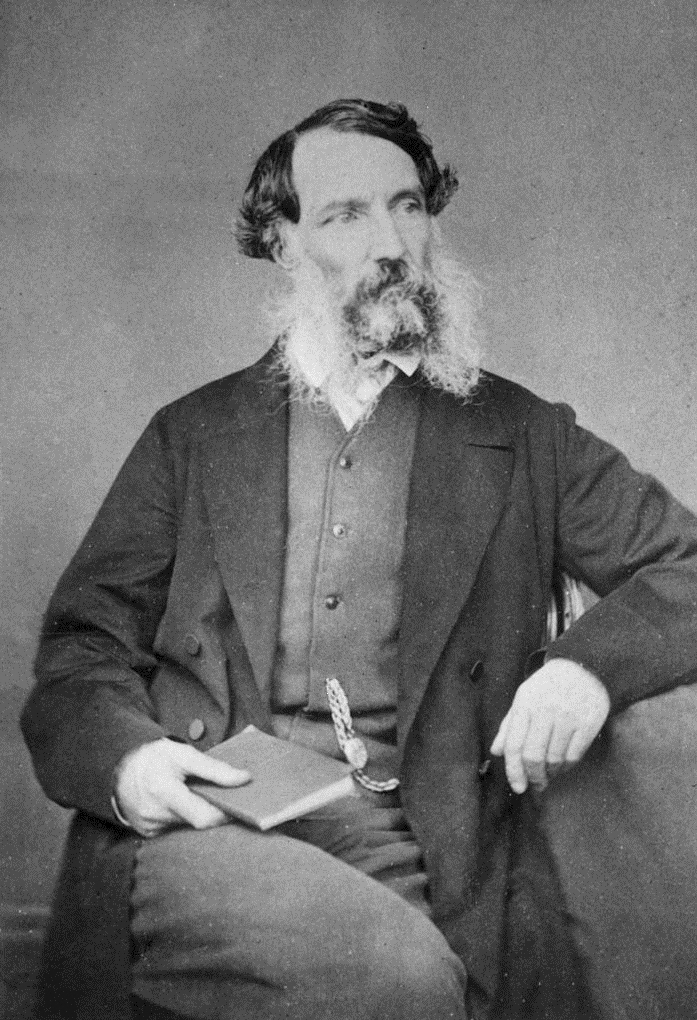
Source & credit
This is not an argument that the governor suffered no consequences. He lost his post and faced years of public criticism and legal controversy. It is an invitation to ask a sharper question: why was the aftermath of October 1865 so different for the man who gave the orders and the people who lived under them?
Before the executions
Emancipation had come to Jamaica decades earlier, but political representation, secure landholding and fair treatment under the law were still beyond the reach of many rural Black Jamaicans. Paul Bogle, a Baptist deacon in Stony Gut, and his supporters carried grievances from that world into the public square. George William Gordon, a landowner and elected legislator, criticized the administration and advocated for poor Jamaicans.
On 11 October 1865 a confrontation at the Morant Bay courthouse turned deadly. Militia gunfire was followed by attacks on officials and the burning of the courthouse. The authorities had legitimate grounds to stop further violence. What they did next is the heart of the Eyre controversy.
Eyre declared martial law over much of eastern Jamaica. The uprising was swiftly contained, but punitive operations continued. The royal commission appointed to investigate later reported hundreds of deaths and floggings and the destruction of roughly a thousand houses. Commonly cited totals include 439 people killed and more than 600 flogged; totals depend on categories and should be presented as figures from the inquiry, not precise independent counts of all victims.
The commissioners acknowledged the danger and the authorities' initial effort to restore order. They also concluded that martial law lasted longer than necessary and condemned excessive punishments, including reckless flogging and the wanton burning of dwellings. Their judgment matters because recognizing the violence at the courthouse did not require approving everything done afterward.
The execution that made Eyre infamous
Gordon was arrested in Kingston, outside the martial-law district, and taken into the district to be tried by court-martial. He was executed on 23 October. His open criticism of Eyre and the weak evidentiary basis for treating him as an instigator made the proceedings a focus of outrage.
One cannot understand Gordon's death by treating the courts as an incidental detail. The geography mattered: moving a civilian from Kingston into a military jurisdiction made a different kind of proceeding possible. The question of whether the government had lawfully used emergency powers would pursue Eyre for years.
Bogle was hanged the following day. The government could end lives within days. Restoring trust in the law would prove far harder.
An empire argues with itself
When accounts reached Britain, writers, philosophers and scientists divided. John Stuart Mill supported the Jamaica Committee's attempt to pursue legal accountability. Thomas Carlyle defended Eyre. Charles Darwin gave £10 to the prosecution effort, as his accounts and correspondence document. The controversy was not a tidy conflict between those who condemned the courthouse violence and those who did not. The argument centered on how much violence a colonial governor could authorize after an emergency had been brought under control.
Eyre was recalled and did not resume the governorship. Attempts to secure criminal convictions failed. He later received a pension and government assistance with legal expenses. Failure to convict is a legal outcome; it does not erase the royal commission's criticism.
A household in Devon, households in St. Thomas
Eyre had married Adelaide Fanny Ormond in 1850. Biographical sources record that he was survived by his wife, four sons and a daughter. He retired in England and died at Walreddon Manor, Devon, in 1901.
An attractive claim says none of Eyre's descendants lives in Jamaica. That is not established by the sources reviewed. The records account for Eyre's own return and elements of his immediate family, not the locations of every later descendant. An incomplete genealogy cannot establish the absence of living descendants.
The meaningful contrast requires no such claim. Eyre's later life is recorded in biographies, pensions and legal proceedings. Many Jamaicans caught in the repression are recorded only as numbers, witnesses or the occupants of destroyed homes. A thousand burned houses are also a thousand sets of questions: whose house, which village, whose land, and where did its occupants go?
The investigation that matters next
The most valuable follow-up would extract names and locations from royal commission testimony and check them against St. Thomas church registers, land records and family papers. That may reconstruct losses that a governor's biography leaves unseen. It also acknowledges what remains unknown: the commission's aggregated counts cannot tell us the fate of every household.
Tony's call: Eyre's departure is documented. The complete geography of his descendants is not. The stronger, provable story is that a governor returned to Britain while Jamaicans remained with the consequences of a repression his own government's inquiry judged excessive.
Evidence: The number and identities of surviving Eyre descendants in Jamaica have not been established.