JAMAICA, RECONSIDERED · 15 OF 19 · PORTRAIT INVESTIGATION · ST. THOMAS
Is this really Paul Bogle? The portrait, the scars, and the evidence.
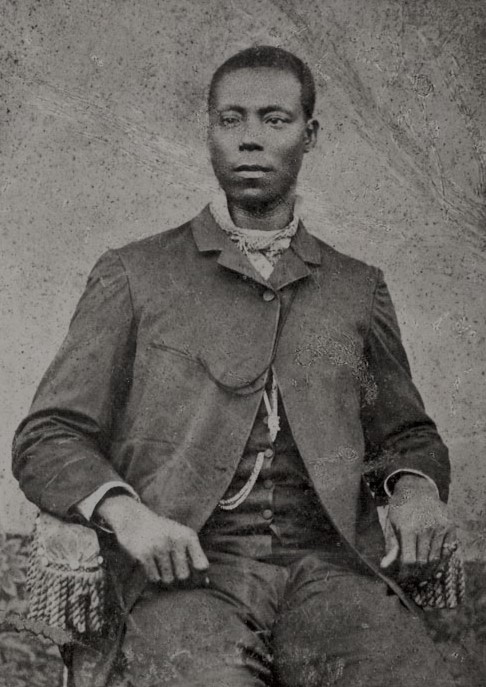
Jamaica knows the seated portrait as Paul Bogle. The surviving evidence leaves that identification uncertain. The rival claim that it shows American inventor Thomas L. Jennings is even less convincing.
What can the face tell us?
Art historian Veerle Poupeye reports that a contemporary description called Bogle’s face pockmarked. She also cautions that those marks would not necessarily be visible in a formal portrait. The apparent smoothness of the reproduced face does not settle that question. The picture is traditionally identified as Paul Bogle. Poupeye’s account and its limits →
Source & credit
Where the photograph came from
W. G. Ogilvie brought the image to public attention through a reported connection to Reuben Ewen of Spring Garden near Stony Gut, whose grandmother was said to be a niece of Bogle. The Sunday Gleaner published the identification in April 1959. An important archive lead survives: the National Library's Walter Adolphe Roberts Archive, MS 353, item 353.2.4.23, lists Ogilvie's 28 July 1957 memorandum, papers discussing authenticity, and photographic copies. The catalogue tells us these papers survive. Their full contents still need to be examined.
Could the well-dressed sitter have been Bogle?
Yes. Clothing is not evidence against him. Bogle was a Baptist deacon, landholder and politically active community leader, not merely an impoverished field labourer. Reports conflict on the scale of his property, so claims of specific acreages should not be treated as settled without land records. A formal portrait would have been plausible for a man of his standing.
Why Thomas Jennings is not a convincing alternative
The American inventor Thomas L. Jennings died in 1859, aged roughly 67 or 68. If the original was a tintype, the man appears younger than Jennings could have been when that process became available in the 1850s. Poupeye notes that the missing original must be examined to confirm the photographic process. Age estimates from photographs are uncertain, but the chronological mismatch is strong; a verified American history linking Jennings to the image has not been demonstrated. The presence of the image under Jennings's name on later websites is not independent evidence.
Descendants, portraits and Manley's statue
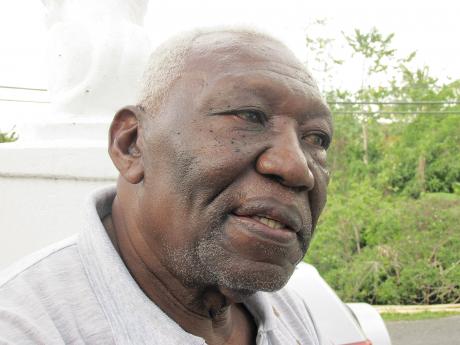
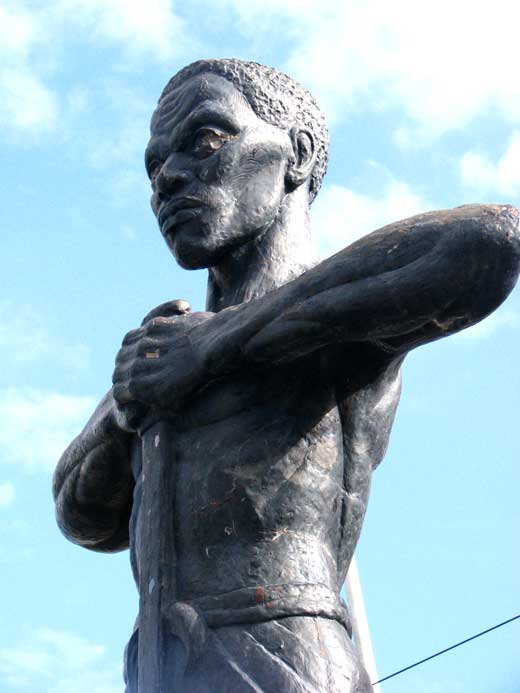
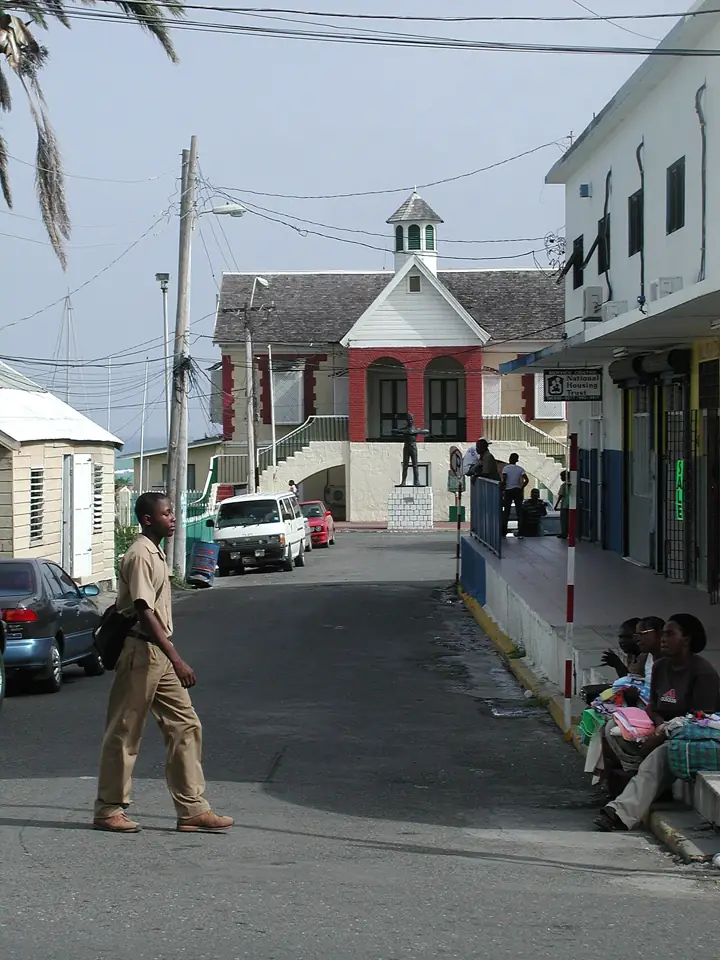
Descendant interviews complicate the story rather than resolve it. Constantine Bogle, identified by the Jamaica Star as a great-great-grandson, defended the customary portrait and criticised Edna Manley's monument in an October 2025 interview. Austin Hoffman challenged the claimed genealogy of Phillip “Bagan” Bogle, the model associated with Manley's sculpture, in a 2015 Gleaner account. These are reported family accounts. Their accounts form part of the portrait’s later family and public history.
Source & credit
Source & credit
Constantine Bogle’s account: Read Ashanti Lawson’s interview and see Ian Allen’s photographs at Stony Gut, 10 October 2025 →
Source & credit
Bogle's capture by Maroons
There is an important historical connection beyond the portrait dispute. Bogle was captured by Maroons working with the British colonial authorities during the suppression of the uprising and executed at Morant Bay on 24 October 1865. Earlier Maroon treaties secured community autonomy while also requiring the return of fugitives and assistance against rebellions. This does not mean all Maroons acted alike. Read our investigation into Maroon freedom and slave-catching obligations →
Our conclusion
The Jennings identification has little supporting evidence and serious chronological problems. The identification as Bogle has a reported Jamaican family connection, but the missing original and incomplete documentation prevent authentication. The person pictured might have been Bogle or a relative. The identification remains: “Traditionally identified as Paul Bogle; sitter not independently authenticated.”
What would settle the question?
Locate the original photographic object; examine the full 1957 Ogilvie memorandum and Ewen family testimony; compare the earliest surviving prints with the 1865 description; and look for a contemporaneous inscription or documented sitter. Descendant photographs alone are not proof.
Sources and image credits
- National Library of Jamaica, Walter Adolphe Roberts Archive, MS 353, item 353.2.4.23.
- National Library of Jamaica, portrait catalogued as Paul Bogle, D0006926. Reproduction requires permission.
- National Gallery of Jamaica, Edna Manley's Bogle: A Contest of Icons (2010).
- Veerle Poupeye, Bogle versus Jennings: Another Perspective (2022).
- Ashanti Lawson, Jamaica Star, 10 Oct. 2025; photographs credited to Ian Allen.
- Jamaica Gleaner, 30 June 2015; photo credited to Paul H. Williams.