JAMAICA, RECONSIDERED · 5 OF 19 · MISSING HISTORY
The labour contracts behind “Out of Many, One People.”
After emancipation, plantation employers recruited workers from India and China under labour contracts. Some stayed and built lives in Jamaica. Their story includes difficult working conditions, later migrations and the making of communities.
After slavery ended, plantation owners still wanted workers on terms that suited the estates. Recruitment from overseas became part of that struggle over labour. Workers from India, and some early Chinese arrivals, came under indenture: contracts requiring service for an agreed period. [1] [5]
Some later made permanent homes in Jamaica. Others returned or moved on. The national motto, “Out of Many, One People,” expresses belonging, but does not tell us how those journeys began or what people faced when they arrived.
What was indenture?
A worker’s journey and employment were organized through a contract and an immigration system. The surviving agreements, emigrant passes and administrative records can show how people were recruited and where they were sent. Jamaica’s archive collection begins in 1845 and includes much later records as well. [1]
Indenture was not legally identical to chattel slavery. But having a contract did not guarantee equal bargaining power or freedom of movement. To understand a person’s experience, we need the actual terms, the employer’s powers and the rules governing departure.
How workers became a picturesque image
Art historian Anna Arabindan-Kesson examines photographs of Indian workers in Victorian Jamaica. Some were staged or circulated as postcards and missionary images. Clothing and poses could make people appear permanently foreign to the island where they worked. [2]
Her account places these pictures beside restrictions on movement and separate living arrangements. The separation was not merely a cultural difference caught by a camera. Institutions helped organize it. An attractive historical photograph can hide those conditions if its caption tells us only about costume.
Source & credit
There was more than one migration
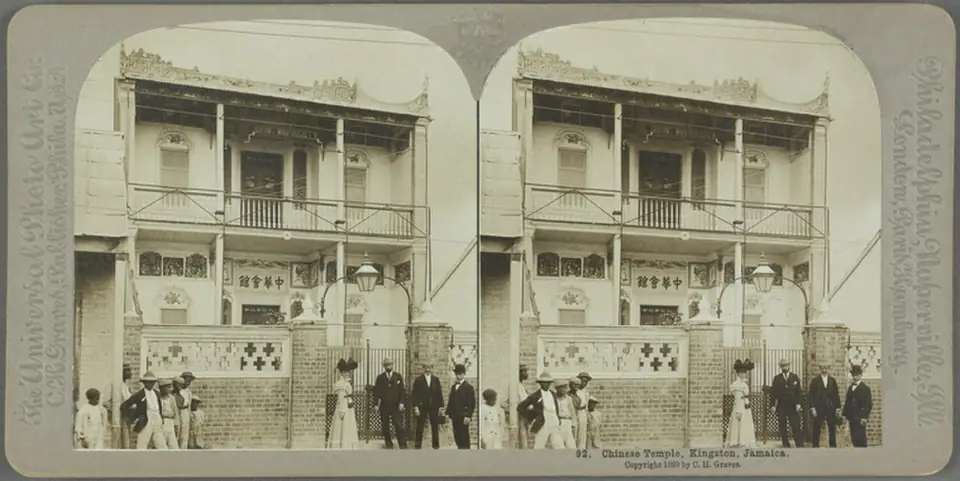
The National Library’s overview distinguishes Chinese arrivals connected to indenture from later Chinese immigration. Chinese Jamaican families have different migration histories. Nor were Indian and Chinese workers’ journeys interchangeable. [5]
The archive’s date range, 1845–1958, describes the documents it holds, including later administration. It does not mean that recruitment under indenture continued throughout that entire period. [1]
Staying meant making a life
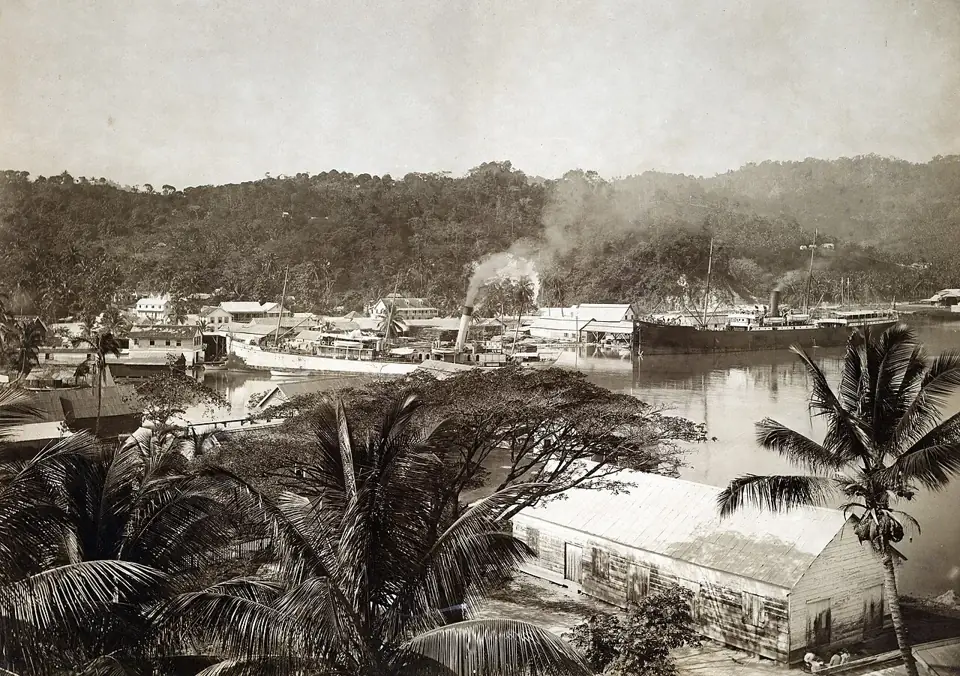
Verene Shepherd’s Transients to Settlers follows the transition from Indian contract labour to permanent settlement. The published review describes people negotiating adjustment and identity, rather than simply disappearing into a national mixture. [3] [4]
Work was one part of that transition. Family records, marriages, return passages and naturalisation correspondence can help trace the later choices of named people. The archive offers routes into those lives, although not everyone has a complete surviving file. [1]
Source & credit
More than a list of contributions
A temple, a shop or a family celebration is part of Jamaica’s present. Behind it may be a history of recruitment, restricted opportunities, adaptation and community building. Knowing that history gives the visible contribution more meaning.
The fuller story keeps the national ideal while taking unequal beginnings seriously. People helped make Jamaica through the lives they built, not simply through customs added to an already finished country.
Look again
Choose one record type in the archive description. Could it tell you why a person came, where they worked or whether they later stayed?
Scholarship and evidence
- Jamaica Archives and Records Department. (2010). The Indentureship Collection, Jamaica. UNESCO Memory of the World regional nomination. Collection description and illustrated catalogue consulted, pp. 1–6. The collection’s 1845–1958 span is not the duration of active recruitment. ↩
- Arabindan-Kesson, A. (2018). Picturing South Asians in Victorian Jamaica. In T. Barringer & W. Modest (Eds.), Victorian Jamaica. Duke University Press. Peer-reviewed chapter available through Stanford; concise discussion of visual argument and recruitment conditions. ↩
- Shepherd, V. (1994). Transients to Settlers: The experience of Indians in Jamaica, 1845–1950. Peepal Tree / University of Warwick. Further reading; bibliographic record. ↩
- Schnepel, E. M. Review of Transients to Settlers, New West Indian Guide. Reproduced by Peepal Tree Press. Indexed review consulted for its description of the transition from contract labour to settlement; automated direct access was blocked. ↩
- National Library of Jamaica. History Notes: Information on Jamaica’s Culture & Heritage. Institutional overview distinguishes Chinese and Indian arrivals, later migration and other post-emancipation movements. ↩