Sam Sharpe Square: judgment, confinement and remembrance
Location: Sam Sharpe Square, Montego Bay, Jamaica
Explore area in Google Maps ↗Map search for the named place or area. Arrange the actual entrance, guide meeting point and access with your host; this is not a confirmed tour departure.
Sam Sharpe Square connects a refusal to work without wages with military repression, public punishment and later national honour. Follow the people and records behind Montego Bay’s monuments.
A plan to stop working without wages
Sam Sharpe was an enslaved man and a Baptist leader in Montego Bay. His congregation gave him a network through which ideas could travel. The National Library’s account describes a plan to withhold labour after Christmas 1831 unless people were paid. The demand challenged the plantation system at its daily foundation: the power to compel someone else’s work. [2]
The protest spread beyond one parish. By 27 December, armed rebellion and estate burning were spreading through western Jamaica. Troops and militia suppressed the uprising by early January. A plan for refusal and the fighting that followed belong in the same account, without assuming that every participant intended exactly the same course. [2]
Source & credit
A threat issued from Montego Bay
A document dated 2 January 1832 makes the official response chillingly direct. Writing from headquarters in Montego Bay, General Willoughby Cotton threatened rebels with death and offered a conditional pardon to those who surrendered. The poster survives among Colonial Office papers and is reproduced with a transcript by The National Archives. [3]
This is the voice of military authority, not a neutral summary of why people rose. It denied that freedom had been granted and described resistance as criminal deception. Reading the poster beside the square’s monuments exposes a dramatic change in public language: conduct condemned by colonial officials became resistance honoured by an independent country. [3]
The punishment reached beyond one famous man
The same archival teaching resource includes an 1832 return of free people tried and sentenced in connection with the rebellion. It records names, occupations, accusations and punishments. Elizabeth Ball of Montego Bay appears with a sentence of twenty-four lashes and six months’ imprisonment for sedition. Ann James of Hanover is recorded as executed for rebellion. [3]
Those entries do not tell us everything either woman did, nor whether the accusations were true. They do show why a history centred only on Sharpe would be incomplete. Women, artisans and others entered the machinery of colonial punishment. The surviving return widens the cast while leaving the people’s own explanations frustratingly out of reach.
Trial and execution turned a town square into a landmark
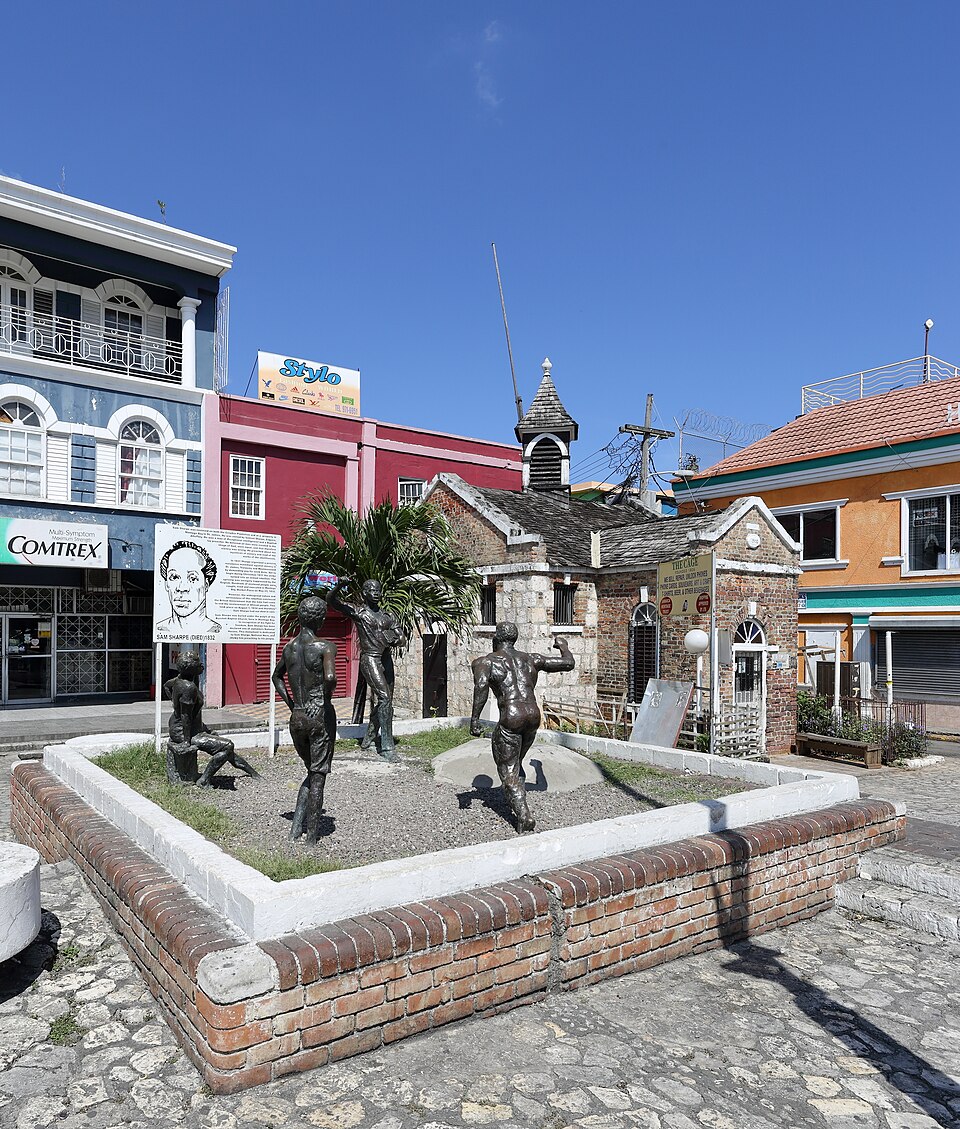
JNHT dates Sharpe’s courthouse trial to 19 April 1832 and his execution in Montego Bay’s market place to 23 May. The Cage, first built in 1806 and later rebuilt in masonry, confined enslaved people and other prisoners. These structures locate the story within the working town, where authority was exercised publicly. [1]
The square carries several histories at once. Its buildings concerned government, commerce and confinement before later generations made Sharpe its central commemorative figure. A walk is clearer when it distinguishes those earlier functions from the monuments added long afterward. The photograph is evidence of a later streetscape, not an eyewitness view of the uprising.
Source & credit
The condemned man became the square’s name
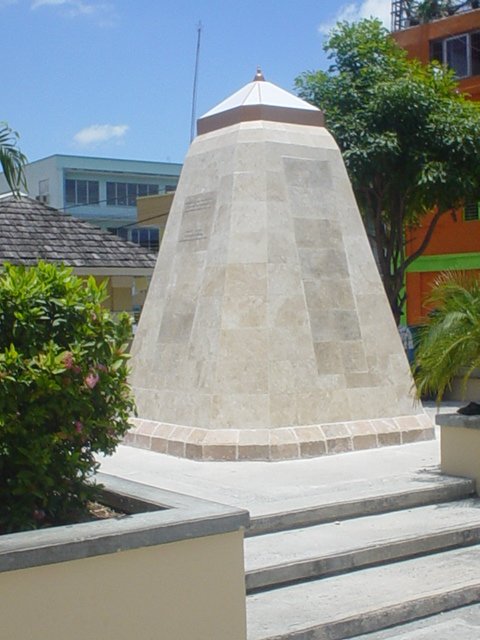
Charles Square was renamed Sam Sharpe Square in 1976. Kay Sullivan’s bronze group followed in 1983, showing Sharpe with a Bible addressing four listeners. A separate Freedom Monument was erected in 2007 for participants in the uprising. The two monuments have different forms and dates; they should not be labelled interchangeably. [1]
The old courthouse also changed purpose. Following a destructive fire, the site was restored as a civic centre. National Gallery West and National Museum West later brought art and museum interpretation into the Montego Bay Cultural Centre. A place associated with judgment became a place where visitors could encounter competing representations of Jamaica’s past. [4]
Follow the story beyond the statues
Start with the refusal to work without wages, then read the military threat, the trial dates and the later acts of remembrance. That sequence gives the monuments something specific to commemorate. Continue with Burchell Memorial and the wider St. James history to follow the congregation and countryside behind the downtown scene. The square is an entrance to the story, not its outer boundary.
Sources and notes
- JNHT, Sam Sharpe Square: trial and execution, Cage, 1976 renaming, Sullivan group in 1983 and separate 2007 Freedom Monument. Historical account does not confirm present access.
- NLJ, Samuel Sam Sharpe: Baptist leadership, labour refusal and the spread and suppression of the 1831–1832 uprising. Its narrative is an institutional retrospective, not the testimony of every participant.
- The National Archives, Spotlight On: Baptist War, PDF pp. 6–11: Cotton poster dated 2 January 1832 (CO 137/181), and return of free people tried and sentenced (CO 137/185). Names and sentences come from the reproduced transcript; charges are colonial allegations, not independently established facts. Archival images are linked, not reproduced.
- Jamaica Information Service, 2019 Cultural Centre history: institutional museum and gallery uses. Named exhibitions and opening arrangements in that older report are not represented as current.