ARTHUR’S SEAT & THE KIDSTONS · 1 OF 4 · ST. ANN & ST. MARY
Arthur’s Seat and Bogg Pen: the estate behind a Jamaican family history
Joseph Kidston’s address at Bogg Pen connects a Jamaican family to Arthur’s Seat. Estate returns, birth records and later ownership records trace the property from slavery into freedom and its changing life as a home.
On 24 May 1845, Joseph Kidston registered his daughter Matilda’s birth. She had been born on 5 April to Joseph and Catherine Kidston. He gave his occupation as labourer and his address as Bogg Pen.
Earlier almanacs place Alexander Kidston at Arthur’s Seat and later at Bogg, beside totals of enslaved people and livestock. My family research connects Bogg Pen with the merged Arthur’s Seat property. Joseph’s address brings a named household into that estate history.
[1][2]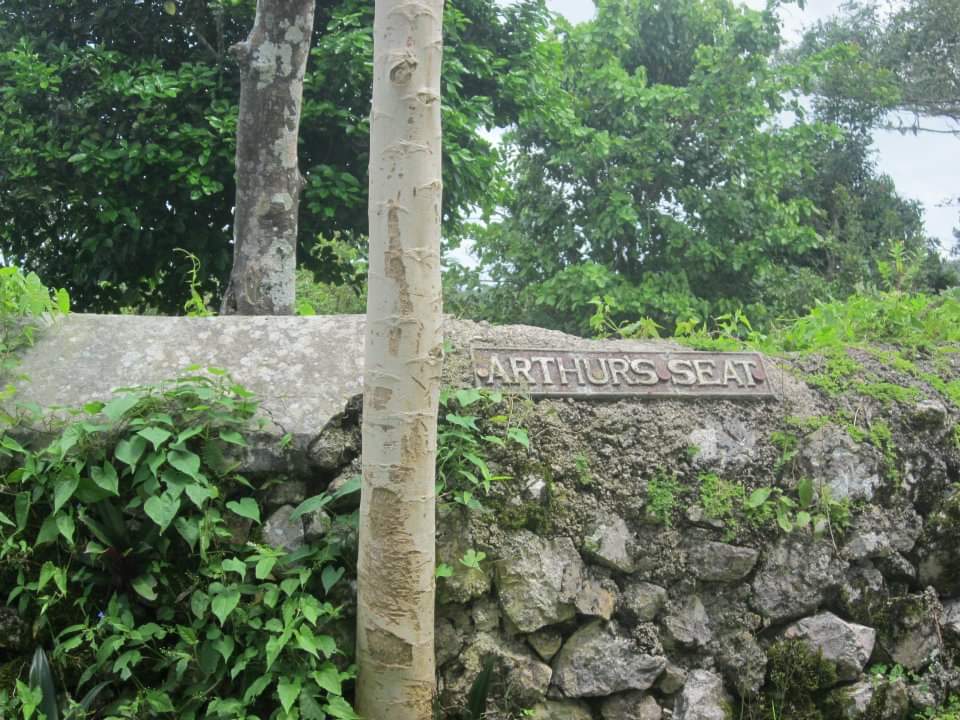
Source & credit
Two names for a connected landscape
Bogg, Bog, Bogg Pen and Boggs Pen are variants followed in the records. Some returns add “etc.” after the property name, reflecting holdings listed together.
The 1878 Jamaica Directory names A. A. E. Drysdale as proprietor of “Arthur’s Seat and Bogg Pens.” Its property index lists both places under him. This is a dated record of their common ownership; the consolidation deed has not yet been examined.
[3][4]This Arthur’s Seat is in St. Ann, within the Ocho Rios property and family records. It is distinct from Arthur’s Seat in Clarendon.
The property before emancipation
The return for 1809, printed in the 1811 almanac, lists Alexander Kidston at Arthur’s Seat with 76 enslaved people and 152 livestock. Returns for March 1816 and March 1819 record 107 and 110 enslaved people respectively; the latter names him as Dr. Alexander Kidston.
[5][6][7]Arthur’s Seat was later classified as a pen, a property where stock was raised. Its animals required pasture, water, fencing and daily care, and supplied power, transport and food to the island’s agricultural economy.
[8]By the 1822 return, Alexander Kidston appears at Bogg with 173 enslaved people. Later returns use Bogg or Bogg, etc.; the dated figures are set out below.
[9]A pen was a place of work
In March 1825, Bogg’s return counted 465 livestock and 149 enslaved people. Watching, feeding and moving stock belonged to the labour behind those columns.
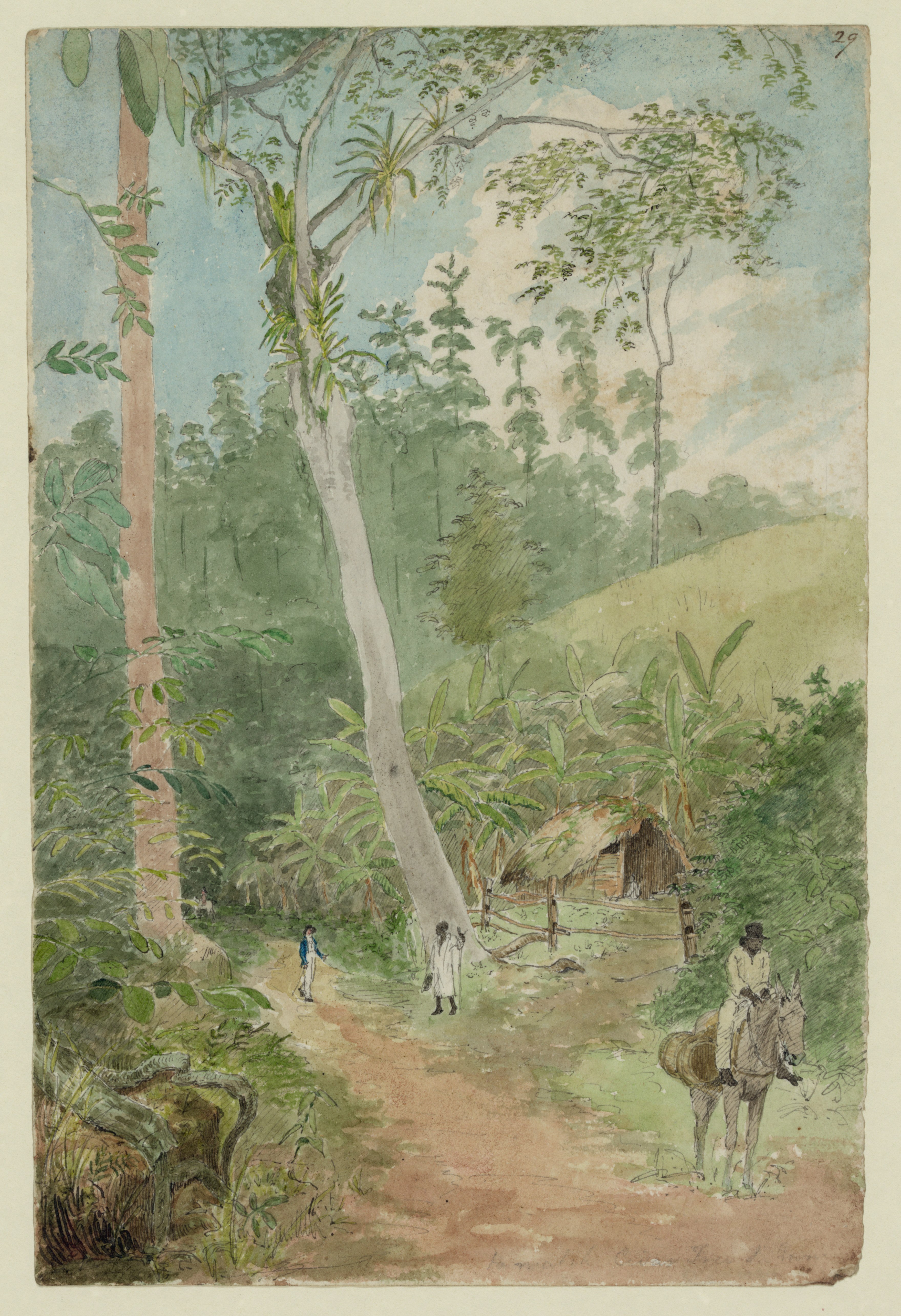
Source & credit
William Berryman’s contemporary Jamaican drawing shows a hut, a path and a water-laden mule. Used here for regional context, it brings the smaller buildings and daily work of a plantation into view.
A dated record of people and property
| Return represents | Published | Property as listed | People recorded | Livestock |
|---|---|---|---|---|
| 1809 | 1811 | Arthur’s Seat | 76 enslaved people [5] | 152 |
| March 1816 | 1817 | Arthur’s Seat | 107 enslaved people [6] | 361 |
| March 1819 | 1820 | Arthur’s Seat | 110 enslaved people [7] | 396 |
| March 1822 | 1823 | Bogg | 173 enslaved people [9] | 413 |
| March 1825 | 1826 | Bogg | 149 enslaved people [10] | 465 |
| March 1826 | 1827 | Bogg, etc. | 149 enslaved people [11] | 467 |
| March 1828 | 1829 | Bogg, etc. | 153 enslaved people [12] | 348 |
| March 1832 | 1833 | Bog etc. | 153 enslaved people [13] | 385 |
| 28 March 1837 | 1838 | Bogg | 117 apprentices [14] | Not listed |
Each row is a return for a particular date. Births, deaths, sales and transfers changed the population. The 1837 figure records apprentices under the compulsory labour system that followed abolition in 1834.
Compensation went to the owner
The House of Commons compensation account printed in 1838 lists Alexander Kidston, St. Ann claim 330, with an award dated 14 December 1835 for 153 enslaved people. The award was nearly £3,000.
[C]The award compensated the ownership claim. Joseph, Jane and the other people subjected to slavery were not its recipients. Compulsory labour continued: Bogg’s March 1837 return still listed 117 apprentices.
Boscobel and the wider Kidston geography
The 1817 almanac also lists Alexander Kidston at Boscobell, St. Mary, with 32 enslaved people and 184 livestock in the March 1816 return. The Kidston property network extended across the St. Ann–St. Mary boundary.
[6]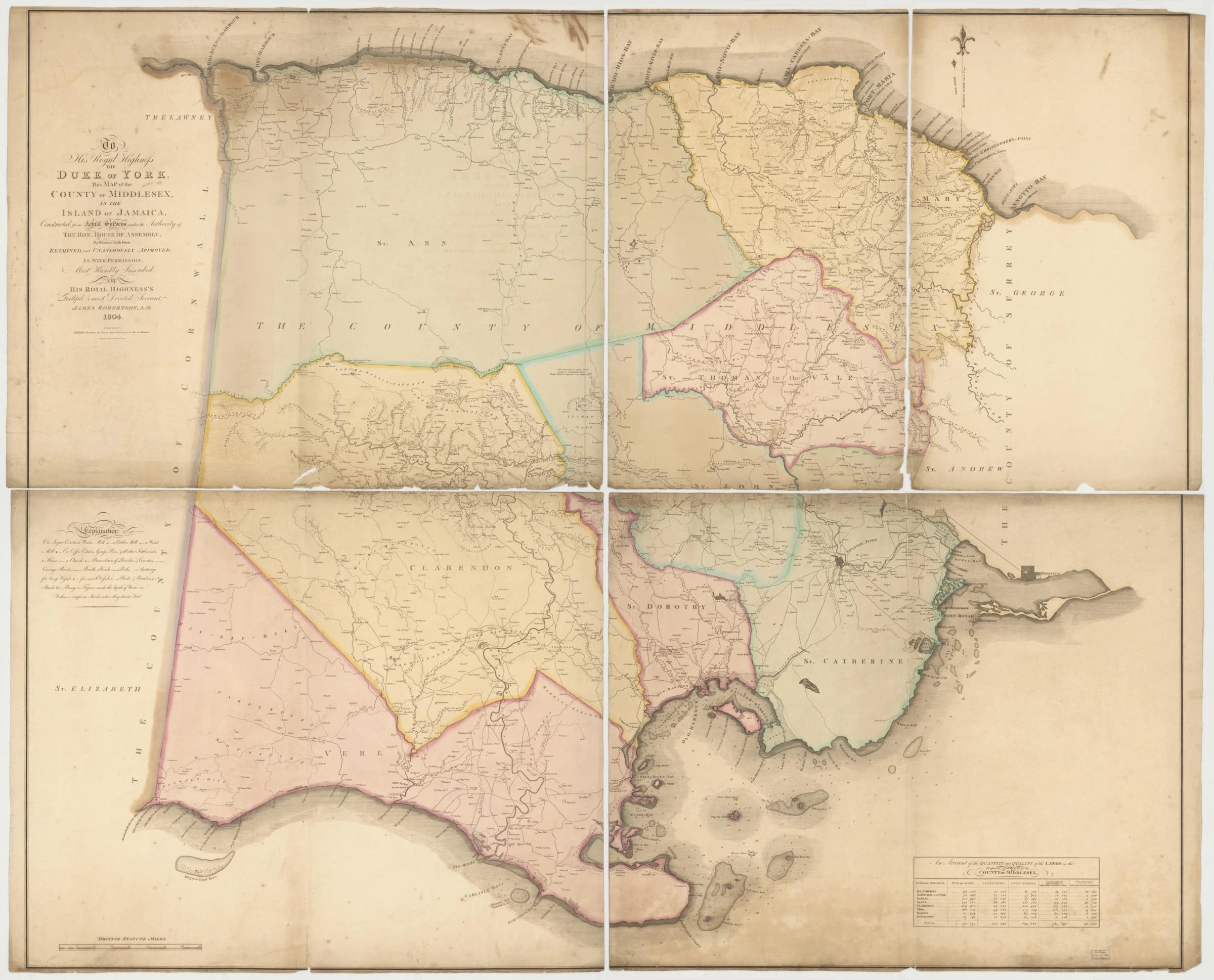
Source & credit
Across a river, into a wider economy
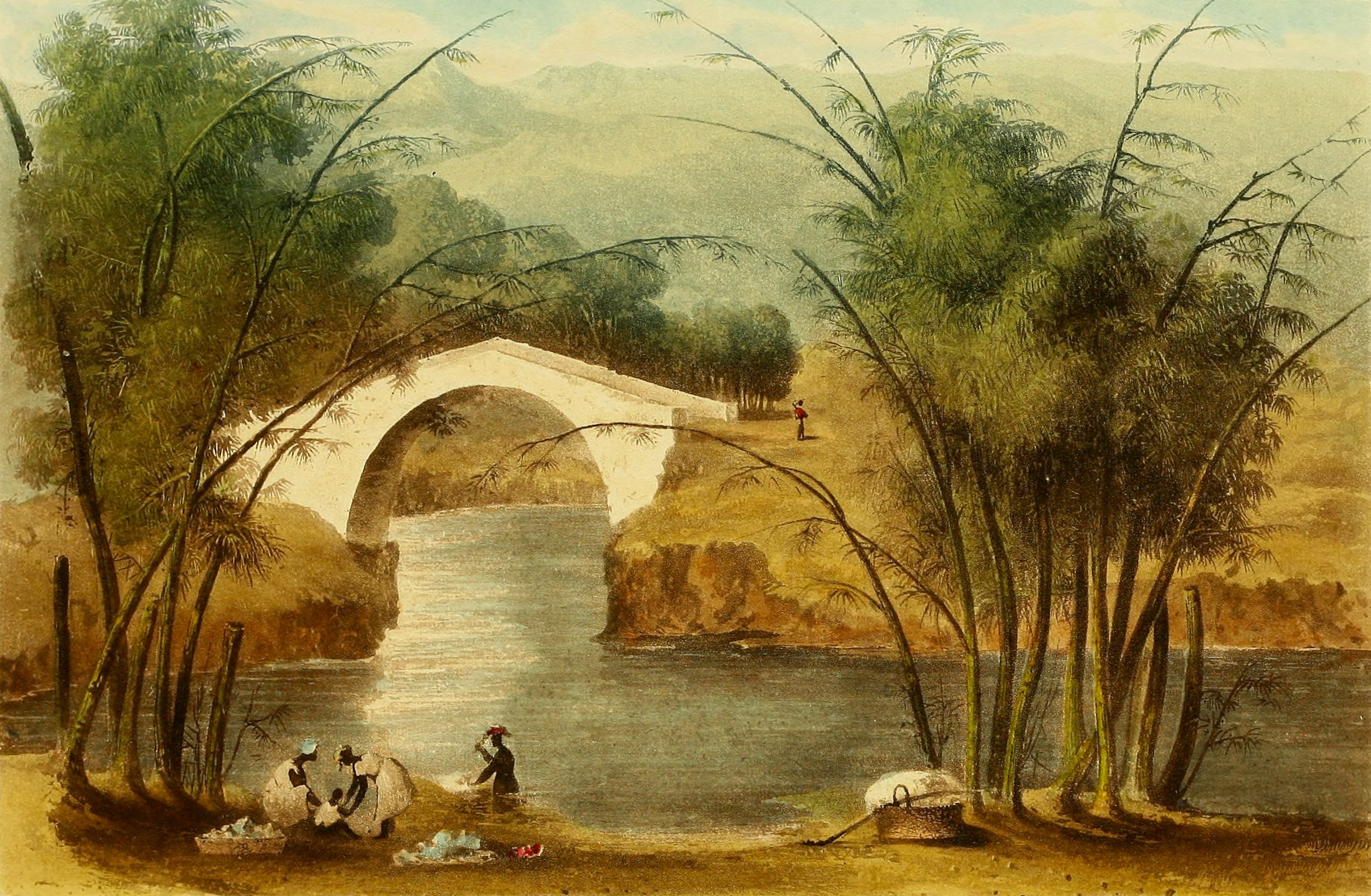
Source & credit
Hakewill’s White River print shows people working beside a crossing. His accompanying text places the river along much of the St. Ann–St. Mary boundary, within the region linking the Kidston properties.
[H]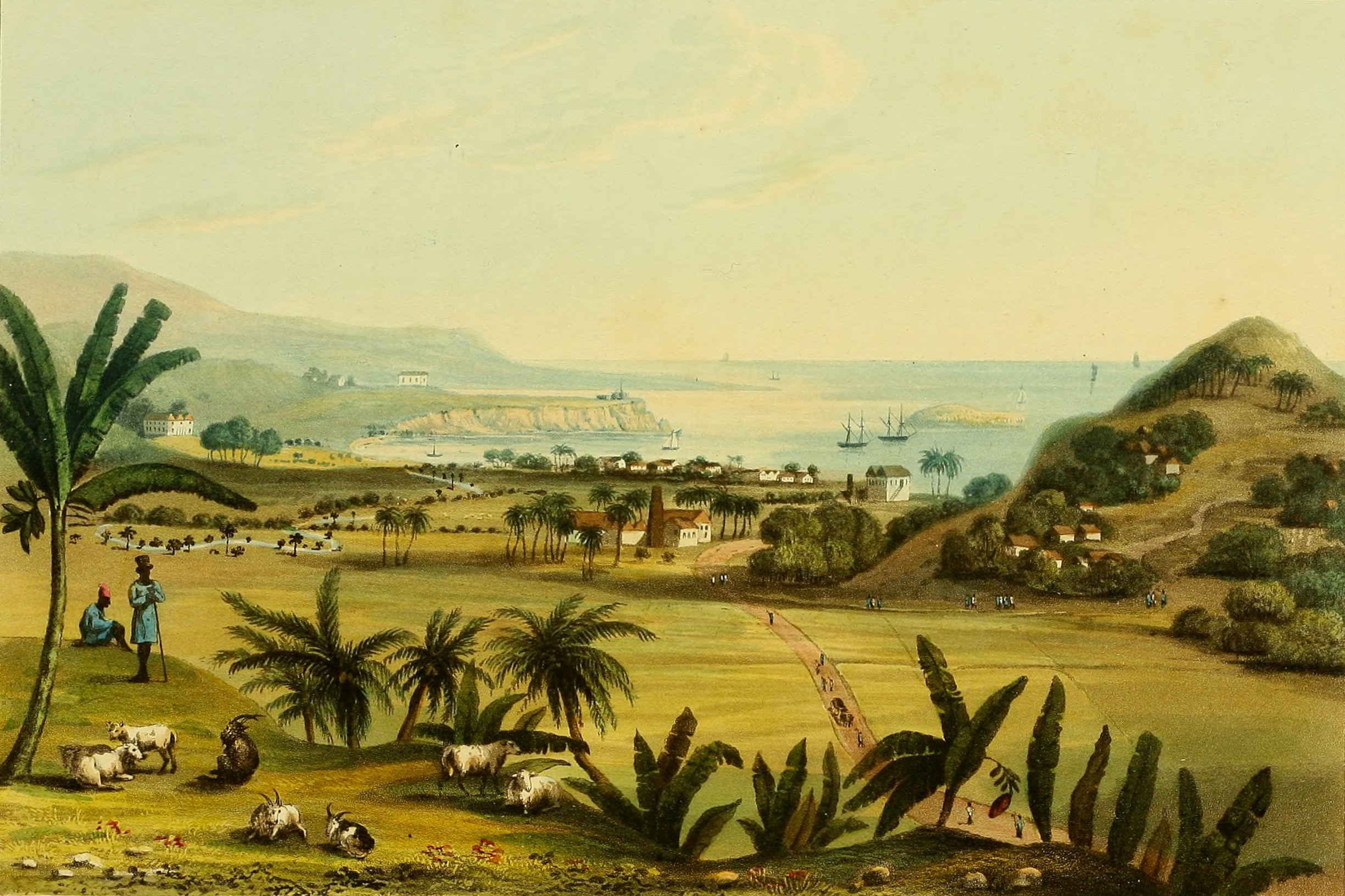
Source & credit
At Port Maria, Hakewill places cattle and people in the foreground, with tracks, buildings and anchored vessels towards the harbour. The view connects the island’s agricultural work to coastal trade.
From an estate return to a father’s address
Joseph’s 1845 entry names Catherine as Matilda’s mother and Joseph as father, labourer and informant at Bogg Pen. After emancipation, the pen remained a workplace and a home. The family chapter follows this household through Matilda’s marriage and later generations.
[2]
Source & credit
Later proprietors, surviving names
A notice published on 26 April 1879 reports the death of A. Alexander E. Drysdale of Bogg and Arthur’s Seat, aged 27. The two properties continued to be named together.
[15]The 1910 commercial directory lists H. H. Drysdale as owner and S. M. Fisher as occupier of Arthur’s Seat, with Ocho Rios as its postal address. Its separate columns distinguish ownership from occupation.
[8]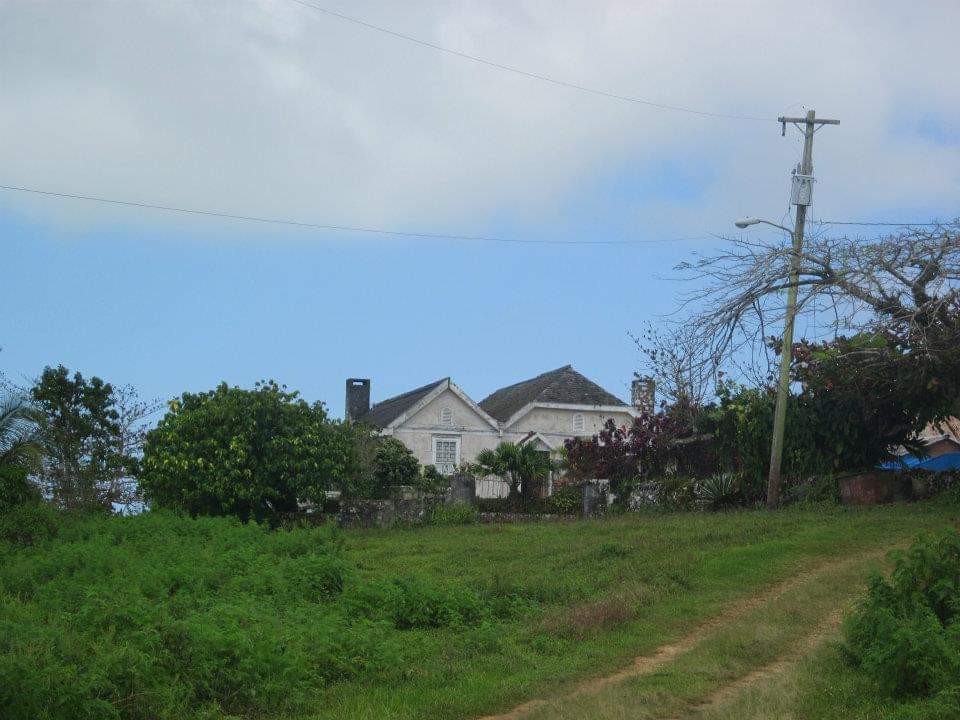
Source & credit
From the Melville family to Marjorie Parkin
The later history passes through the Melville family to Marjorie Parkin, a retired nurse and antiques dealer. My account places her purchase in the 1980s. Brett Ashmeade-Hawkins recalls visits to Parkin in the early 1990s and Raymond Brandon’s earlier stays with the Melvilles.
Susan Nathan Knight photographed Parkin’s furnished house in 2012. Her album comments identify Marge and Jacky Parkin’s antiques sales at Arthur’s Seat and Louvain. PBS separately credits Marjorie Parkin Antiques as a prop supplier to its 2001 Marcus Garvey film.
[A][P]Noble Verity’s June 2024 post documents the damaged house and reported looting. His September report places the later fire in August 2024. The house chapter follows this sequence through named accounts and photographs.
[F]The estate’s history continues through different records: Kidston property returns, Joseph’s household, the Drysdale directories and Parkin’s later home and business. The next chapter follows the Kidston family and parish authority.
Tony’s call: Joseph’s address is part of Arthur’s Seat’s history. The house, the working land and the families belong together.
Sources and records
- Anthony DePass family archive and verified family research, with original records reproduced in this series and In Search of Marianne. Joseph’s early register sequence, the elder and younger Alexander, James’s relationship and Bogg Pen’s incorporation into Arthur’s Seat follow the supplied family research.
- Original St. Ann birth register, entry 435: Matilda, born 5 April 1845, registered 24 May; Joseph Kidston and Catherine Kidston; Joseph a labourer and informant at Bogg Pen. Family-archive image.
- Jamaica Directory 1878, Ocho Rios. A. A. E. Drysdale, proprietor of Arthur’s Seat and Bogg Pens. Published transcription.
- Jamaica Directory 1878, St. Ann estates and properties. Arthur’s Seat and Bogg separately indexed under A. A. E. Drysdale. Published transcription.
- Jamaica Almanac 1811, St. Ann; returns for 1809. Alexander Kidston, Arthur’s Seat: 76 enslaved people, 152 stock. Published transcription.
- Jamaica Almanac 1817; March 1816 returns for St. Ann and St. Mary. Arthur’s Seat 107/361; Boscobell 32/184. Published transcription.
- Jamaica Almanac 1820; March 1819 return. Dr. Alexander Kidston, Arthur’s Seat: 110 enslaved people, 396 stock. Published transcription.
- Jamaica Commercial Directory 1910, St. Ann: H. H. Drysdale, owner; Arthur’s Seat, pen; S. M. Fisher, occupier; Ocho Rios post office. The directory defines a pen as a property where stock is raised. Published transcription.
- Jamaica Almanac 1823; March 1822 return. Alexander Kidston, Bogg: 173 enslaved people, 413 stock. Published transcription.
- Jamaica Almanac 1826; March 1825 return. Alexander Kidston, Bogg: 149 enslaved people, 465 stock. Mary Ann Roche listed separately. Published transcription.
- Jamaica Almanac 1827; March 1826 return. Alexander Kidston, Bogg, etc.: 149 enslaved people, 467 stock. Published transcription.
- Jamaica Almanac 1829; March 1828 return. Alexander Kidston, Bogg, etc.: 153/348; James Kidston separately listed with eight enslaved people. Published transcription.
- Jamaica Almanac 1833; March 1832 return. Alexander Kidston, Bog etc.: 153 enslaved people, 385 stock. Published transcription.
- Jamaica Almanac 1838; return of 28 March 1837. Alexander Kidston, Bogg: 117 apprentices. This is an apprenticeship return, not a pre-1834 slave count. Published transcription.
- Trelawny and Public Advertiser, 26 April 1879: notice for A. Alexander E. Drysdale of Bogg and Arthur’s Seat, St. Ann; death reported 10 March, aged 27. Published transcription. Place printed “Pan, Basses Pyrenees.”
- Arthur’s Seat collection saved by Anthony DePass from Jamaica Colonial Heritage Society. Susan Nathan Knight’s furnished-house and grounds photographs were taken in 2012 and posted in the album dated 9 March 2012; Brett Ashmeade-Hawkins explicitly credits her in his 2 June 2024 album comment. The damaged-house group matches Noble Verity’s 2 June 2024 post, before the reported August fire. Publication dates are distinguished from exposure dates. Three further photographs are from Verity’s 30 September 2024 post.
- James Hakewill, A Picturesque Tour of the Island of Jamaica (1825), White River, Port Maria and introductory material; original publication and plate inscriptions.
- William Berryman, Plantain Walk — Bookkeeper — Watchman and Hut — man with casks of water / greattoe in stirrup. Library of Congress, ppmsca.13410, DRWG 1 — Berryman, no. 13. Catalogue date: between 1808 and 1816. Original drawing in watercolour, black ink and pencil; Commons scan of the Library image. Public domain / no known restrictions on publication. The Library’s date range takes precedence over the Commons page’s single 1808 date.
- James Hakewill, engraved by Sutherland; Bridge over the White River, St. Mary’s, published 1 May 1825. Scan via Internet Archive / Wikimedia Commons. Public domain.
- James Hakewill, engraved by Clarke; Port Maria, St. Mary’s, published 1 August 1825. Scan via Internet Archive / Wikimedia Commons. Public domain. Publication date read from the print metadata and the 1825 volume.
- Susan Nathan Knight, Arthur’s Seat album dated 9 March 2012; business comments and Brett Ashmeade-Hawkins’s 2 June 2024 recollections. Jamaica Colonial Heritage Society; membership may be required.
- PBS American Experience, Marcus Garvey: Look for Me in the Whirlwind (2001), props credit to Marjorie Parkin Antiques.
- Noble Verity, 28 September 2024, reporting the August fire through Marjorie Parkin’s granddaughter; read with his June and September photographic posts, linked in the house chapter.
- House of Commons, Accounts of Slave Compensation Claims, ordered printed 16 March 1838, paper 215, uncontested claims, printed p. 15 (PDF p. 23): St. Ann claim 330, Alexander Kidston, award 14 December 1835, 153 people. The available scan clips the far-right monetary columns; the amount is stated approximately here rather than supplying unread pence.
- Record distinctions: the earlier account’s “nearly 200” is replaced by the 153 people listed in St. Ann compensation claim 330. That claim is distinct from the dated almanac totals and the later apprentice return. Joseph’s 1845 labourer entry establishes occupation and residence, not ownership of land. The family account places the Melville–Parkin transfer in the 1980s; its deed and exact date have not been examined.