ARTHUR’S SEAT & THE KIDSTONS · 2 OF 4 · ST. ANN & ST. MARY
The Kidstons of St. Ann and St. Mary: family, land and power
Two Alexander Kidstons, James Kidston and Mary Ann Roche belong to a family history that crosses estate ownership, marriage, race and local government. Their records also preserve traces of people whose lives they controlled.
In May 1818, a St. Ann baptism book recorded three free children of colour named Kidston. Other records place an Alexander Kidston in estate ownership and parish government, and James Kidston registering people through his wife, Mary Ann Roche. A shared surname crossed sharply different legal and social positions.
The family outline
My family research distinguishes an elder Alexander Kidston, his son Alexander, and James, the elder Alexander’s son and the younger Alexander’s brother. James is described in that research by the colonial term “mulatto.” The table below separates that family reconstruction from the particular records reproduced or cited here.
| Person | Relationship or identification | Evidence |
|---|---|---|
| Elder Alexander | Father of the younger Alexander and James in the family reconstruction. | Anthony DePass’s family research; the parentage documents are not reproduced in this chapter. |
| Younger Alexander | Son of the elder Alexander; brother of James in the family reconstruction. | Family research. Almanac entries retain their printed names and titles. |
| James Kidston | Brother of the younger Alexander in the family research; husband of Mary Ann Roche by June 1826. | The original 1826 return establishes the wording through his wife. |
| Alexander, aged three in 1818 | A child baptised alongside Maria and Amelia; parents not named in these entries. | The original baptism register, 26 May 1818. |
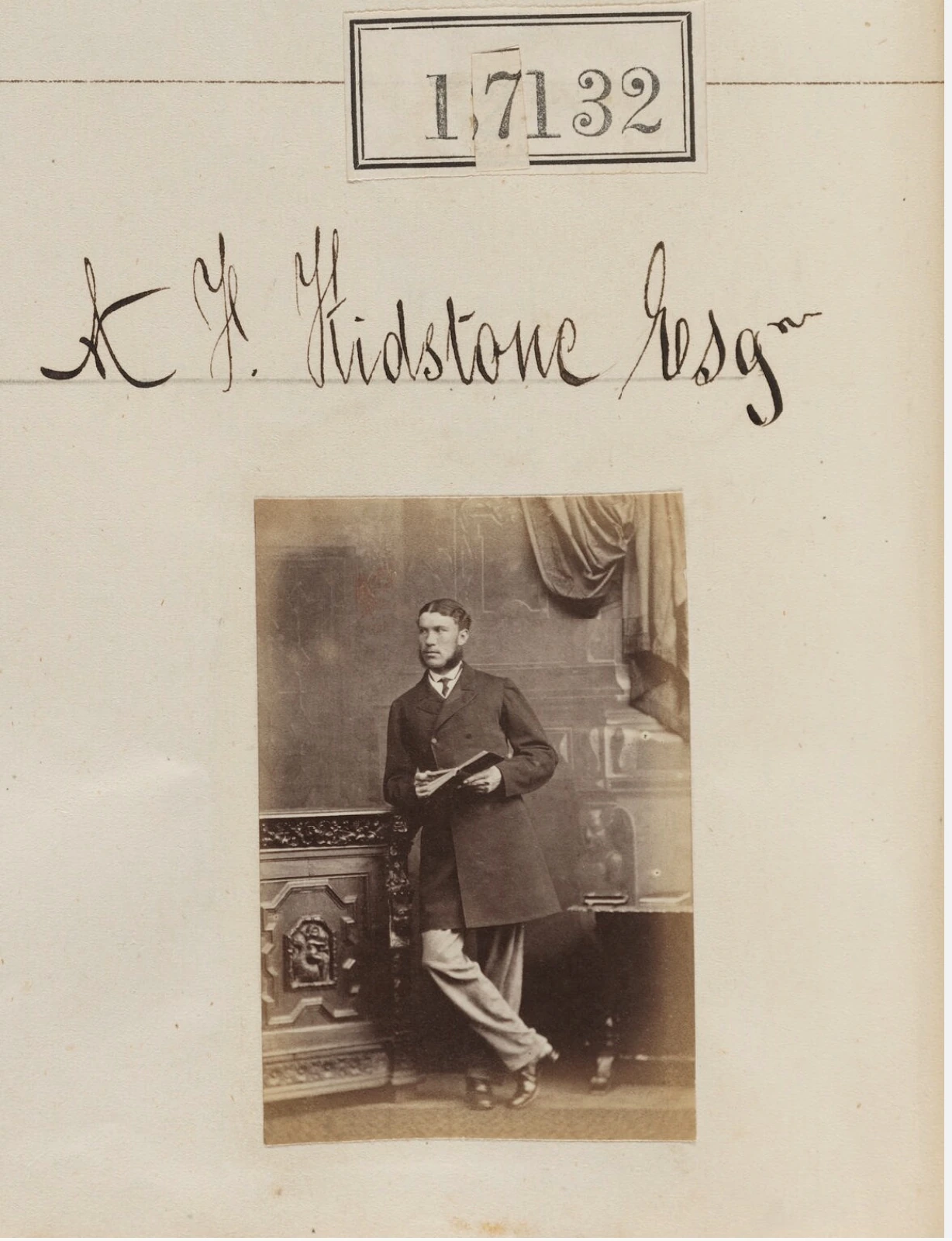
| Portrait sitter | Identified as Alexander Kidston in the family archive; mount reads “A. J. Kidstone Esq.” | Family identification and the mount inscription; the sitter’s precise relationship to the early estate holder remains unresolved. |
Source & credit
The almanacs name Alexander at Arthur’s Seat in 1811, Dr. Alexander in the 1820 volume, and Alexander at Bogg in later returns. These entries locate the property network; assigning each to the elder or younger man requires the individual family chronology.
[2][3][4]The proprietor was also part of parish government
Alexander Kidston appears with George F. Coward among St. Ann’s churchwardens for 1817, and also among the vestrymen. Estate ownership and parish office placed the Kidston name within both private and public authority.
[5]The property returns were supplied to parish vestries. Landholders therefore participated in the institutions that recorded and administered the parish’s wealth and population.
The public man and the view from the house
Source & credit
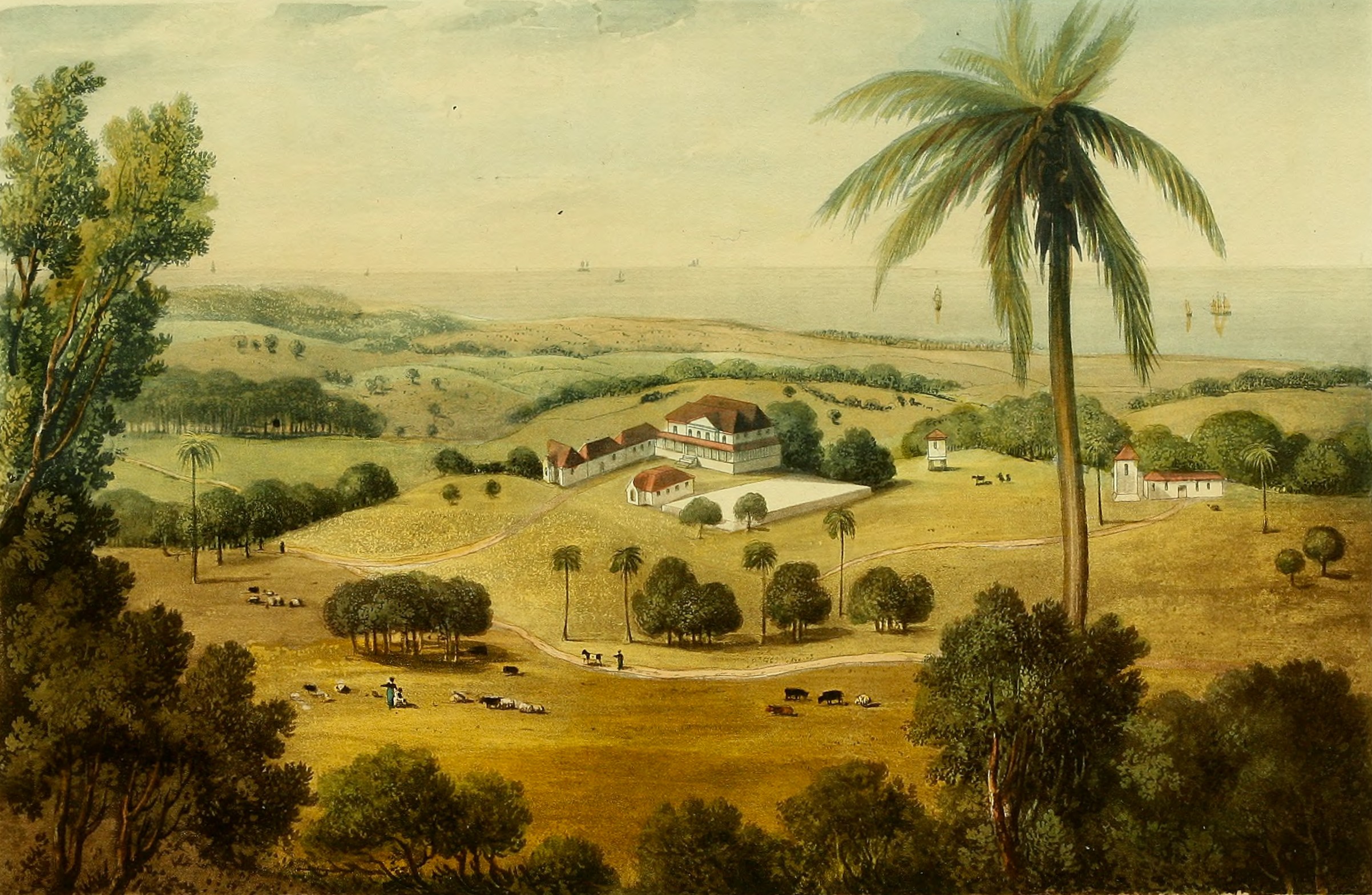
Hakewill’s Cardiff Hall view provides a neighbouring St. Ann comparison: the residence stands above outbuildings, cattle, paths and a drying floor identified in his text as a place for pimento. The house and the workplace occupied the same estate landscape.
[H]James, Mary Ann Roche and marriage as a property connection
The 28 June 1826 St. Ann return names James Kidston as owner “in right of Mary Ann Roche his wife.” This is direct evidence of their marriage by that date and of the capacity through which he registered people associated with her.
[6]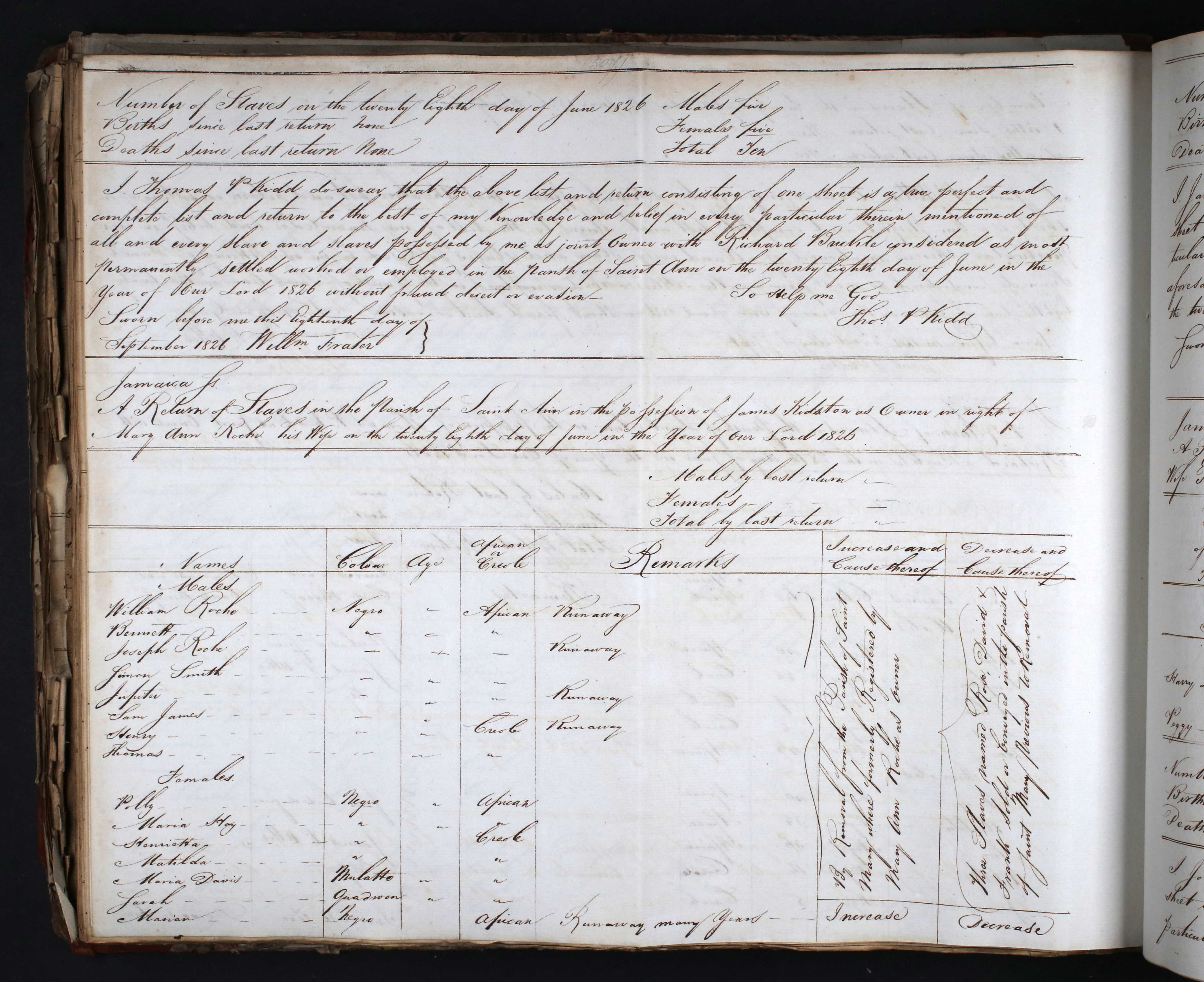
Source & credit
The family research dates the marriage to 1826. The 1829 almanac lists James separately with eight enslaved people, while Alexander appears at Bogg, etc., with 153.
[1][4]James’s reported mixed ancestry and his participation in slaveholding belong in the same biography. The family’s place within Jamaica’s racial hierarchy did not prevent its members from exercising ownership over others.
Three children in the 1818 baptism book
Maria Kidston, nine; Amelia Kidston, seven; and Alexander Kidston, three were baptised in St. Ann on 26 May 1818. Each is described as a free child of colour.
[7]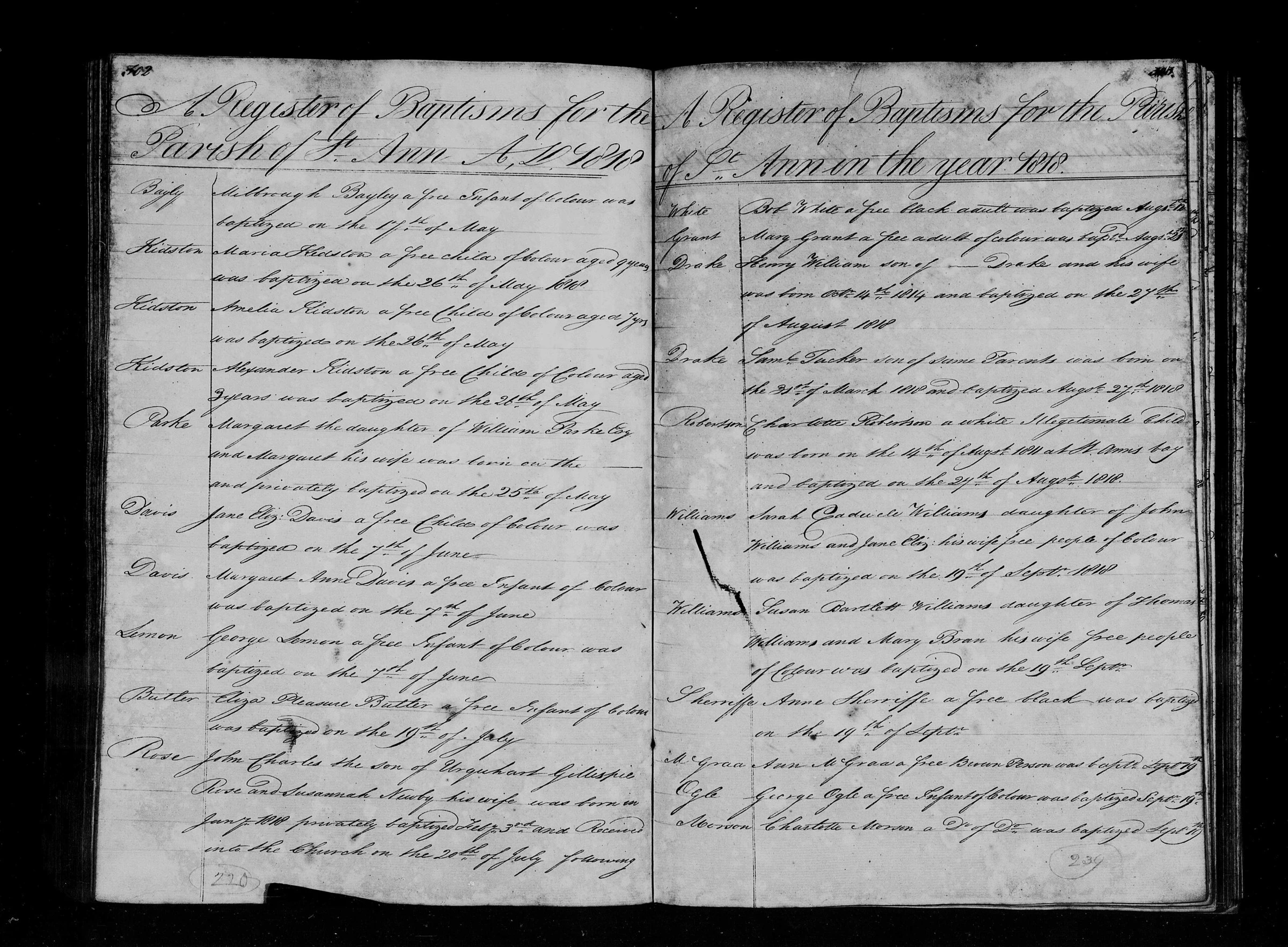
Source & credit
The entries do not name their parents. This young Alexander is retained as a separately documented child, without identifying him as one of the adult proprietors.
These children held legal freedom before general emancipation. Their entries show why the Kidston surname and African ancestry cannot, by themselves, determine a person’s legal status.
A man entered as Thomas, then identified as Jacky
Douglas Chambers’s transcription of the Cornwall Chronicle workhouse lists records a man first entered as Thomas and identified on 29 May 1816 as Jacky, belonging to Dr. Kidston of St. Ann. The Trelawny Workhouse notice preserves a named life within the system of capture and confinement.
[8]The St. Ann court chapter places such ownership claims within the parish’s judicial history.
Another Jacky in the court record
Michael Becker’s study discusses an 1811 St. Ann case involving Jacky and William, both under Alexander Kidston, over clothing and coins. The court chapter follows the case, citing MS 273, folio 373. A link between this Jacky and the man in the 1816 notice has not been established.
[B]Compensation went to the owner
On 14 December 1835, Alexander Kidston received an award of nearly £3,000 under St. Ann compensation claim 330 for 153 enslaved people. The 1838 parliamentary account records the award; the estate chapter places it beside the property and apprenticeship returns.
[C]The payment protected the owner’s financial claim as legal slavery ended. It did not compensate the people who had been enslaved.
The Scottish papers
The National Records of Scotland catalogue describes copies of letters from Cunningham Buchanan’s executors to James and Alexander Kidston and Abraham Hodgson, dated 1812–1813. They form part of a court process concerning Buchanan of Fellowship Hall, St. Mary, with a will, accounts, inventory and other correspondence.
[9]The file connects the Kidston names to an estate-administration network between Jamaica and Scotland. Its catalogue has been examined; the correspondence itself remains unread.
Two connected family histories
Joseph’s story follows Marianne and Abba / Jane into the household he formed with Catherine. The Alexanders and James appear through ownership, marriage and administration. Their histories meet in the estate world; a shared surname does not establish biological descent from a proprietor.
[1][10]The next chapter begins with Joseph as Matilda’s father at Bogg Pen and follows the descendants into St. Mary.
Tony’s call: Follow each person through the record that names them. The surname alone cannot supply the relationship.
Sources and records
- Anthony DePass family archive and verified family research, with original records reproduced in this series and In Search of Marianne. Joseph’s early register sequence, the elder and younger Alexander, James’s relationship and Bogg Pen’s incorporation into Arthur’s Seat follow the supplied family research.
- Jamaica Almanac 1811, St. Ann; returns for 1809. Alexander Kidston, Arthur’s Seat: 76 enslaved people, 152 stock. Published transcription.
- Jamaica Almanac 1820; March 1819 return. Dr. Alexander Kidston, Arthur’s Seat: 110 enslaved people, 396 stock. Published transcription.
- Jamaica Almanac 1829; March 1828 return. Alexander Kidston, Bogg, etc.: 153/348; James Kidston separately listed with eight enslaved people. Published transcription.
- Jamaica Almanac 1817, parochial officers elected for 1817. Alexander Kidston listed among St. Ann churchwardens and vestrymen. Published transcription.
- Original St. Ann return, 28 June 1826: James Kidston as owner in right of Mary Ann Roche his wife; Marianne recorded as long absent. Lower return in image 62711_314054001181_0640-00535.jpg.
- Original St. Ann baptism register, 1818, left-hand manuscript p. 220: Maria Kidston, nine; Amelia Kidston, seven; Alexander Kidston, three; baptised 26 May. Each described as a free child of colour. Parents are not given in these entries. Family archive: kidstons 1818.jpg.
- Douglas B. Chambers, editor, Runaway Slaves in Jamaica (II): Nineteenth Century (2013), p. 182. Trelawny Workhouse, 1816, Cornwall Chronicle entries; 29 May identifies Thomas as Jacky, belonging to Dr. Kidston, St. Ann. Scholarly transcription inspected, not the original newspaper sheet.
- National Records of Scotland, CS228/B/15/52: John Buchanan v James Corbet Porterfield, 1821. Catalogue lists copies of letters from Cunningham Buchanan’s executors to James and Alexander Kidston and Abraham Hodgson, 1812–1813. Catalogue examined; the letters themselves are off-site and have not been read here.
- Original St. Ann birth register, entry 435: Matilda, born 5 April 1845, registered 24 May; Joseph Kidston and Catherine Kidston; Joseph a labourer and informant at Bogg Pen. Family-archive image.
- Hakewill, A Picturesque Tour (1825), Cardiff Hall plate and accompanying description; the print was published 1 July 1824.
- Michael John Becker, Duke dissertation (2021), pp. 58–59, note 30; MS 273, folio 373.
- James Hakewill, engraved by Sutherland; Cardiff Hall, St. Ann’s, published 1 July 1824 in the series collected as A Picturesque Tour of the Island of Jamaica (1825). Scan via Internet Archive / Wikimedia Commons. Public domain.
- House of Commons, Accounts of Slave Compensation Claims, ordered printed 16 March 1838, paper 215, uncontested claims, printed p. 15 (PDF p. 23): St. Ann claim 330, Alexander Kidston, award 14 December 1835, 153 people. The available scan clips the far-right monetary columns; the amount is stated approximately here rather than supplying unread pence.
- Names, ancestry and portrait: Anthony DePass’s supplied family reconstruction identifies the elder and younger Alexanders and James’s relationship to them. The earlier Facebook account applied “mulatto” to Alexander; the research summary used here applies it to James. A record identifying the particular Alexander is needed to resolve that difference. The 1818 entries establish the children’s names, ages, date and free status, but do not name their parents. The portrait is retained under the family identification and its “A. J. Kidstone Esq.” inscription; its date and exact relationship to the estate holder have not been established. The 1816 workhouse entry is not evidence of kinship with Joseph’s family.
- Compensation count: the 153 people in claim 330 replace the earlier post’s approximate “nearly 200.” The award, property returns and apprenticeship return are separate records.