Jamaica: the history that makes the journey make sense
A national history from Indigenous communities through conquest, slavery, freedom and independence—then a route into the regional histories behind the places you visit.
Begin before Columbus
Jamaica’s history begins with people living on the island, not with a European ship. Archaeology at Seville brings Indigenous settlement into the same landscape as later Spanish and English occupation. The pottery, settlement traces and burial evidence belong to communities with their own knowledge and social worlds. “Discovery” is a misleading starting point for an inhabited island: Columbus’s arrival in 1494 marks a European encounter and a subsequent colonial claim. Spanish settlement followed in the early sixteenth century. [1]
1655 changed the ruler, not the right to freedom
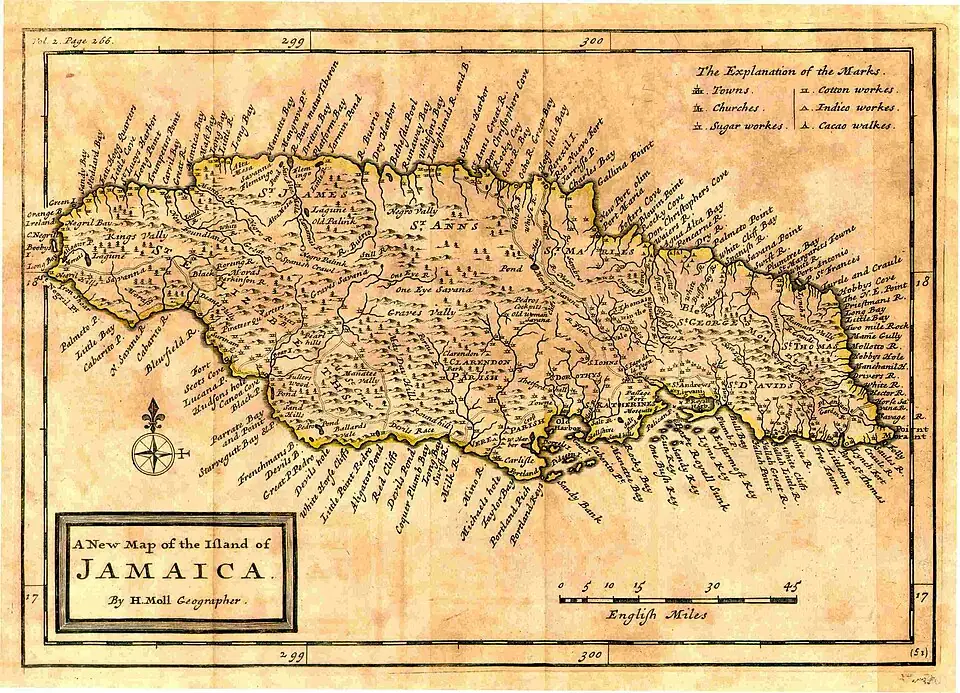
England’s conquest in 1655 shifted Jamaica into another imperial system. Under later British rule, sugar estates depended on the forced labor of enslaved Africans. Plantation wealth linked fields, mills, ports, merchants and overseas consumers. A great house and a coastal warehouse therefore belong in one economic story. The island’s African inheritance was created through forced migration, but the people transported here brought languages, skills, religion and political experience; they were never merely labor inputs. [2]
Source & credit
Resistance made freedom a political struggle
Maroon communities established freedom outside plantation slavery. Treaty settlements in 1739 recognized particular communities while imposing obligations involving later fugitives. Tacky’s War in 1760–61 and the emancipation war associated with Sam Sharpe in 1831–32 reveal other struggles within the slave colony. The end of legal slavery in 1834 still left many people bound by apprenticeship; full emancipation followed in 1838. The distinction matters when a memorial says “freedom”: ask which date, whose freedom and what conditions remained. [3]
Follow the treaty, Tacky’s War and Sam Sharpe’s western Jamaica for the people, places and contested choices behind these dates.
A nation required more than a flag
After emancipation, obtaining land, education and political influence remained unequal struggles. Free villages, churches, markets and migration helped people build lives beyond estate control. Morant Bay in 1865 exposed the violence sustaining unequal power. Universal adult suffrage in 1944 widened formal participation; independence on August 6, 1962 established a sovereign nation. [4]
Source & credit
Read the country as you travel
The national chronology becomes clearer in particular places. St. Ann joins Seville, free villages, Garvey and tourism. St. Mary connects rebellion, small farming, banana exports and community memory. Trelawny links a sugar port to the interior; St. James joins emancipation struggle to Montego Bay. Kingston brings political institutions, migration and musical innovation together. None of these regions is a museum frozen in one era. A school operating in an old estate landscape, a market beside a memorial and a modern house added to a family yard are continuations of history, not interruptions of it.
Tony’s Call: Begin with this chronology, then choose one regional article before your day out. You will see more when the harbor, hillside and household belong to the same account.
St. Ann and Ocho Rios → · Trelawny and Falmouth → · St. Mary’s hills →
St. Catherine: the capital changed, the civic landscape remained
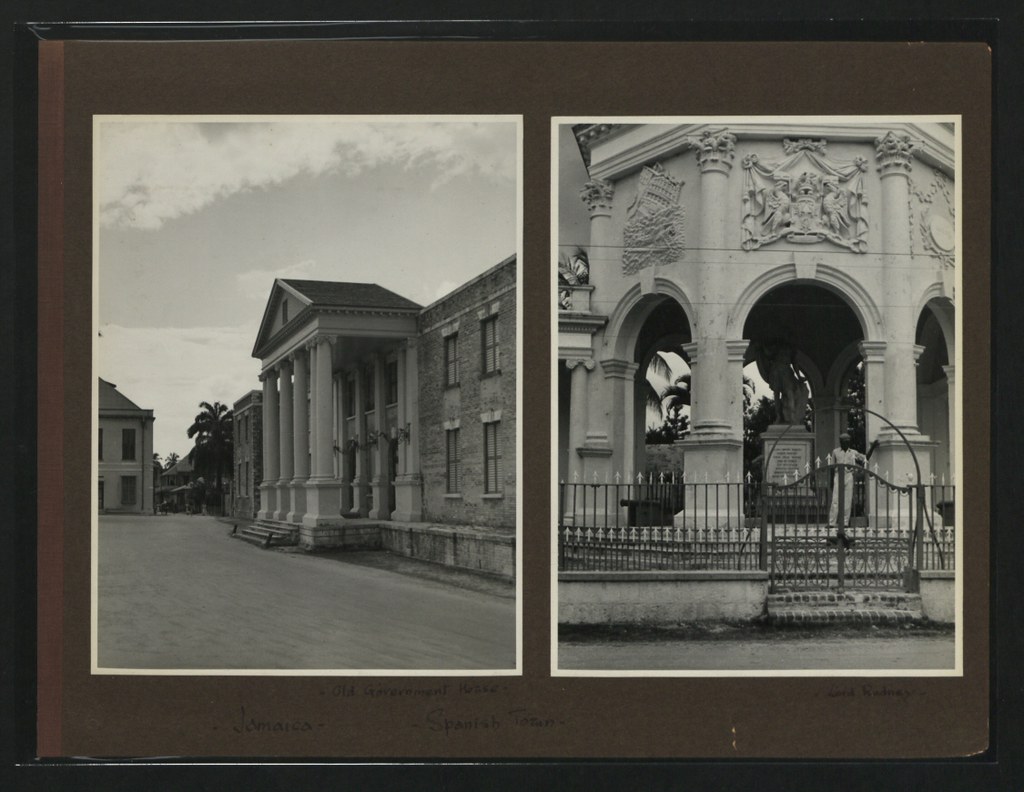
Spanish Town gives the change of imperial rule a physical setting. JNHT dates the town to 1534 and describes its continuation as the capital after the English conquest of 1655, until the capital moved to Kingston in 1872. The transfer changed the national center without erasing the earlier one.
The Trust dates King’s House to 1762 and records the reading of the 1838 emancipation proclamation from its steps. Fire in 1925 left the main eastern facade and stables. That makes the surviving facade especially useful for learning: it connects colonial government, the public declaration of freedom and later loss. An intact-looking frontage cannot establish an intact interior.
Read the archive album below with that sequence in mind. Its 1930s view comes after the fire. The page also contains a memorial view, so the whole album page must not be captioned as one building. For a visit, confirm current access independently of the historic record.
Follow power through the landscape
A useful national history needs more than a succession of rulers. Follow three things through each period: control of land, control of labor and the ability to make a public claim. The plantation joined those forms of power in the owner. Emancipation broke legal ownership of people, but it did not automatically break dependence on estate housing or make cultivable land affordable. A village, a school and a market therefore belong beside the dates of abolition. They show what people needed to turn a change in law into a workable life.
Source & credit
The same approach changes how we understand independence. The vote and the sovereign state altered political authority; a household still needed income, transport, education and somewhere to live. The constitutional achievement did not settle every inequality inherited from colonial rule. Read the Independence Act beside the household and migration articles. One explains formal authority; the others keep people whose daily lives continued across 1962 inside the national account.
For a first visit, choose one coast-to-interior comparison rather than trying to absorb the whole island. In St. Ann, connect Seville's settlement evidence with a free village and the resort coast. In St. Mary, connect a harbor, an inland market town and the banana economy. Those sequences make historical change visible without treating a modern community as a surviving plantation. The question to carry is simple: what changed here, who made it change, and what did people still have to negotiate?
Sources and notes
- JNHT: Seville Heritage Park and successive settlement ↩
- National Library of Jamaica: peoples, settlement and colonial history ↩
- Library of Congress: chronology, emancipation and parish research ↩
- JIS: national historical chronology ↩
- JNHT, Spanish Town: capital chronology, King’s House, emancipation and the 1925 fire. Checked 12 October 2026. ↩