Moore Town: a living Maroon community, heard on its own terms
Location: Moore Town, Portland, Jamaica
Explore area in Google Maps ↗Map search for the named place or area. Arrange the actual entrance, guide meeting point and access with your host; this is not a confirmed tour departure.
Portland’s Maroon heritage is a living history of place, language and sound. Start with the community, then listen to a recording whose musicians and release date are actually identified.
Begin with a community, not a costume
Moore Town belongs to the eastern Maroon history of Portland. It should not appear as a generic performance stop detached from the people who maintain its institutions. The heritage record associates the settlement with Nanny and the history of New Nanny Town. Those names connect resistance, settlement and remembrance, but the short JNHT account is not enough to settle every origin story or family relationship. Its genealogical assertions remain uncorroborated. [1]
A recognised community still had to carry freedom forward
The history associated with Nanny leads from resistance toward the harder, continuing work of sustaining a community. Land, leadership, memory and religious knowledge became resources carried across generations. They make Moore Town a living political and cultural history rather than a monument to one eighteenth-century struggle.
A recording offers one route into that life because it preserves identified performers and sound. Community accounts offer another, through how people explain their own institutions and remembrance. The sources work together best when the community remains the subject. Moore Town’s importance is that freedom had to be maintained through relationships and practices, including knowledge whose use belongs under the authority of its bearers. [1] [2] [3]
Source & credit
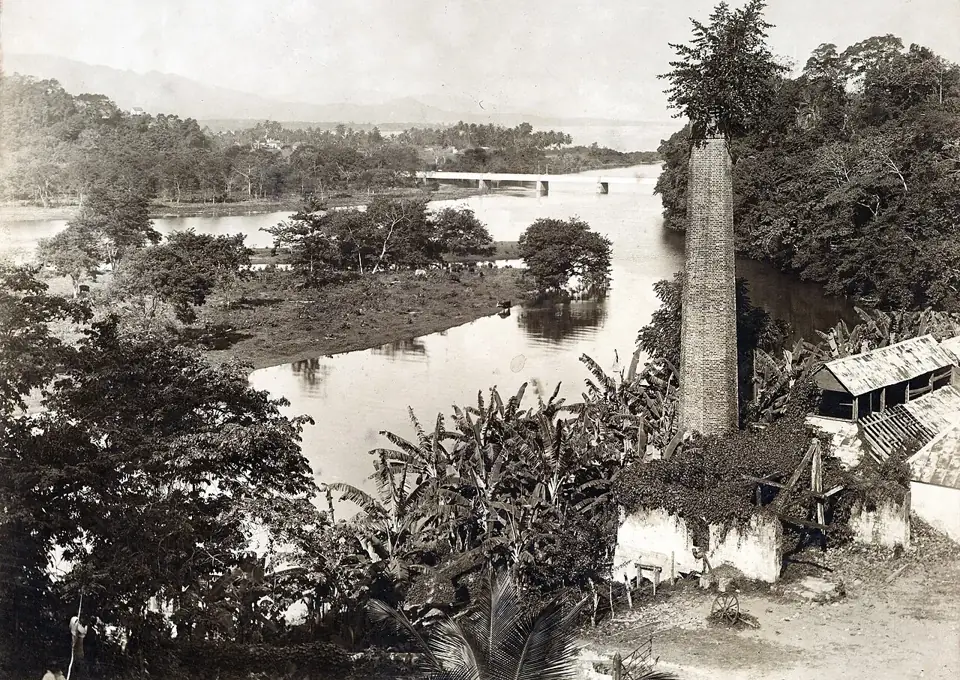
Look closely: A wider Portland river landscape, not Moore Town or a Kromanti ceremony. Read the river and settled hills beside the community account without turning the view into evidence of a particular ritual.
Source & credit
The monument is one way of remembering
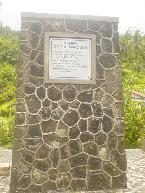
The photograph offers a modest, specific subject: a marked place and an inscription. It cannot show how Nanny lived, what every resident believes, or the full history of land negotiations. Read an inscription as a commemorative statement made for an audience. Ask who commissioned it, when it was installed and how community members explain the place. A monument and an archival document can both be evidence while answering different questions.
Let the present community speak
The Moore Town Maroon Council and Diaspora Partners’ website presents community history alongside contemporary organising. That is a useful counterweight to a guide assembled entirely from outside descriptions. It makes clear that heritage includes present responsibilities and relationships, not only an eighteenth-century past. The community’s own account deserves to be read as an attributed voice. It is not a substitute for independently checking every historical claim or a guarantee that a visit can take place on a particular day. [2]
Listen to the identified Moore Town musicians
Smithsonian Folkways identifies the track Kromanti (Country): Shedo as a performance by Maroon musicians from Moore Town. Its catalogue gives a duration of 1:41 and an album release in 1992. That date belongs to publication, not automatically to the recording session. The record labels the language Jamaican Creole English; the tradition’s Kromanti title alone does not establish that every word heard is in a separate ritual language. This distinction keeps the listening exercise precise. [3]
A recording is a selected encounter
Listen once for the organisation of voices, then again for changes in rhythm and the relationship between lead and group. Describe what you hear before guessing a meaning. The catalogue identifies an unspecified chorus and Pringting ensemble, rather than naming every individual. A published track is a bounded selection prepared for an audience. It does not give a visitor permission to record a ceremony, enter a restricted space or demand an explanation of knowledge that community members choose not to share.
Compare Moore Town with Accompong carefully
The Accompong article supplies a separately identified St. Elizabeth recording. Compare their catalogue labels and the audible organisation of each performance. Do not treat the western treaty associated with Cudjoe as the single founding document for every Maroon community, or transfer a description of Accompong directly to Moore Town. The comparison becomes valuable when it preserves locality. Two Maroon histories can be related without being interchangeable.
Turn listening into a respectful local enquiry
Make three headings in your notes: what the catalogue establishes, what I can hear, and what requires community explanation. Put the 1992 release date in the first column, your description of the voices in the second, and questions about meaning or setting in the third. For a visit, agree the subject and route with a community-approved host. A useful question is how people would like Moore Town represented in a guide today, rather than asking for a performance simply because one exists on a record.
Sources and notes
- Primary institutional account identified and attributed in the narrative. ↩
- Moore Town Maroon Council and Diaspora Partners: the community’s contemporary account and contact route. ↩
- Smithsonian Folkways, Kromanti (Country): Shedo, Moore Town musicians; SFW40412_119, 1:41; album released 1992. Individual session date not established here. ↩