Sligoville: buying land before apprenticeship ended
Location: Sligoville, St. Catherine, Jamaica
Explore area in Google Maps ↗Map search for the named place or area. Arrange the actual entrance, guide meeting point and access with your host; this is not a confirmed tour departure.
Henry Lunan bought the first lot. Keeping his name beside the minister who bought the land changes this St. Catherine story from a founding achievement into an account of people securing somewhere to live.
A home beyond the estate
Henry Lunan’s purchase gives Sligoville a human starting point. Formerly an enslaved headman at neighbouring Hampstead, he became the first person recorded as buying a lot in the settlement. A hillside plot meant more than an address: it offered the possibility of keeping a home when a disagreement over estate work might otherwise threaten both wages and shelter. JNHT places his purchase beside the organising work of Baptist minister James Mursell Phillippo. [1]
Source & credit
The village began during apprenticeship
Phillippo acquired land in 1835, while apprenticeship still required formerly enslaved people to provide compulsory labour. The National Library dates the purchase to 10 July. The timing places Sligoville within the struggle to make freedom practical, three years before apprenticeship ended in 1838. A landholding outside an estate could change the terms on which a family approached employment. [2]
Edward Bean Underhill’s 1881 biography of Phillippo, assembled from the missionary’s papers, describes an initial twenty-five acres, subsequently enlarged to fifty. Its account begins with a mission station that became a settlement. That distinction helps explain why church, school and households developed together rather than arriving as unrelated additions. [3]
Source & credit
A chapel and school before the formal opening
Underhill dates the start of a combined chapel and schoolroom to October 1835. A larger building followed, completed in July 1838. He places Lunan’s first lot purchase about two months before full emancipation and dates the settlement’s formal opening to 12 June 1840. The purchase of the parent property, the first individual sale and the dedication were therefore separate milestones. [3]
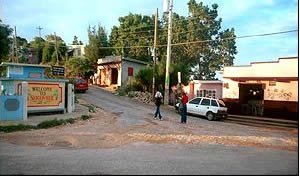
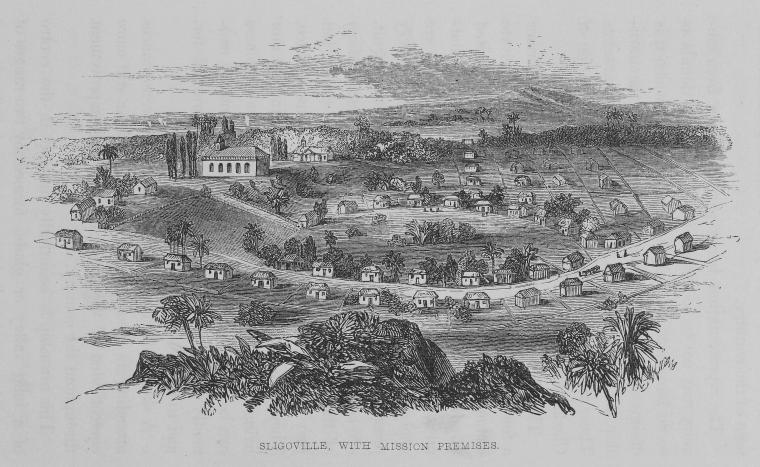
The engraving published in Phillippo’s 1843 book brings these elements into one view: a conspicuous mission building, smaller dwellings, cultivated ground and connecting paths. It presents a missionary’s account of progress. Its orderly composition is useful evidence of how the village was represented, while household boundaries and building dates require other records. The later street photograph offers a different view of the same named community, separated by an unrecorded interval.
Families built at different stages
Underhill reproduces Joseph John Gurney’s observations from a visit on 7 March 1840. Gurney described fifty acres divided into 150 freehold lots, with fifty already sold. Some purchasers had cottages, others temporary huts, and others were preparing ground for construction. His description makes settlement a process rather than a finished village appearing on one founding day. [3]
Gurney also reported that men spent much of their time earning wages on nearby estates. Independent residence could therefore coexist with continued plantation employment. Owning a home outside the estate did not require a family to abandon every connection with estate work; it could instead provide a firmer base from which to negotiate that work. The account preserves this important relationship between land and livelihood.
Read the missionary account with its loyalties visible
Underhill wrote to honour Phillippo, and Gurney praised the settlement’s religion, industry and prospects. Their descriptions preserve valuable detail, but their satisfaction is not testimony from every resident. Lunan’s name survives; the experiences of many women, children and later purchasers are much less visible in these passages. [3]
The early purchasers were doing the physical and financial work of making a settlement: acquiring holdings, clearing land, building dwellings and sustaining households. Keeping that activity beside the minister’s role gives Sligoville a fuller cast of historical actors. The commemorative name honours the Marquess of Sligo; the village’s material history also belongs to those who bought and occupied its ground.
Connect the hillside with Spanish Town
Spanish Town’s square locates the public proclamation of freedom; Sligoville shows the longer work of securing a place to live. They make a useful pair for a St. Catherine history day. Compare Maidstone as well: its documented instalment purchases show another route toward household independence. These communities shared a concern with land, but their arrangements and local histories deserve individual attention.
Sources and notes
- JNHT, Sligoville: Phillippo, Henry Lunan, Hampstead and the settlement’s name.
- National Library of Jamaica, History Notes: apprenticeship, free-village background and 10 July 1835 purchase date.
- Edward Bean Underhill, Life of James Mursell Phillippo (1881), printed pp. 183–185, scan pages 196–198: land, buildings, Lunan, dedication and Gurney’s 1840 visit. A retrospective missionary biography drawing on Phillippo’s papers.
- NYPL, Sligoville, with mission premises: engraving issued in 1843, not a photograph; publication date distinguished from drawing date.