JAMAICA, RECONSIDERED · 1 OF 19 · CORRECTION
Emancipation paid the enslavers. Freedom still had conditions.
In 1834, slavery legally ended, but many Jamaicans still had to work without wages under “apprenticeship.” Britain paid compensation to enslavers. James Williams’s account shows what the transition meant for one young worker.
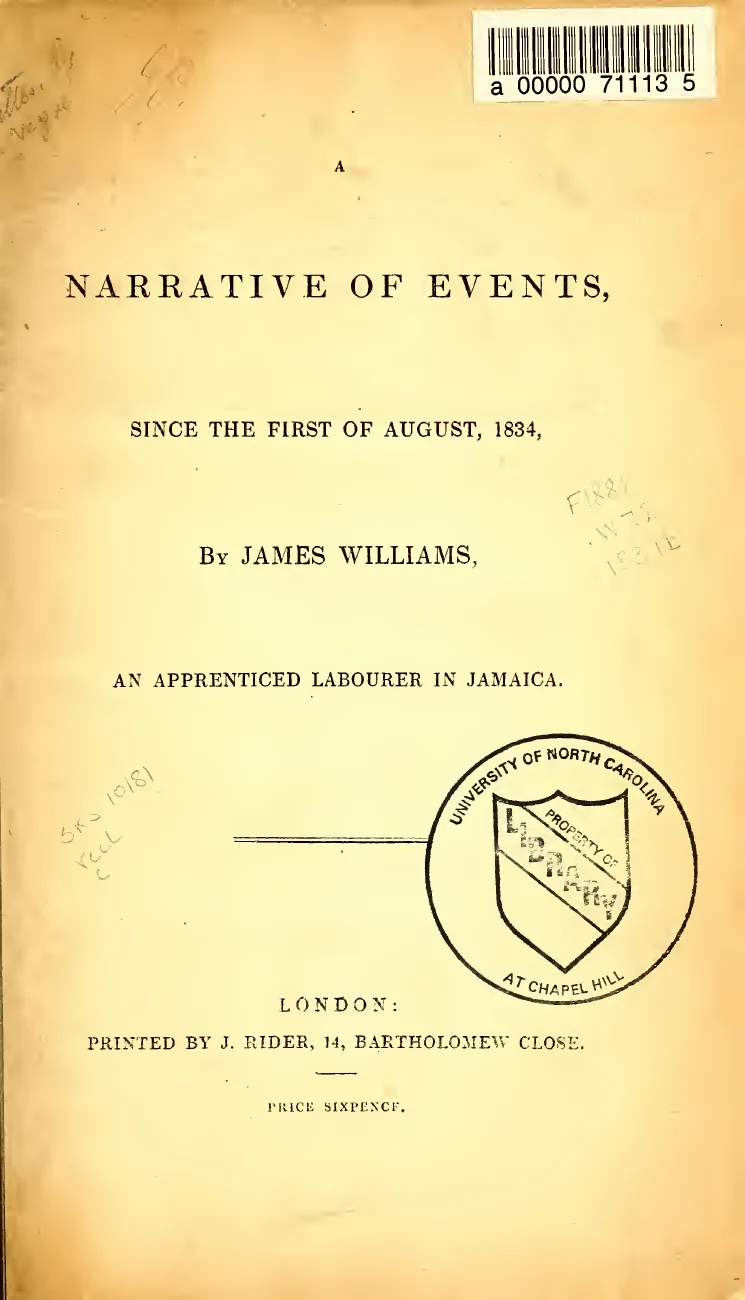
James Williams expected the end of slavery to change his life. Yet his 1837 account described punishment and appearances before magistrates after emancipation. He had grown up at Penshurst in St. Ann. When he told his story, he was still called an “apprenticed labourer.” [1]
That phrase explains why Jamaica’s freedom story needs more than one date. In 1834, the abolition settlement ended legal slavery, but many formerly enslaved people were required to keep working for their former enslavers under apprenticeship. Full emancipation in Jamaica came in 1838. [4]
What apprenticeship meant
Apprenticeship was compulsory labour during the transition out of slavery. A new legal status did not necessarily mean control over the next working day. Employers could bring complaints before magistrates, and punishment remained part of the system. [2]
Williams described particular people, places and proceedings. His account lets us see how the rules affected a worker, rather than assuming that the announcement of freedom ended coercion. His testimony was published with support from the campaign against apprenticeship; that history of publication belongs beside his story, not in place of it. [1] [2]
Source & credit
Who received the compensation?
The British government provided £20 million across its colonies to compensate enslavers for the loss of what the law had treated as their property. The people who had been enslaved did not receive that payment for their suffering or unpaid labour. UCL’s Legacies of British Slavery project traces the recipients and their claims. [5]
The money also passed through agents and financial institutions. Anson and Bennett’s research shows how intermediaries could collect awards and charge commissions. Their study covers a wider British colonial system; its figures should not be mistaken for Jamaica’s total alone. [3]
Three dates, three different changes
Britain abolished its slave trade in 1807. People already enslaved remained enslaved. The 1833 abolition law took effect in 1834, followed by apprenticeship for many. The end of apprenticeship in 1838 finally removed that compulsory system in Jamaica. [4] [6]
Freedom also meant finding a way to live
Legal emancipation was an enormous achievement. But it did not automatically distribute land, supply a home or give every worker a fair bargain. Those practical questions shaped the next chapter: wages, land purchases and the building of free villages. Follow the free-village story →
Source & credit
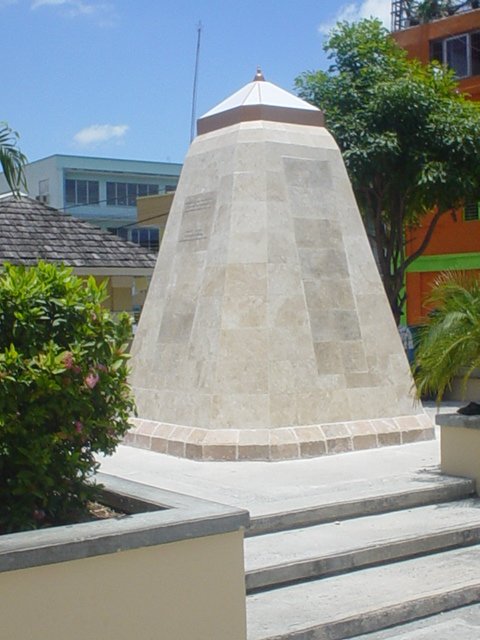
The monument to Sam Sharpe remembers the struggle for freedom. Williams’s small printed book shows why the settlement that followed also deserves attention. One preserves a public achievement; the other brings us close to the conditions a worker faced.
The story behind the celebration
The correction is straightforward: emancipation mattered, apprenticeship prolonged coercion, and compensation went to enslavers. Holding those facts together gives us a fuller account of freedom than either a triumphant anniversary or a claim that nothing changed.
Look again
Compare the dates below with James Williams’s opening pages. What changed in law in 1834, and what remained under someone else’s control?
Scholarship and evidence
- Williams, J. (1837). A narrative of events since the first of August, 1834. London: J. Rider. University of North Carolina copy, Internet Archive. Primary pamphlet: title page and printed narrative, especially opening pp. 1–3, consulted. ↩
- Paton, D. (Ed.). (2001). A Narrative of Events … by James Williams, an Apprenticed Labourer in Jamaica. Duke University Press. Scholarly edited edition; publisher account consulted, not the full modern introduction. ↩
- Anson, M., & Bennett, M. D. (2022). The collection of slavery compensation, 1835–43. Bank of England Staff Working Paper 1,006. Research summary consulted; its financial sample is not a Jamaica-only total. ↩
- Walvin, J. (2007). Abolishing the slave trade. Institute of Historical Research, History in Focus. Historian’s essay consulted: abolition’s place in a longer British history of slavery. ↩
- UCL. Legacies of British Slavery. Made at UCL. Research project account consulted. Modern-value estimates are deliberately not repeated here. ↩
- UK Parliament. Slavery Abolition Act 1833, 3 & 4 Will. IV c. 73. Primary statutory record and available XML consulted; the current record contains repealed provisions and is not a substitute for the original enacted text. ↩