Halse Hall: a house that changed as property became power
Location: Halse Hall, Clarendon, Jamaica
Explore area in Google Maps ↗Map search for the named place or area. Arrange the actual entrance, guide meeting point and access with your host; this is not a confirmed tour departure.
Clarendon’s great house carries several building phases, from a defensive estate centre to a more elaborate residence and a later industrial-company addition.
Look beyond the entrance
Halse Hall is more than a grand Clarendon residence. Its history connects an English military land grant, plantation production, a scientific career financed by enslaved labour, and later corporate reuse. The house, a landscape watercolour and a sale catalogue show different aspects of that history. Read them together, while keeping the purpose of each source in mind: architectural description, an artist’s selected view and a legal advertisement for property.
Source & credit
A house built in stages
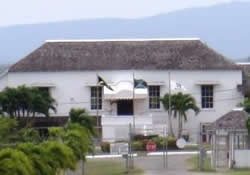
JNHT traces the estate to Major Thomas Halse after England’s conquest of Jamaica in 1655. Halse grazed cattle and raised hogs. The Trust describes thick defensive walls and a house still of one storey when he died in 1702. Francis Saddler Halse enlarged it into a two-storey residence in the late 1740s; the entrance steps, columns and fanlight belong to that later architectural story, while the portico was another addition. [1]
These phases prevent the present photograph from becoming an illustration of 1655. A land grant, a building’s first construction and its later appearance are different dates. The more elaborate approach also invites a question about who could enter by the front steps and whose work made the household possible.
Source & credit
A plantation landscape, with a qualification
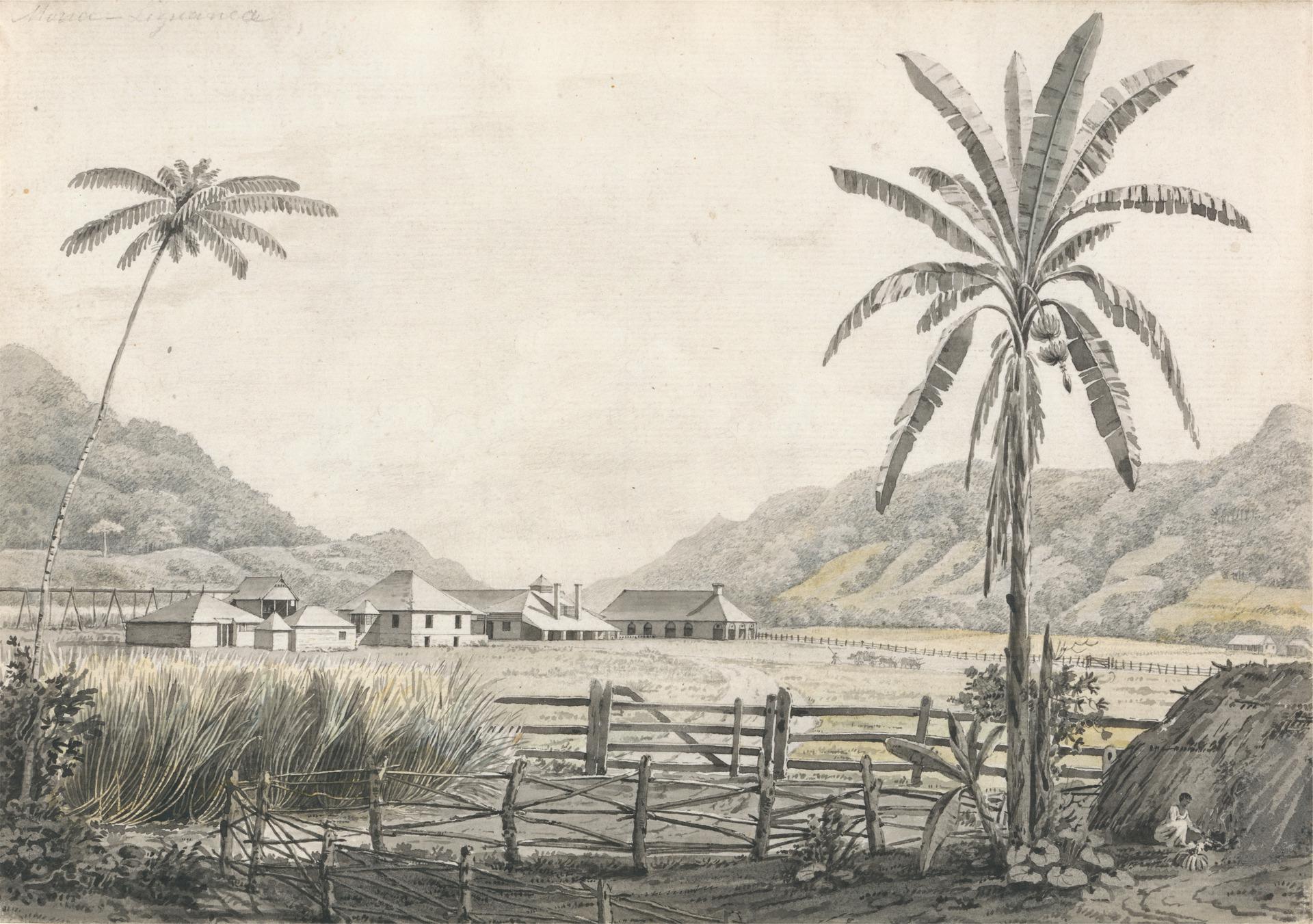
Yale’s exhibition catalogues the anonymous watercolour above as the farm and sugar factory at Halse Hall, circa 1780. The sheet itself also bears “Mona Liguanea,” so the identification must remain attributed to the catalogue. It is not a measured plan of this house. Yale draws attention to the contrast between distant sugar works and foreground provision grounds, where enslaved people were expected to help supply their own food. [2]
Look at the small human figures against the buildings and cultivated landscape. Their size in the composition is an artistic choice; it is not a measure of their economic importance. A calm scene cannot describe the conditions under which food or sugar was produced. The image becomes more useful when paired with records about work and control rather than read as a self-contained picture of contented plantation life.
Henry de la Beche and the estate’s income
Princeton University Library connects Halse Hall to the geologist Henry Thomas de la Beche, who inherited the property as a boy and received income from its enslaved workforce while living in Britain. He visited Jamaica in December 1823 and subsequently published his 1825 account of slavery. His scientific interests and plantation ownership were parts of the same life, not separate biographies. [3]
Princeton also preserves medals commissioned as rewards for “Good Conduct”: one associated with Tomasso Saulini around 1824 and a later example by William Wyon dated 1841. Their owner’s portrait and language of reward reveal who defined acceptable behaviour. They document a proprietor’s view of labour, not the workers’ consent to that system. The later medal also belongs to a different legal period from the earlier one; it should not be used to imply that slavery continued unchanged in 1841. [3]
Source & credit
The estate as a saleable collection
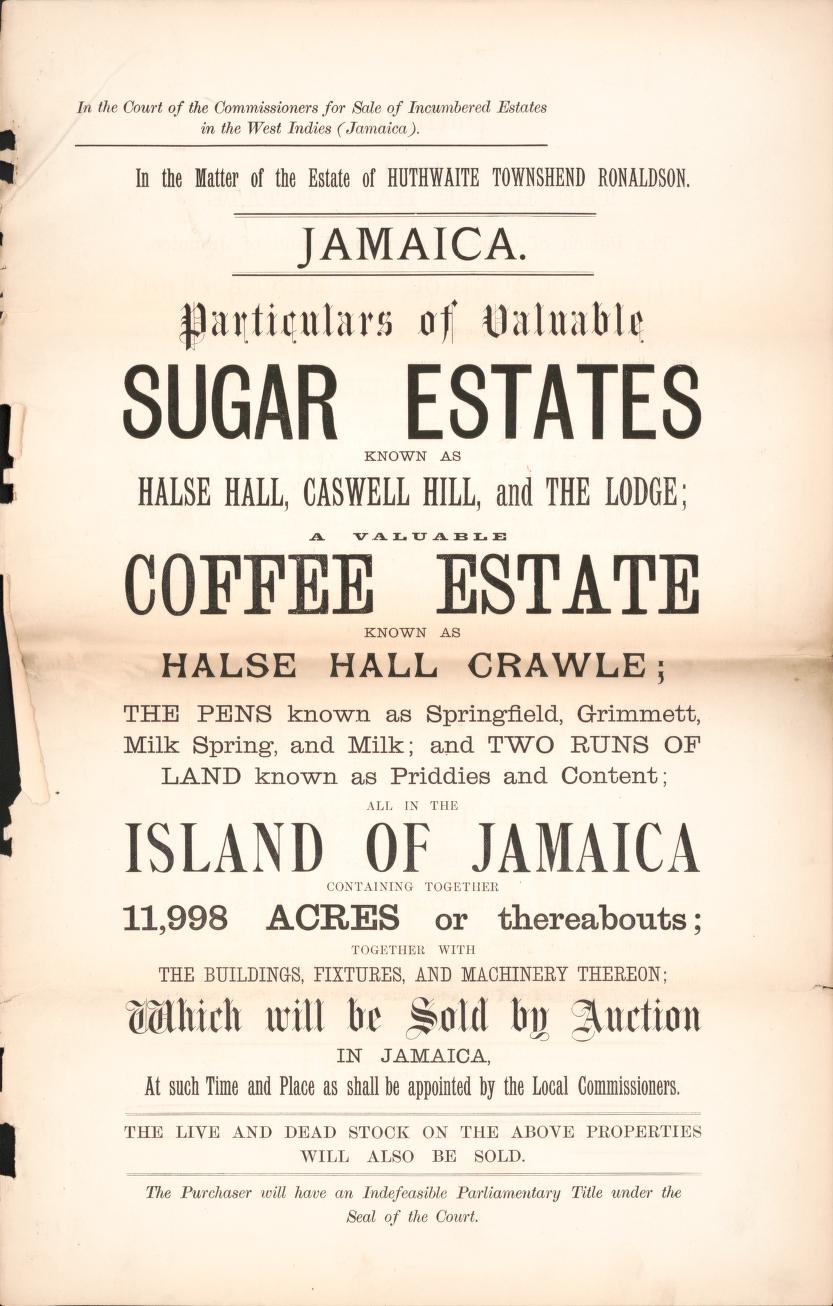
The Library of Congress preserves sale particulars with conditions dated 25 November 1887. Their title groups Halse Hall with Caswell Hill, the Lodge, a coffee estate, pens and other lands. The advertised 11,998 acres are the combined properties, not a measurement of Halse Hall alone. Buildings, fixtures, machinery and livestock appear within the proposed sale. [4]
This document shifts the scale from the residence to a portfolio of productive land. It also records an intention to sell; the title page by itself cannot establish the eventual purchaser or completed terms. Such distinctions keep a legal advertisement from silently becoming a complete ownership history.
Another economic era entered the building
JNHT records a later wing added by Alcoa Minerals of Jamaica. The corporate addition brings the story beyond the plantation period, but it should not make the older labour history disappear. [1]
On an agreed visit, ask which fabric belongs to each phase and where the work areas lay in relation to the residence. The strongest comparison is between the house, the people who sustained the estate and the changing uses of its land. A beautiful entrance is a beginning for that enquiry, not its conclusion.
Sources and notes
- JNHT, Halse Hall Great House: land grant, building phases and Alcoa addition.
- Yale University Library, Prospects of Empire, “Idyllic Landscapes”: circa-1780 catalogue identification, conflicting inscription and interpretation of provision grounds.
- Julie Mellby, Princeton University Library, 16 March 2021: de la Beche’s estate income, 1823 visit, 1825 publication and surviving reward medals.
- Library of Congress, sale particulars, catalogued 1887; conditions dated 25 November 1887, published between 1887 and 1888. Combined acreage is not Halse Hall’s acreage alone.