Liberty Hall: owning a place for Black public life
Location: Liberty Hall, 76 King Street, Kingston, Jamaica
Explore area in Google Maps ↗Map search for the named place or area. Arrange the actual entrance, guide meeting point and access with your host; this is not a confirmed tour departure.
At 76 King Street, a meeting place became a centre for organising, enterprise and education. Its history connects Garvey’s international arguments with a specific Kingston institution.
Ownership mattered
Liberty Hall’s own institutional history dates its purchase by the Kingston Division of the Universal Negro Improvement Association to March 1923. The verb matters: this was not simply a room borrowed for an evening. Owning a meeting place gave an organisation a material base for recurring activity. The account describes meetings, small businesses and cultural and intellectual programmes. That combination makes the building useful for understanding how political ideas needed spaces, income and ordinary organisational work. [1]
A movement needed an address as well as an idea
Liberty Hall gave organising a physical setting. Meetings, communication and the practical work of sustaining a movement needed somewhere to happen. The building therefore belongs beside Garvey’s speeches and publications as part of the machinery through which people could act collectively.
Its later museum role changes the audience and purpose while preserving that association. Visitors encounter an interpretation of a movement where earlier participants encountered the demands of making one work. Holding those uses together makes the place more than a shrine to a single personality. It links political ideas to the ordinary requirements of an organisation: gathering, keeping in contact and persuading people to continue. [1]
Source & credit
An institution rather than a lone speaker
Garvey is the best-known name, but a local division needed members who organised events, maintained premises and brought people together. The short institutional account does not name everyone who did that work. A fuller history should seek committee records, programmes, accounts and members’ recollections. Start with the building as evidence of collective effort, rather than allowing a famous founder to occupy every room in the story.
Listen before the Kingston purchase
The guide already carries Garvey’s recorded explanation of the UNIA’s objects, dated July 1921 in New York. It is included here as a comparison made before the Kingston division’s 1923 purchase. This is a formal public address, not a recording made inside this Liberty Hall and not ordinary conversational Jamaican speech. Listen for how the speaker defines a collective purpose and addresses an audience beyond a single locality. Then ask what practical facilities a local organisation would need to pursue such aims. [2]
Keep the different Liberty Halls separate
JNHT’s account places Kingston’s hall at 76 King Street and discusses the wider movement’s use of the Liberty Hall name. Do not transfer an event in New York directly to Kingston merely because both venues shared that name. A date, city and organisation should accompany each meeting or recording. This simple discipline prevents a local history from acquiring impressive but misplaced episodes from an international movement. [3]
Education and entertainment could share the same space
The institution’s history describes intellectual and cultural programmes alongside meetings and enterprise. That overlap is a useful way to understand public learning outside a formal classroom. A lecture, performance or gathering could create an audience for ideas and a place to encounter other members. It does not mean every event served exactly the same political purpose. Programmes and newspaper reports would allow us to examine the balance rather than assume it. [1]
The building continued after its first role
The museum’s history follows later ownership changes, acquisition by JNHT in 1987, renovation and reopening on 20 October 2003 as Liberty Hall: The Legacy of Marcus Garvey. Keep those dates distinct from the 1923 purchase. The later museum interprets an earlier institution; it is not a meeting from Garvey’s lifetime preserved unchanged. Its educational mission is itself part of the continuing history of how Jamaicans represent and debate Garvey’s work. [1]
Read a facade with an institutional record
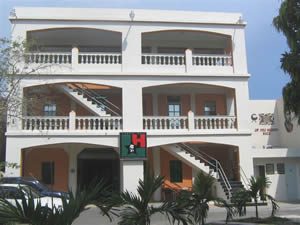
The inline photograph supplies a later view of the multi-level building. It cannot show which event occupied a particular floor in 1923 or identify every alteration. Use it to ask about access between levels, gathering spaces and changes in use. Then compare Liberty Hall with Ward Theatre: one offers a history of organisational ownership and learning, the other of public performance. Both can reveal the infrastructure of cultural life without being treated as identical institutions.
A listening-and-place exercise
After hearing the recording, write two short lists: stated aims in the speech and practical activities documented at the Kingston hall. Mark connections as your interpretation unless a record explicitly establishes them. On a museum visit, ask how exhibits explain local members and the surrounding community alongside Garvey’s biography. The strongest learning outcome is an account of how an international movement became local work, with the recording and the building kept in their actual settings.
Sources and notes
- Primary institutional account identified and attributed in the narrative. ↩
- Garvey’s formal UNIA address, New York, July 1921: recording and attribution record already used in this guide; not audio from Kingston Liberty Hall. ↩
- JNHT: Kingston hall, UNIA context and source facade photograph. Events in other Liberty Halls are not assigned to Kingston. ↩